It's almost the end of the year, and it might be a good time to do a purge of your browser extensions.The sad reality of not being able to browse the modern internet without an ad blocker or without a video codec plug-in sucks.While you can absolutely set up a self-hosted one on your system, most average users are probably just going to install uBlock Origin (or something similar) as an extension on their browsers.
If you use the Internet often, especially on desktop, you probably have a number of browser plugins that go beyond ad blocking.Plugins are the best thing to happen to the internet since frames and marquee tags went out of style.But as with everything these days, there's a hidden danger: outdated plugins that could cause some trouble (if you’re not careful).
Add How-To Geek on Google Add as Preferred Source Follow on Google Discover Browser extensions can be compromised It’s good to understand the risks It’s just a fact of modern life that a browser extension can be compromised or act maliciously.Browser hijacking, remote access, identity theft, keylogging, you name it.A compromised and malicious extension can cause issues like that and more.
In 2025, there was an entire network of phishing attacks (mostly targeting users in Brazil, Mexico, Vietnam, and Colombia) that used browser extensions that the attackers force-installed after successful phishing attempts to siphon data when users visit their financial institutions.That's just one example of a malicious extension, but it's worth thinking about.After reading about that, I got to wondering: how often am I actually examining, updating, and purging extensions I use? About 86% of Chrome extensions (it can vary by browser) ask for a lot of permissions.
And a lot of users don’t usually check or update their extensions after installation, so there’s definitely room for review and improvement.You should at least look into an extension before installing it The dangers of not vetting your add-ons Most of the time, it wouldn't be unreasonable to think that a simple browser extension is probably safe.But just because an extension starts out as being safe doesn't mean it'll stay that way.
Consider that anytime you install a browser extension, you are more than likely allowing it to collect information or read the sites you're visiting.Now, imagine that browser extension gets compromised, hacked, or tampered with by a bad actor.Next thing you know, data from your browsing session and maybe even personal data is compromised.
The big thing to consider with extensions is that they can return information to the servers of the people who created them.That's just a risk you take with extensions in general.Common sense sort of dictates that any 3rd Party extension or plug-in you use (on Obsidian, extensions are called plug-ins, while they're just called 'extensions' in Chrome, Firefox, etc.) is at your own risk.
Browser extensions have a lot of permissions that go beyond a typical sandbox.So, there are potential risks.Even so, I feel like most of the extensions I've used have been fine.
But I spend some time vetting what I'm installing before just randomly loading a new extension into my browsers or Obsidian.I typically manually update or purge extensions and Plug-ins More vetting and control over your extensions is a good thing Close Sometimes, an extension either stops working or begins acting strangely.You can’t always prevent it, but understanding and updating your extensions is a good step toward staying safe.
Take a look at the uBlock Origin extension.It no longer works in Chrome because Manifest V2 support was removed from the browser (uBlock Origin Lite is the workaround for that).But it's still amazing in other browsers like Firefox and Opera.
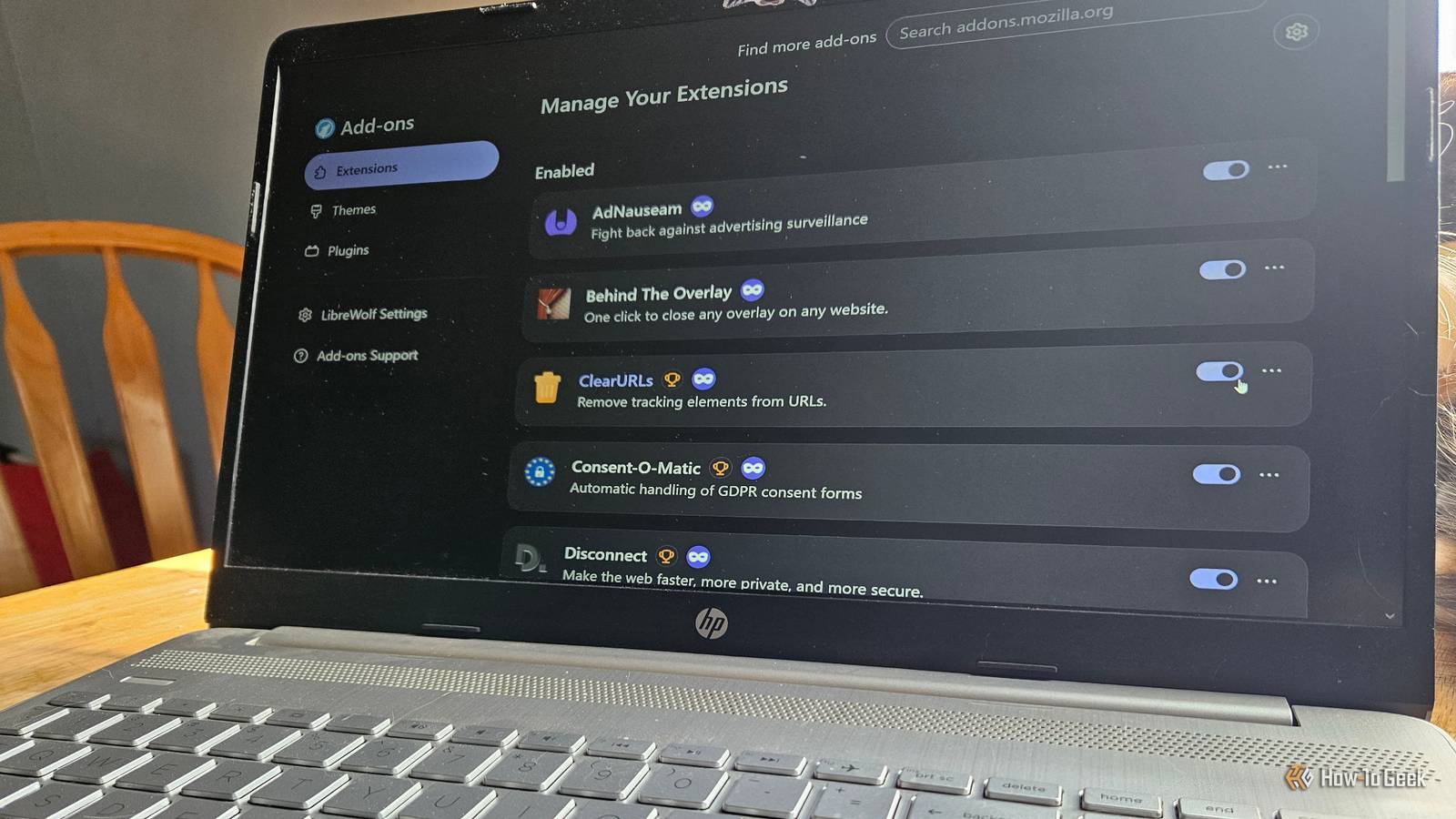
It's one of my favorite extensions for Firefox (although I use AdNauseam on some of my devices instead, particularly mobile).It's pretty rock solid and has been amazing for mobile browsing and YouTube.In order for it to work, the extension needs permission to access web requests and page content.
It it doesn't collect information, and they've been true to their word on that.But here's the interesting thing: uBlock Origin is open-source, so you have to do your due diligence and make sure you're only downloading it from the official creator (Raymond Hill), that you're keeping it up-to-date, and that you're not just grabbing something that looks like it with the same or similar name.In uBlock Origin's settings, you have options to give it access to the local files on your computer and to allow automatic updates.
Both of these options could lead to compromised data or other issues if the extension gets hacked or has malicious code injected into it.I never allow an extension to access local files, root, or have privileged access.On the computer I'm using to write this, it appears that the last time I updated it was in September.
So that means it's time to see what's inside the new updates and do a bit of research to see if the newest version of uBlock Origin has any known exploits or vulnerabilities.I will repeat this process with every extension I use before updating it, especially if the extension is allowed to access what's on the screen in the browser.Yes, it's time-consuming.
But when I say "it's time to take a look at your extensions,” is what I explicitly mean: updating, checking for known issues/vulnerabilities, and asking yourself, "does this truly improve my browsing experience?" If the answer to the latter question is "no," or you're noticing something odd about the extension, then the best thing to do is purge it from your browser.Check your browser extensions often I think it’s a good idea to regularly review what you’re doing with your devices and the extensions you use.Extensions are often a community-led effort and might have issues.
Some are probably perfectly fine.It’s up to you to decide what works for you, but as a general rule of thumb, I just think it’s a good idea to purge your extensions occasionally and really take the time to vet the ones you plan to keep.Related I asked How-To Geek's writers which Linux distros convinced them to quit Windows, and I was surprised by some of the answers HTG writers love Linux.
And there's a few unexpected ones.Posts 46 By David J.Buck
Read More