Earlier in the year, a consortium that includes China’s BLT announced a major breakthrough in using a high-precision, liquid metal UV 3D printing process to upgrade the hinge for Chinese smartphone maker OPPO’s foldable Find N6 phone.Around the same time, another leading Chinese OEM in the metal AM market, Farsoon, announced that it was using its proprietary Fine Spot Laser PBF method to consistently print parts with layer thicknesses as low as 10 micrometers (µm).These included parts from copper, a capability which Farsoon is leveraging for markets including data center thermal management solutions.
Now, a company founded in May 2024, Suzhou Dewu Technology Co., Ltd.(Dewu Technology), targeting the same market for ultra-high-resolution, tiny metal parts, has announced the closure of a pre-Series A round, in an exclusive from Chinese tech media site 36Kr.The numbers aren’t very specific, with the site simply noting that Dewu Technology has been funded thus far to the tune of “tens of millions of yuan,” which sounds like anywhere in the $5-15 million range.
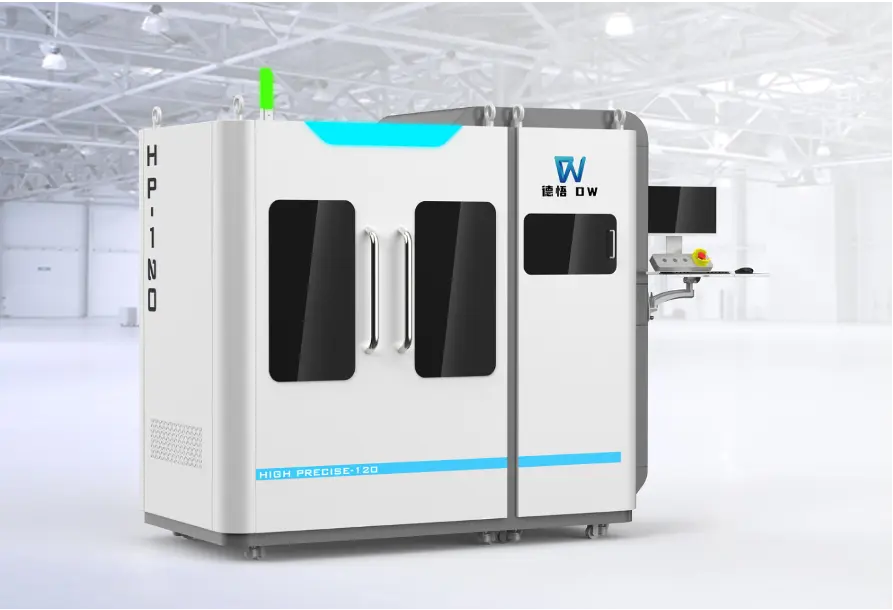
The leaders of the round were two Chinese investment firms, Beijing-headquartered GSR United Capital, and Jintou Zhiyuan, based in Jiangsu.Dewu Technology claims its printers are capable of achieving wall thicknesses down to 30µm, with finishes down to 1µm.These are bold claims, especially for such a young startup, and there’s not much of a presence in (Western) online sources for the company.
It seems somewhat relevant, however, that the 36Kr interview mentions that one of the institutions where “core team members” at Dewu were educated was Shanghai’s Jiao Tong University, which is one of the members of the aforementioned consortium involving BLT.The interview is also filled with insightful observations from the company’s founder, Wang Zhou, related to demand trends in the global AM market.These are especially relevant to demand for metal parts used in consumer electronics applications: Wang frames the company’s business model by noting that the most relevant question for customers “…is not whether it can be printed, but ‘how many procedures are still needed after printing.’ The post-processing cost of parts printed by traditional SLM accounts for 70%, and we have reduced this proportion to 10%-20%.
…When the surface finish reaches Ra ≤ 1.5μm, many medical and consumer electronic parts can be used directly without post-processing.…Our technical route is naturally suitable for consumer electronics, because the cost saved in post-processing is real.This is also why overseas leading consumer electronics customers have come to us intensively since the second half of last year.
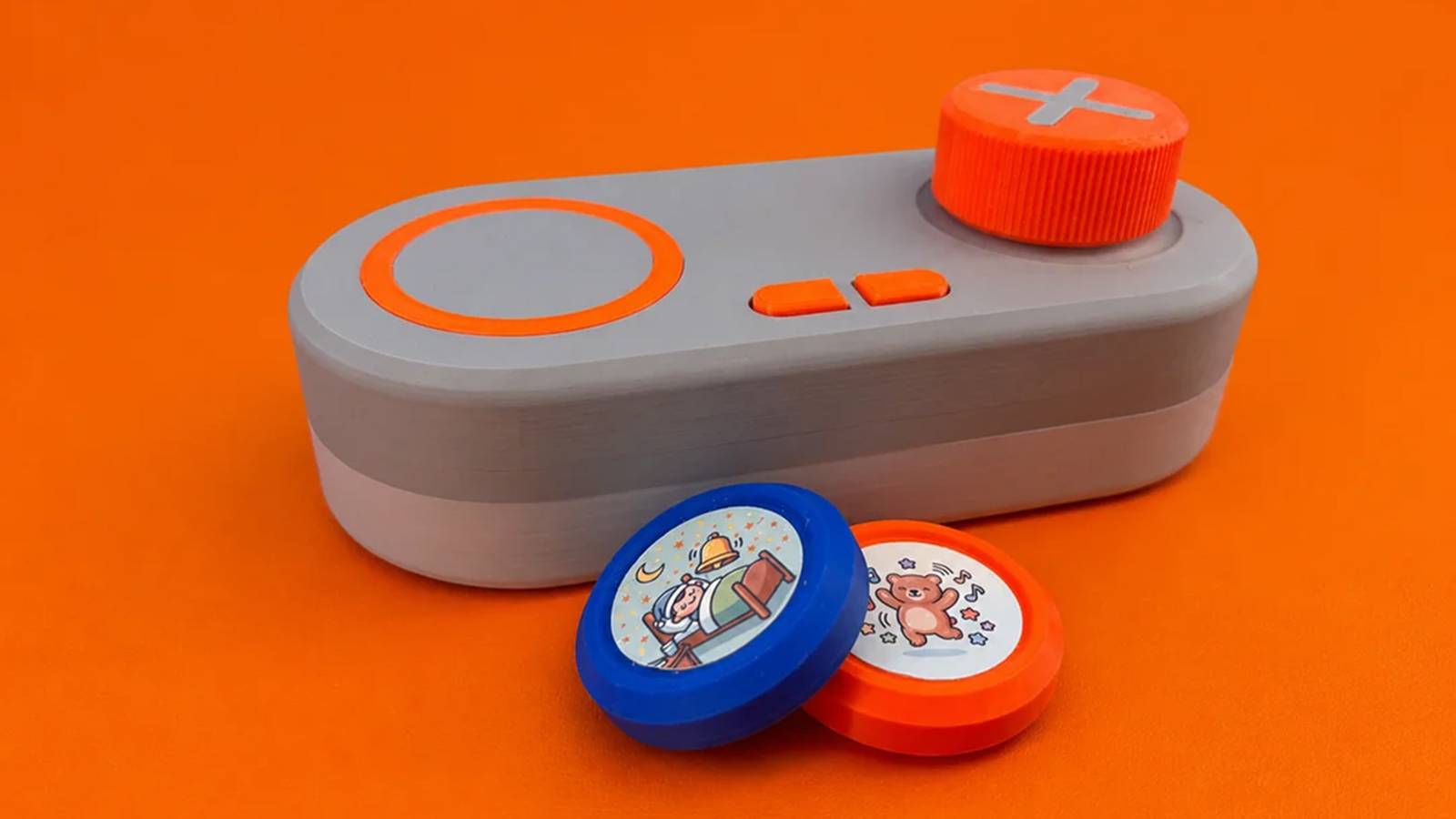
Their design end has moved towards ultra-high-precision structures, and traditional 3D printing cannot meet the requirements…as consumer electronics enters mass production, multi-laser large-format equipment will further reduce the printing cost, and this advantage will continue to expand.Customers do not ultimately buy a piece of equipment, but a solution that can be delivered in mass production.” Again, one can certainly question how consistent the company’s process is at delivering parts with such thin walls and such high-resolution finishes, and how close it is to scaling its business model.But it is noteworthy in itself that the company’s value proposition is tiny metal parts, and that this is, largely, specifically in response to growing demand from consumer electronics firms, particularly in light of the BLT and Farsoon announcements from earlier this year, as well as the regular influx of 3D printed electronics news over the course of this year.
It’s also worth mentioning that, in the last several years, seemingly every time non-Chinese (especially Western) observers express skepticism about Chinese technological progress — and above all, such progress in the context of consumer electronics — they are inevitably proven wrong.The most attention-grabbing example was probably the Huawei release of the Mate 60 phone, which demonstrated that China was capable of making chips with 7 nm capabilities, despite years of various Western sanctions.The same trend has continued with Chinese AI firms.
People scoffed at DeepSeek, and while that company may have been overhyped, initially, it wasn’t just hype, and at any rate, there are a number of other viable Chinese LLMs.Meanwhile, a Chinese company just announced that it succeeded in producing a DUV machine that is expected to begin shipping this year, enabling additional workarounds to Western chip sanctions.All of that aside, isn’t it deeply arrogant for people in, say, the US, which at this point has been ceding ground in manufacturing for almost as long as it was the world’s dominant manufacturing power, to assume superiority over the country where more manufacturing has taken place in the 21st century, by far, than in any other country? It used to be that one could deflect that fact by saying all they make in China is goods that cost too little to be worth anyone else’s trouble.
But that has long since ceased to be a valid comeback.Images courtesy of Dewu Technology Subscribe to Our Email Newsletter Stay up-to-date on all the latest news from the 3D printing industry and receive information and offers from third party vendors.Print Services Upload your 3D Models and get them printed quickly and efficiently.
Powered by FacFox Powered by 3D Systems Powered by Craftcloud Powered by First Mold Powered by Xometry 3DPrinting Business Directory 3DPrinting Business Directory
Read More