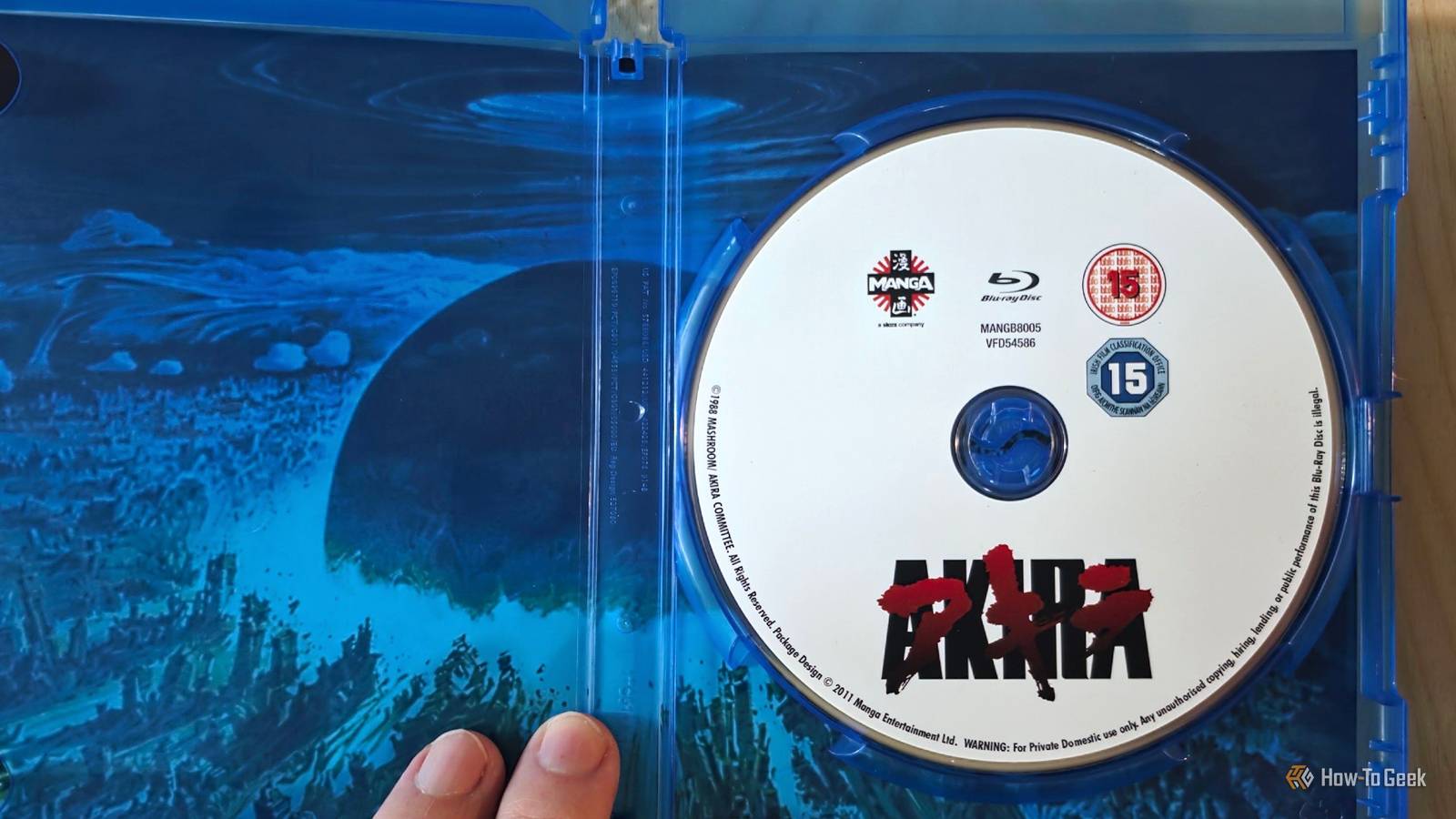
Physical media has been dying quietly for years, and most people didn't fight it because streaming was just easier.Buying a digital copy felt like the same thing, just without the disc.The problem is that it isn't the same thing at all, and it's not just about ownership; it's about the quality that we're all losing out on.
You don't actually own your digital movies Buying digital just gets you permission to watch People don't think about home video today the way they used to when I was a kid.Thanks to streaming, digital purchases are basically a replacement for discs.You don't need a player, shelf space, or anything else.
I bought in 2013, and I still own it today, working perfectly since it's digital, which is more than I can say about my DVDs and videos.This sounds great, but the only part that is an issue is that the companies aren't really selling you a file.Those companies are selling you a license record that lives in their database, tied to your account.
The platform checks your account, your location, your device security level, and only then hands over decryption keys.No server, no playback.It's completely dependent on their infrastructure still existing and you staying connected.
That's actually the part everyone hates, because you don't have a copy.You are buying permission to stream it, and that permission can be checked every single time you press play.For the studios and platforms, this is a fantastic deal, which is why they push back on anyone who wants it to change.
They don't have to press discs, print cases, or ship anything anywhere.They just sell licenses straight to whatever device you already own.Since everything flows through their app, they get data on what you watch, when, how often, that sort of thing.
That setup is wildly profitable, and it's hard to argue against because you don't have to work hard to preserve the file.I already said my digital copies have outlived and outperformed my physical ones, but there's not a good reason why we can't be given a file we actually own.The issue is that it can be revoked at any time, and there's not much recourse.
If you owned the file, then there wouldn't be an issue, but companies want to keep their hands on it.This will be what companies push now that Blu-ray is coming to an end, because it's better for them.Streams look worse because they throw away data Discs just hold way more detail than streams Close The reason a 4K Blu-ray looks different from a 4K stream basically comes down to how much data each one is allowed to use.
Both use the same HEVC/H.265 codec, but the amount of actual visual information they can push is wildly different.A physical Ultra HD Blu-ray can hit 108 Mbps on a dual-layer disc and 128 Mbps on a triple-layer one.That means a typical movie sits at a variable bitrate between 50 and 90 Mbps, sometimes spiking higher.
Streaming services, on the other hand, have to compress the video because the companies are paying for CDN bandwidth and dealing with people's mediocre home internet.Even Apple TV has been measured streaming HEVC at around 29 Mbps on average for some titles.Amazon and most subscription platforms go even lower, like 15 to 20 Mbps for 4K.
Even with Netflix's newer, more efficient encoding, the highest average 4K bitrate it targets is around 8 Mbps.That is less than half of what physical discs will let you have.Streaming encoders use aggressive inter-frame compression, which basically means they only update the pixels that change between frames.
That works, but it throws away fine details like fabric texture, skin pores, or just general environmental sharpness.Large screens make this way more obvious.That attitude that things are good enough is why streaming has taken over so completely.
That argument that "most people won't notice" has been used by companies to quietly downgrade quality before, and that will never stop being an unreasonable excuse.Once physical media is gone, there's no fixed high-bitrate reference point anymore.Platforms can just lower the bitrate whenever they want to save money, and nobody has an easy comparison.
Keeping your movies safe takes real effort You have to back up the files yourself More and more people are going back to buying physical media because they're tired of streaming services and digital stores that can yank access to content they paid for.But physical discs aren't perfect either.They can scratch, degrade over time, and eventually become unreadable if the hardware to play them disappears.
The smart idea going around is to rip your discs into private digital archives you keep on your own hardware.The main tool for this is MakeMKV, which strips the copy protection off Blu-rays and 4K UHD discs and packages everything into an MKV file, keeping the full video and audio quality intact.There are a few places that sell media without DRM, but they're hard to find.
Music has mostly solved this problem through stores like Bandcamp, where you download actual MP3 or FLAC files that work forever regardless of whether Bandcamp still exists.Ebooks have similar options through places like Smashwords.Movies are a much harder problem because Hollywood studios are basically refusing to sell their content without copy protection attached.
If you want an official DRM-free movie download, your options are pretty much limited to independent filmmakers selling through Vimeo on Demand or old public domain films on Archive.org.Owning your media in a way nobody can take away means you get more work upfront.You have to buy the discs, rip them, manage the files, and keep up with backups and hardware yourself.
It's not cheap upfront, and it's not easy.The alternative is renting your entire library from companies that can change the terms or go bankrupt.There's no easy answer for this None of this is easy to fix, and there's no clean answer.
Most people won't set up their own server because it's easier to stream, and the difference is negligible right now.It's true that once Blu-ray is gone and streaming is the only option, platforms won't have any competitive reason to hold bitrates high or keep licenses stable.That won't be a problem for the regular person until it's too late.
Read More