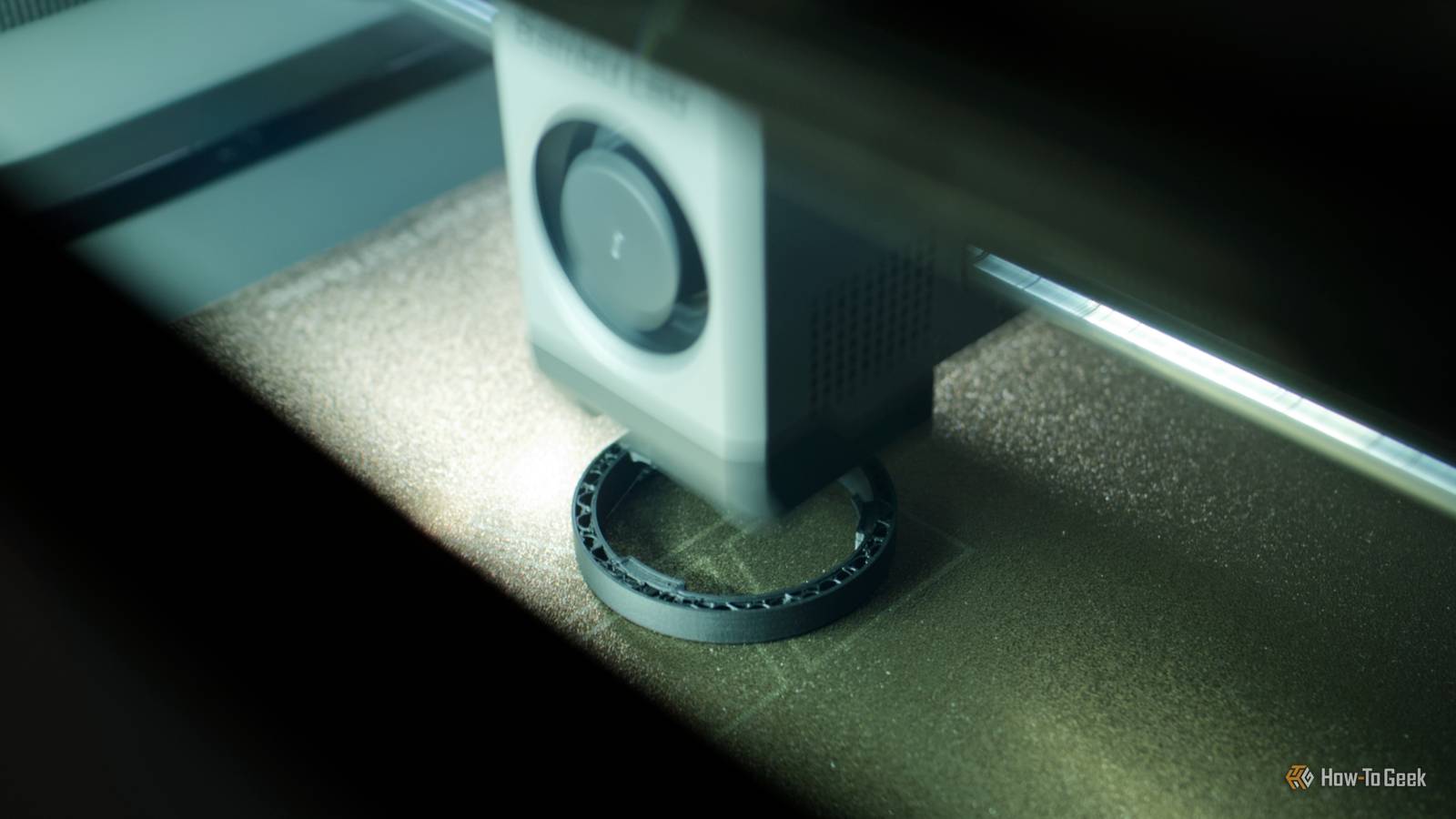
Most of the tools you buy are probably purchased on the assumption that they’ll last years, if not a lifetime.Very few tools fall into the “disposable” category, but that’s not necessarily the case when it comes to 3D printing.With a 3D printer, you can create a wide variety of tools that won’t necessarily last, but can still prove useful.
Why 3D print your own tools? Live for today Let me premise this by saying we’re not specifically talking about 3D prints that can enhance your existing tools, like shop vacuum attachments and mounts for drill bits that live on your driver.Rather, we’re going for tools and items you might find around a workshop like wrenches, clamps, pliers, and similar accessories.There are some valid reasons to 3D print a tool rather than buying one or using one you already have.
The first is that 3D printing something is almost always cheaper than buying something from a hardware store.If you’re on a tight budget for a particular job and your printer is up to the task, a 3D print can save you .You also might not want to risk a tool you already have.
Taking certain items out of your workshop can mean never seeing them again.We’ve all left a tool outside only to find it months or years later in terrible condition, metal rusted and rubber perished.Having a set of “disposables” ready to go can’t hurt.
Sometimes, printing a tool can be much quicker than ordering something or heading to the hardware store.Maybe you know you own a tool but would rather spend the time on the task at hand, rather than reorganizing your shop.Maybe you’re lending something to that friend who never seems to give anything back.
Some tools always seem to go missing, whatever you do.Printing a few spares can be a nice insurance policy.Finally, there are items that you might only need for a single job that are hard to justify buying.
These are things you’ll never use again, that don’t necessarily to be hard-wearing.3D printing can reduce the cost to mere cents and a bit of your time (you can even pass them on to someone when you’re done).Of course, these reasons don’t apply to tools, and there are some big downsides to keep in mind (don’t worry, we’ll get there).
Tools you can 3D print A few ideas to get you started Close 3D printing a tool isn’t always the most economical option, especially given how hardware store home brands now dominate on value.But most of the time, it is.This is particularly true when it comes to clamps, whether they’re trigger clamps that require a few dollars’ worth of extra hardware or perfectly-sized regular clamps.
In terms of toolbox mainstays, you can 3D print adjustable wrenches and needle-nose pliers—though both are limited in terms of how much pressure they can exert.MakerWorld also seems to be awash with vises, from bench vises (and this one) to fractal vises designed to hold items that come in virtually any shape.Drill guides are another item that can be hard to justify buying once you’ve printed one for about 10c.
Then there are those items that always seem to get lost around the garage or workshop, like sanding blocks.Smaller items are especially easy to lose, like edging tools for applying silicone and utility knives.I’ve always got a pack of blades to hand since they live in the same place all the time, but it feels like I lose a knife a month at this point.
Then there are those few items that you find yourself needing for a single job, that you really don’t want to spend any money on.The HVAC radiator fin straightener is the perfect example—how often do you intend to straighten your radiator fins? Once, maybe twice? 3D print it.Another example is the dry wall panel carrier, perfect for whether you’re finishing a small room or replacing a single sheet and need better grip when setting up.
These are just a few examples; there are objects already available for just about any job.Don’t forget about the limitations of 3D printing Material choice matters The obvious drawback to 3D printing tools at home is that they’re unlikely to be as durable as those you buy in the shops.Metal trumps plastic, and even injection-molded plastics offer benefits over 3D-printed layer lines.
That said, you can improve a tool’s durability by printing in PETG, ABS, ASA, and Nylon.You can throw carbon fiber blends in there for even better durability, or get a slightly better result from PLA by using tougher versions like PLA+.Subscribe to the newsletter for 3D-print tool ideas and more Access deeper coverage of 3D-printed workshop tools by subscribing to the newsletter.
Expect practical design ideas, filament and material guidance, durability trade-offs, and project prompts to help you print useful, budget-minded shop gear and organizer Get Updates By subscribing, you agree to receive newsletter and marketing emails, and accept our Terms of Use and Privacy Policy.You can unsubscribe anytime.Regular PLA is fine for many tasks, especially if you’re not concerned with long-term durability.
Just remember that PLA has poor resistance to UV and moisture, plus it can rapidly degrade when exposed to solvents (like the kind of solvents that might already coat the inside of your toolbox or be used liberally in a workshop).For some jobs, no 3D-printed tool is ever going to be good enough.I wouldn’t put a hammer head on a 3D-printed grip, for example.
Spanners designed to endure high amounts of torque or vises being used to hold items that are going to be hit hard are bad ideas.You don’t want to hurt yourself, so stick to sensible limits.Don’t forget that your 3D printer can also be used to organize your workshop.
Read More