If you’ve spent any time in hobbyist electronic spaces, you’ve probably come across the term “LoRa” before.Like Wi-Fi and cell networks, LoRa can be used to send and receive data through the air.But there are some big differences that make LoRa a very different technology.
LoRa is short for “long range” Low power, high range Close The term LoRa is short for “long range” and, like other wireless forms of communication, LoRa relies on radio waves to send and receive data.LoRa was designed with efficiency in mind, maximizing range and minimizing power consumption.This makes it significantly different from similar technology, like Wi-Fi.
Wi-Fi is designed for high data throughput and typically has quite a short range.Wi-Fi also uses more power than LoRa, which is why many battery-powered smart home sensors use mesh networks like Zigbee or Thread.By comparison, LoRa is designed to send small amounts of data over great distances.
In perfect conditions, the technology can work over distances of 200 miles or 300km.In reality, this often caps out at around 6 miles or 10km.LoRa is what happens when you prioritize range over bandwidth, which makes it perfect for long-range text transmission but unsuitable for sending large amounts of data as would be required to transmit images or videos.
For context, the maximum transfer rates for LoRa fall somewhere between 0.3 kbit/s and 27 kbit/s, which is 0.0375 KB/s to 3.375 KB/s.That puts it somewhere in the region of a mediocre dial-up internet connection.The LoRa standard uses different bands in different regions, all of which are free of regulation.
This means that the technology doesn’t require a license to operate, as is the case with HAM radio.In North America, this is 865-867MHz.In Europe, it’s 863-873MHz or 433-434MHz.
Also relevant to the LoRa discussion is LoRaWAN.Whereas LoRa refers to the underlying technology over which data is transmitted, LoRaWAN describes the protocol and network architecture through which the technology is implemented.Mesh networking makes LoRa even better Meshtastic and MeshCore Being able to send data over great distances for a very low power cost has some obvious upsides.
Some use LoRa to transfer data between smart home devices like sensors in a mailbox that are too far away from home networks.Another good example would be to collect information wirelessly from a weather station situated miles away from your server.LoRa can cover even greater distances using a broader network structure.
Meshtastic and MeshCore are, as their names imply, mesh-based implementations of LoRa technology.By using multiple “nodes” within a LoRa network, data can be sent over much greater distances by “hopping” between nodes.These peer-to-peer technologies are both open source and free to use, but have a few big differences separating the two.
In a Meshtastic network, LoRa devices act as clients, repeaters, and routers using the same firmware.On a MeshCore network, there are three different firmware varieties designed with different jobs in mind: companions are client devices, repeaters are forwarding nodes, and room servers are essentially buffers that store message history so that client devices can play catch up when they come back on the network.Meshtastic has a standard hop limit of seven, which means that a broadcast cannot go beyond seven nodes on the mesh network (though MQTT bridges and specialized firmware can help).
MeshCore has a much larger limit of 64 hops.MeshCore is also seen as a faster client since it uses less data to find a “path” through the network, while Meshtastic is slower due to the way it “floods” channels with the whole transmission when routing through the network.Perhaps the biggest practical difference between the two is that Meshtastic is a lot more approachable.
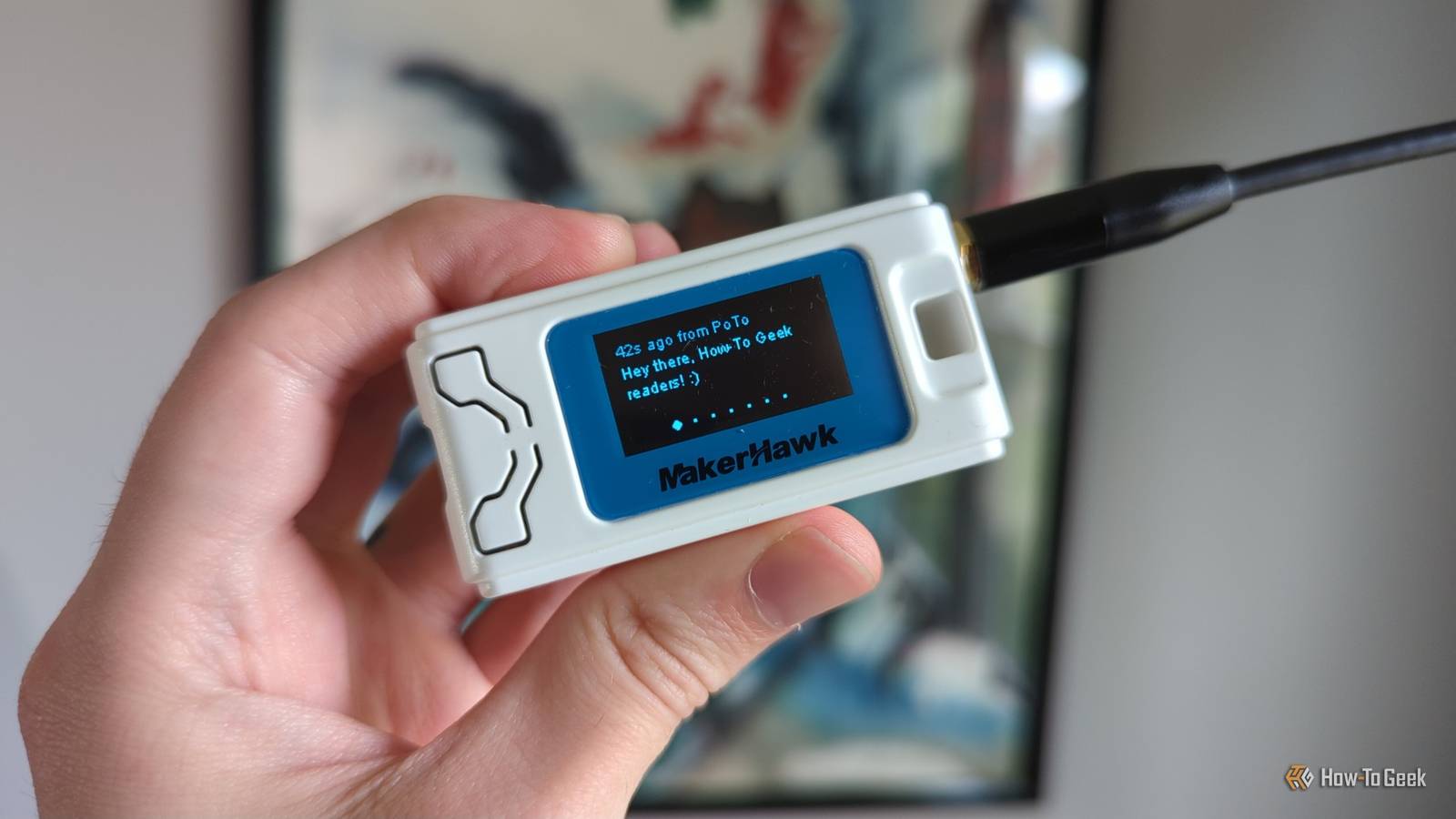
It’s often described as being a “plug and play” option, while MeshCore has many more moving parts.On the upside, you can switch between the two using the same hardware if you decide to.Buy or build your own LoRa devices Why you should get involved If you want to get started with LoRa, building or buying your own device is relatively easy.
You can check out the Meshtastic Getting Started guide and peruse the MeshCore nodes list for an idea of what’s involved.To boil a complex decision down to a single bit of advice, I’d recommend Meshtastic if you want an easy introduction and have nearby nodes in your area you want to tap into, or MeshCore if you’re comfortable with a more complex setup that feels more robust.The devices you’ll end up using typically depend on microcontrollers like the ESP32, rechargeable batteries, and decent antennas.
Lower-power chips like the nRF52 series offer even better battery life, if you can get your hands on them.So why bother with LoRa? That depends.MeshCore itself came about following a severe tropical cyclone in New Zealand that left communications down across a large area.
Both of these technologies could fill in similar gaps if such an event were to occur, as long as people are using them.Beyond this, LoRa is great for peer-to-peer communication between devices for hikers, campers, skiers, and anyone venturing off-grid.In a city, it’s fun to join the local network and send messages (via your smartphone or computer) without relying on the internet.
And then there’s the hobbyist element: why give it a try, considering it’s cheap and relatively easy to get started? LoRa communication devices are just one of the mesh-based ESP32 projects you might want to build over the course of a weekend.
Read More