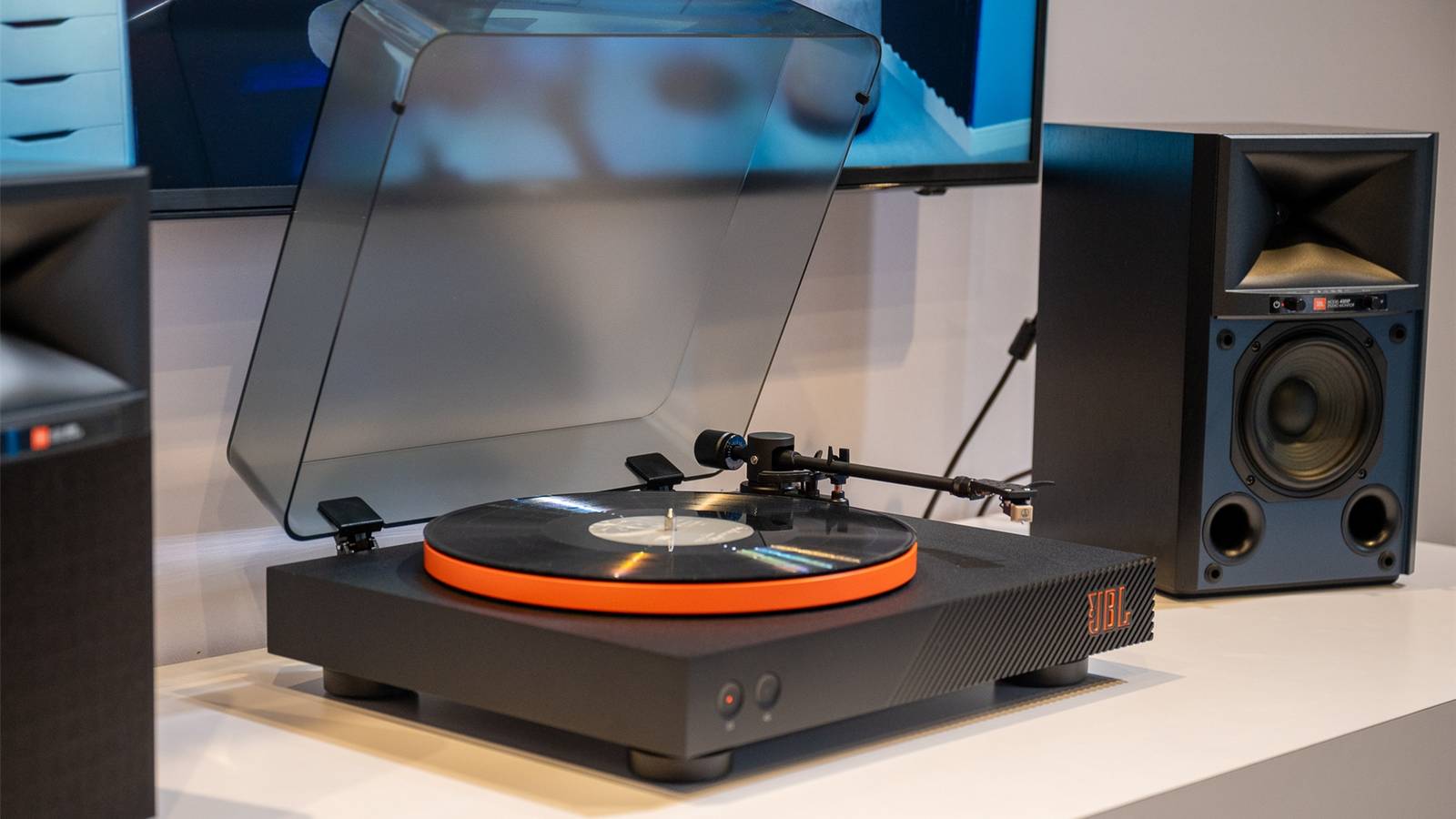
The vinyl versus CD debate keeps popping up its head, which is something I find personally annoying given that, objectively, CDs are the superior format.But, over time, I've realized that the claims by vinyl fanatics about the supposed audio quality of their beloved medium have less to do with objectivity and almost everything to do with subjectivity.Vinyl doesn’t beat CDs on fidelity, and it never has So let's get the objective technical stuff out of the way first.
CDs are, inarguably, higher-fidelity than vinyl pressings in every way, and this is why.CDs have a much, wider dynamic range.That is, the range of the softest and loudest sounds the recording can capture.
Vinyl recordings have a realistic dynamic range between 55-70dB compared to CDs that offer 90-96dB.That might not sound like a lot, but don't forget that decibels are logarithmic.Subjective loudness doubles with every 10dB, so the difference really is enormous.
If we go beyond CDs and move into high-fidelity audio, then even CDs are blown out of the water, with 24-bit lossless music offering up to 144dB of dynamic range.The noise floor on a CD is also dramatically lower.That's the measure of unwanted background noise from signal distortion and other artifacts not in the recording, which is easily detectable by ear on any vinyl recording, no matter how good the gear you're using.
And no, you don't need audiophile "golden ears" to tell.On a CD, the noise floor should be imperceptible even on middling gear, because there's basically no unwanted noise from the medium itself.The fact is that, if you used exactly the same master for both a vinyl pressing and CD recording of something, the CD would clearly and obviously hew closer to the original studio recording than the vinyl.
However, that's exactly a key difference that could be responsible for the genuine perception sometimes that vinyls sound better.Most “vinyl sounds better” comparisons aren’t actually fair The biggest reason vinyl wins subjective listening shootouts is simple: you’re usually not comparing formats—you’re comparing masters.Mastering has to be done in a very particular way because of the limitations of the vinyl format when it comes to dynamic range, how much bass you can physically represent in the grooves.
With a digital copy, the engineers mastering the audio can do pretty much whatever they want within the limits of human hearing, and because of this we got a silly arms-race known as the "loudness wars".Because CDs offer so much dynamic range, producers started making audio levels higher and higher to make their music stand out on the radio or in clubs.Eventually, to make music sound even louder, a technique known as was used to achieve even louder music, but at the cost of fidelity.
So certain types of music can sound more distorted and compressed in the CD master than the equivalent vinyl.Today you'll find plenty of digital music that has been properly remastered digitally to undo the damage the loudness wars perpetrated, but a lasting victim is the idea that the enforced conservative mastering of vinyl means that vinyl itself is the better format for fidelity.Expectation bias does a lot of heavy lifting Human hearing isn’t a lab instrument.
It’s deeply influenced by context, belief, and effort.As someone who formally studied psychology, I'm aware of how we are uncritically trusting of our senses.We think of our eyes as cameras and our ears as microphones, but the truth is that we often see and hear what we expect to, rather than what's really there.
If you already expect vinyl to sound better, then that's what you'll hear.There is wrong with that, because in the end your perception is your reality.Though sadly, vinyl fans are often exploited, just like many AV enthusiasts in general, with expensive snake oil because of this tendency to hear what we want.
This is why blind testing is so important.It eliminates the effect of priming on our perception, and all things being equal in a blind test, vinyl is unlikely to come out on top.I honestly think a lot of it comes down to the ritual of vinyl.
It feels to select the record, power up all your gear, place the needle and sit down to actually listen.This is much more of a commitment to the music than just opening an app and shuffling your favorite playlist.Vinyl’s flaws are familiar, and familiarity feels good The last piece of the puzzle for me is that the very factors that make vinyl an objectively inferior recording format are what make people like it.
The hiss, the pops, the "warm" sound that comes from those analog flaws.Subscribe to the newsletter for clear audio-format coverage Cut through myths about vinyl versus CD—subscribe to the newsletter for evidence-based, science-first coverage of audio formats, mastering practices, and listening psychology so you can make informed choices about sound.Subscribe By subscribing, you agree to receive newsletter and marketing emails, and accept our Terms of Use and Privacy Policy.
You can unsubscribe anytime.The thing is, it's just an illusion.If you made a lossless digital recording of a vinyl record, you wouldn't be able to tell which was the original, because the digital version perfectly preserves those analog flaws.
Even worse, any vinyl pressing from after digital recording and mastering took over in studios is just an analog pressing of a digital master.So any perceived issues with digital recordings should apply just as equally to that vinyl pressing as it would to a digital medium.It's not like pressing a digital audio waveform into an analog medium suddenly restores the details vinyl fanatics claim have been lost, after all.
I'm not here to tell anyone what they should do with their free time or how they should enjoy music.As long as you're enjoying it, that's really all that matters.What I do have an issue with is spreading falsehoods to justify that hobby, which might end up fooling people who are looking for the best audio fidelity and leading them down an expensive, inconvenient dead-end.
Read More