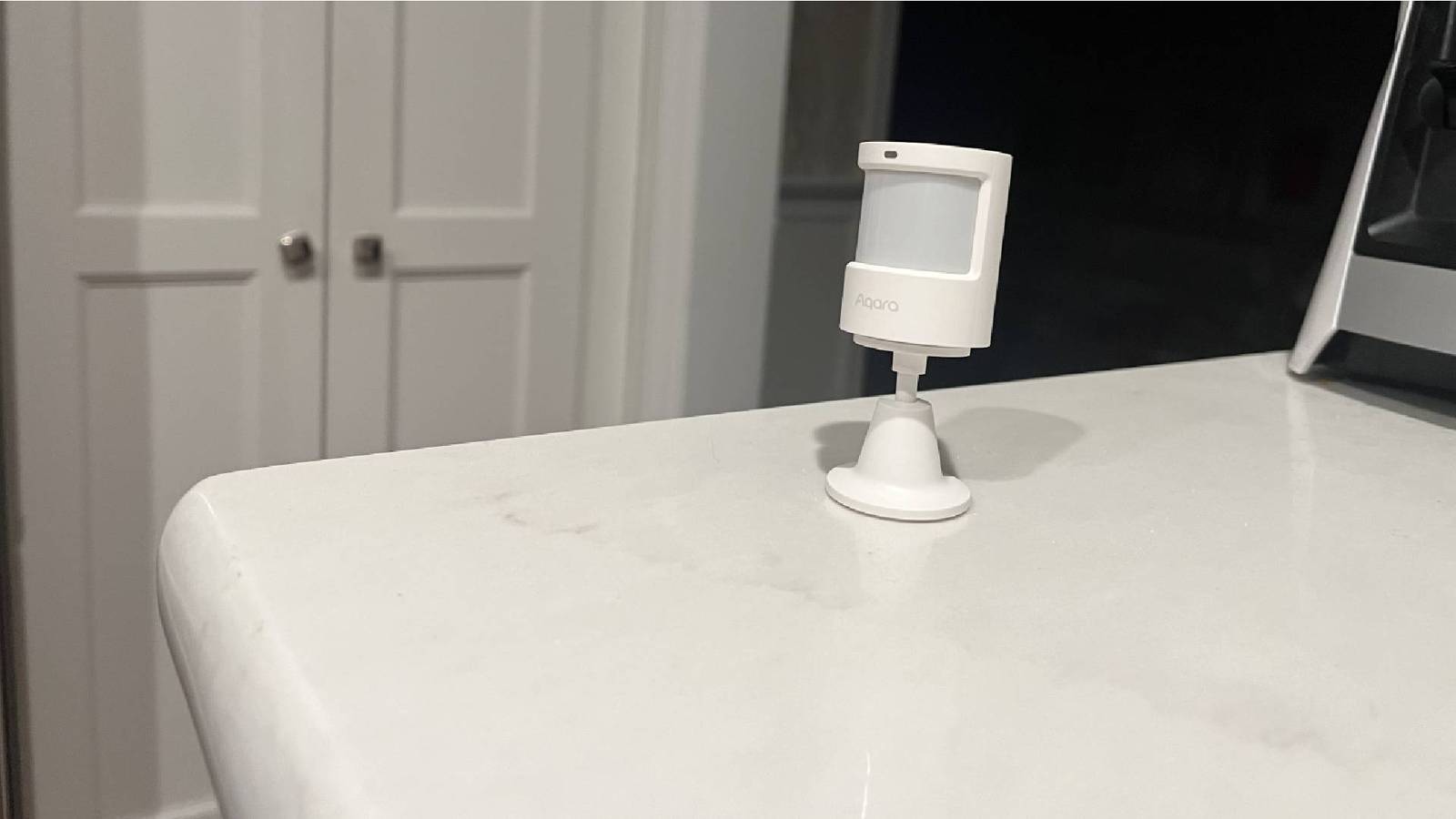
Motion sensors are a part of many smart homes.They're very useful for common purposes, such as having your lights automatically turn on when you enter a room.Where you position them can be key to how quickly they react, and the obvious positions aren't always the best.
Related The weirdest smart home sensor you never knew you needed Don't sleep on these useful sensors.Posts 10 By Adam Davidson Why facing the room makes your motion sensor feel slow The intuitive position isn't optimal When you set up a motion sensor, the urge is usually to place it in a location where it can "see" as much of the room as possible.You might place it in the far corner of the room, or above a doorway pointing directly into the room, where it can cover a wide area.
Once you've set it up, you're pretty confident that your motion sensor should trigger when there's motion in the room.You set up an automation that will turn on the lights as soon as motion is detected.However, when you test the automation, there's a significant delay between when you enter the room and when the light turns on.
You've already walked quite a long way into the room before it happens.You check your automation, and it's not due to the latency of your system; the motion sensor just didn't spot you very quickly.This isn't ideal.
If you're using a motion sensor to turn on your lights, you don't want to have to stumble across half the room in complete darkness before they turn on.The problem isn't the motion sensor; it's where it's placed.PIR sensors work better when objects cross their path Motion toward or away is less sensitive The key to understanding why pointing your motion sensor to face the room isn't ideal is knowing how a motion sensor works.
The most common smart home motion sensors are Passive Infrared (PIR) sensors.The passive part means that they don't send out a signal into the room; they sit back and wait for infrared energy to be detected.Human beings naturally emit infrared energy in the form of thermal radiation due to our warm bodies.
The PIR sensor detects the levels of this radiation and looks for changes.When we move, the level of infrared radiation changes, and the motion detection is triggered.The key thing is the way that changes in infrared are detected.
Many motion sensors include two or more sensing elements within them.When you walk past a motion sensor, one of the sensing elements will detect a change in infrared before the other, and it's this differential that's interpreted as motion.When you walk directly toward a motion sensor, both of the internal sensors may detect a similar level of infrared.
The level of infrared will increase the closer you get to the motion sensor, and as you get nearer, the sensor may detect infrared over a wider area.When you're far away, however, these changes can be minimal; it's only as you get closer that the change is enough to be interpreted as motion.This means that a PIR sensor is much more sensitive to tangential motion perpendicular to the sensor than radial motion along the radius of the sensor's field of view.
In other words, PIR motion sensors are far better at determining when you walk past them than when you walk directly toward or away from them.Aiming across the entrance is the simple fix Target the threshold of your room Once you know this, it becomes clearer why placing your motion sensor so that it can "see" the room isn't always the best thing to do.If you place one above your door, facing into the room, for example, when you walk in or out of the room, you're moving directly toward or away from the sensor, rather than across its field of view.
This means it won't be as quick to react.The simple solution is to place your motion sensor in such a way that when you enter the room, you're passing in front of the motion sensor.The best way to do this is to have your motion sensor facing across the threshold of the entrance to the room.
By facing your motion sensor across the threshold of your room, the moment you enter the room, you will be walking directly past it.The motion sensor should then immediately detect motion, and your smart lights should turn on much sooner.It's still possible to let the sensor "see" the room so that it can detect motion within the room as well as at the threshold.
You don't need the sensor to point perfectly parallel to your doorway; even if it's at an angle, motion detection when you enter the room should be significantly improved.Subscribe for smarter motion-sensor placement and tips Get practical smart-home guidance - subscribe to the newsletter for clear, tested motion-sensor placement advice, troubleshooting pointers, and related setup ideas that improve detection and reduce missed triggers.Get Updates By subscribing, you agree to receive newsletter and marketing emails, and accept our Terms of Use and Privacy Policy.
You can unsubscribe anytime.For example, it should be possible to face your motion sensor so that its view is across your doorway but is also pointed toward your couch.You can improve things further by mounting the sensor reasonably high so that it's not blocked by furniture and is less likely to be triggered by pets walking past.
PIR motion sensors aren't always enough Motion isn't presence While optimal placement of your motion sensor can make it much better at detecting when you enter or leave a room, it can't solve one of the biggest issues with a PIR sensor.If you're sitting still, the sensor won't pick up any changes in infrared, and so motion won't be detected.If you have automations that turn your lights off as well as on, you may find that your lights turn off when you sit still, as there's no motion detected in the room.
PIR sensors are great for detecting motion, but they can't detect presence.You might want to add a dedicated presence sensor to your room as well, to ensure the lights don't go out when you're watching TV.It may seem counterintuitive at first, but placing your motion sensor facing across the threshold of your room can make it much quicker to detect you.
Try repositioning yours, and you may be impressed by the results.
Read More