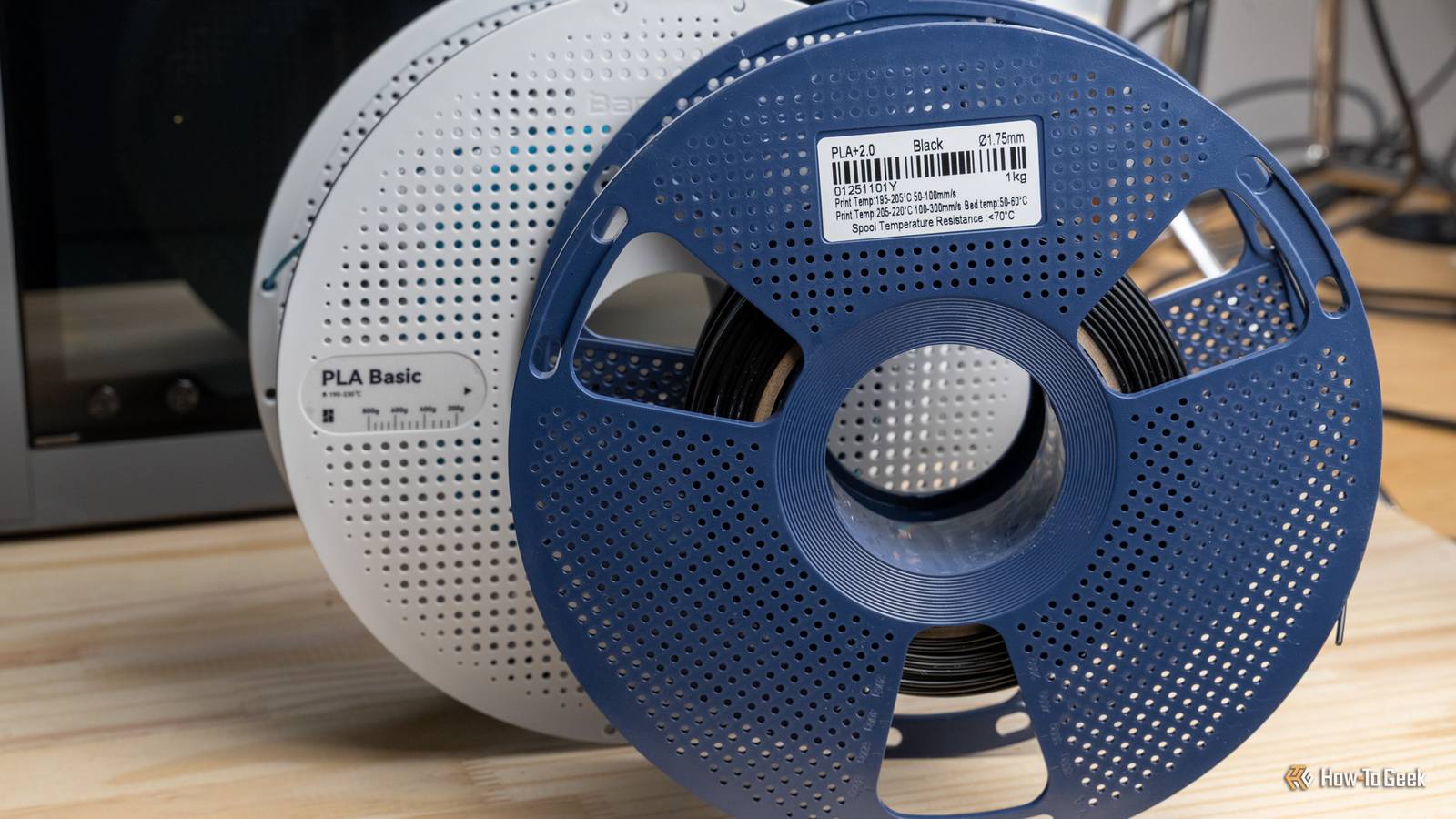
How old is your oldest spool of 3D printing filament, and where do you store it when it’s not in use? The idea that filament might go “bad” over time might seem odd, even though we don’t have the same long-term durability expectations for the items we print.The real question is whether “permanent” damage can occur to filament that makes it virtually impossible to print with.Filament absorbs moisture from the atmosphere Printing quality is affected, but the fix is easy Close Your 3D printer filament absorb moisture from the air, with certain filament types worse than others.
While even PLA and PETG are considered hygroscopic, some filaments like Nylon and TPU are especially thirsty and require proper preparation before using them.One study measures the effects of humidity on filament storage over a 24-hour period.Five PLA filament specimens were stored in a humidity-controlled environment at relative humidity levels of 10%, 30%, 50%, 70%, and 90% and then fed directly from their respective chambers into a 3D printer’s nozzle.
The results support widely held beliefs about storing filament in humid conditions.The mechanical properties of the filaments stored in higher relative humidity were slightly deteriorated, while higher storage humidity was associated with a more porous macrostructure.Impact resistance was also lessened in specimens stored in higher humidity.
Most importantly, the study concludes that the 24 hours spent in higher humidity environments “did not induce molecular degradation,” which means no permanent changes in the filament were observed.The fix here is simple: dry your filament to reduce the amount of moisture that is stored within it and print away.Another study draws similar conclusions, measuring specimens that are exposed to humidity for varying periods of time—from 24 hours to 150 hours.
The specimens that were exposed for the longest were noticeably weaker than the PLA that was stored in a sealed environment with desiccant.Anyone with experience using 3D printers could have predicted these results.Moisture can cause problems with prints, but if you’re mostly printing with PLA, then you might be able to ignore it.
For other filament types, you’re going to have far worse issues than a bit of stringing (spider-web-like surface blemishes), like bed and layer adhesion problems and even extrusion issues.So what about long-term storage? The evidence here is a little more spotty.The long-term effects of humidity on filament are up for debate There are more variables to consider I can’t find any studies that test the long-term effects of storing 3D printer filament in humid conditions.
There doesn’t appear to be any published study on whether permanent changes occur, and what might cause these changes.That said, there are some hints.One adjacent study points to hydrolysis as “the primary degradation mechanism of poly(lactic acid) (PLA) in aqueous media.” This means that water is bad for objects made from PLA if they are submerged for a long time.
This is something that has long been known about PLA: water is bad.UV is also bad, and a combination of the two can spell disaster for your prints.The question is whether storing filament in moderate to high humidity over time can degrade the filament to the point where even drying it out won’t help.
According to that previous study, “during degradation, water molecules diffuse into the polymer matrix and react with ester bonds along the polymer backbone.” If the bonds that hold the filament together are affected by the presence of moisture, this means that damage is permanent.How fast this happens through humidity alone is the real question.Many have shared their thoughts on the matter, which is where we turn to Reddit.
In one thread, there are commenters noting that older filament becomes very brittle, easily shattering to the point where it’s no longer usable (and can cause blockages and bits of filament to get everywhere).The time frame varies from five to ten years, with some noting that the outermost filament can be especially problematic.Drying doesn’t appear to help the most brittle of materials.
Most of these observations relate to PLA, which has both decent humidity resistance greater susceptibility to moisture compared with other filaments.Play it safe and store your filament properly Lock in the freshness There are two schools of thought here.Some suggest that old filament is worth throwing in the dryer and trying anyway, and others warn of the nightmare cleanup scenario that is removing bits of shattered PLA from your hotend’s PTFE tube.
Unopened spools should last for a long time, but once they’ve been opened, they need to be stored carefully for preservation.You can do this with resealable vacuum bags, cereal boxes, and lots of desiccant.For most of us, that isn’t going to be a problem.
But if you’re saving fancy PLA for because you’d rather wait for the “right time to use it,” you might want to reconsider unless you’ve invested in capable storage.Give yourself permission to use even the fanciest filament you own, then save some money on buying more using our top tips.
Read More