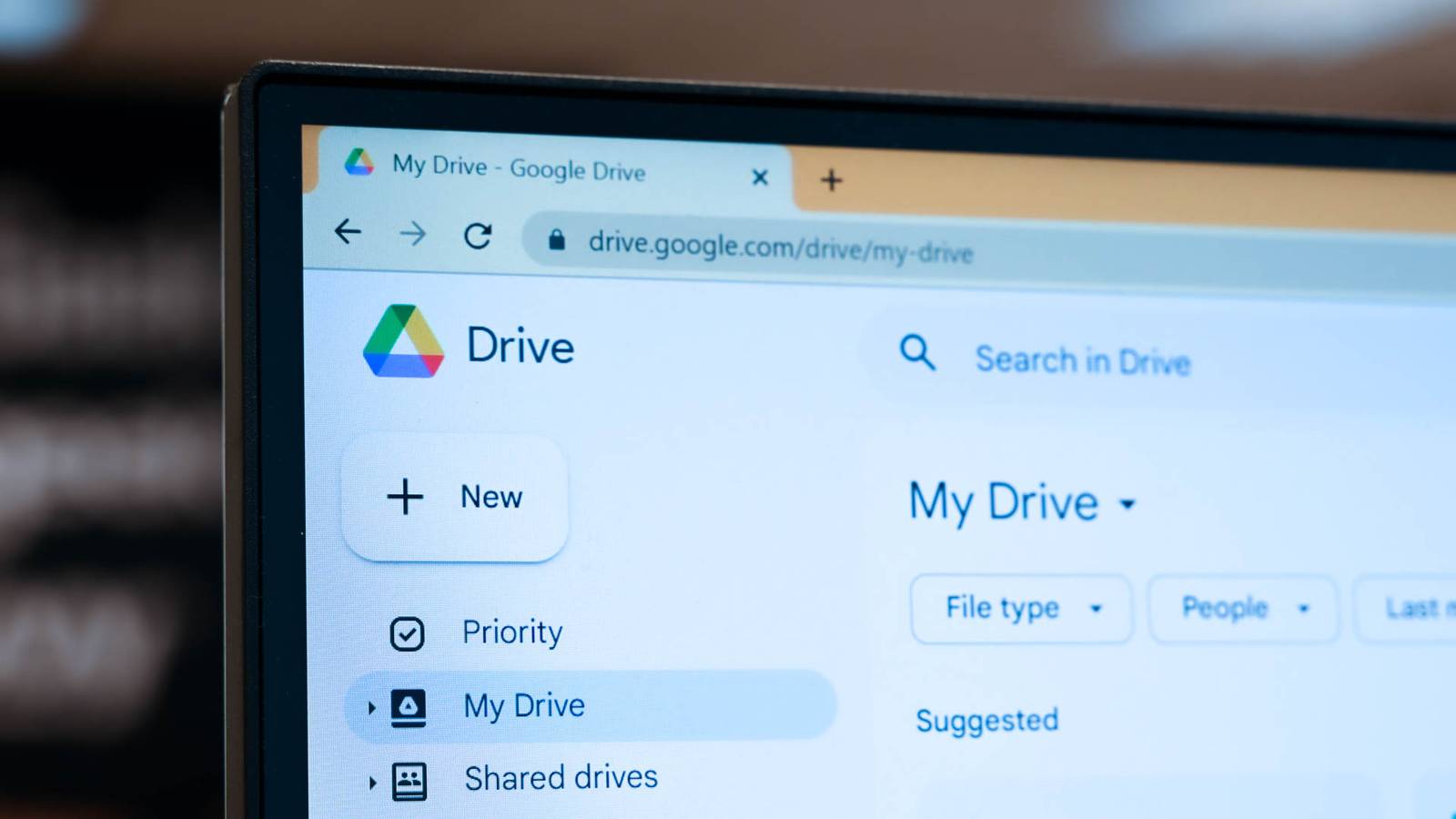
One of my homelab goals was to replace Google Drive.I hate paying Google money.However, the further I got into trying to replace Google Drive, the more I realized that Google Drive was the solution I was searching for—so I realized it was time to embrace Google after all.
Replacing Google Drive was the goal It costs a lot and has way too many storage limitations I've been a heavy Google Drive user for many, many years.In fact, I can't even remember how long I've been a paying Google One or Google Drive subscriber.It has to be close to, if not over 10 years at this point.
First, let's talk about the good parts of Google Drive.It's supported on every major platform out there.It works flawlessly.
Sharing is simple.It's a trusted and feature-rich platform.Really, the main thing not to like about Google Drive is the cost—or the fact that Google owns it.
On the other side of the coin, Google Drive can get pretty expensive.I currently pay $20 per month for 5TB of storage with all of the other Google AI functions that I don't really care all that much about.Another downside to Google Drive is simply that Google owns and runs it.
Google is in control of all your files.They might claim to not look at the contents, but they definitely have the ability to.Google should keep your privacy at the forefront of their mind, but what happens when that's not in its best interest? So, I wanted to get out of Google Drive.
Replace it entirely with my own hardware and software.That shouldn't be too hard, right? I built out a homelab capable of doing everything I needed I have the processing power and storage to do anything I want I have a pretty sizable homelab at this point.With over 150TB of raw data capacity in my homelab, and at least 116TB of that being actually usable spinning disk after redundancy, I have than enough drives to handle my storage needs, right? I definitely do.
I also have more than enough horsepower in my homelab to handle running the servers.I even have a dedicated window air conditioning unit to keep my office cool, dedicated power circuits to handle the load, you name it.So, with all that hardware and storage, I set out to replace Google Drive (and a lot of other services).
I started with Nextcloud, which seemed simple enough.Except, Nextcloud can be a bear to run and maintain.It's fairly simple—until it breaks.
Getting external access set up for Nextcloud is also a bit of an annoyance, but it's doable.So, I got it up and running and started trying to use it.I ran into a few issues with Nextcloud initially, but I eventually ironed them out and tried to use it.
The Nextcloud apps work decently well.They're not Google-tier, but they do work well.The problems started to arise though when I couldn't access my files if my homelab was down.
There was a time when I wasn't at home and needed access to my files—this typically wasn't an issue.The issue came from the fact that my internet was down for whatever reason and I couldn't access my files anymore.I ran into the same problem another time when the power was out at my house and I wasn't there.
With Google Drive, I never had that type of issue.Normally, there was always way to access my files, even if there was a partial internet outage.If the internet was down hard enough that I couldn't access my files on Google Drive at all, then that meant the internet was down for a lot of other services and I just had to wait a bit for it to come back online.
Those two instances started to show me that Google Drive was worth more than just a few dollars for cloud storage—Google Drive also brought reliability that I just couldn't match at home.However, the biggest thing I eventually realized was a single location for my files wasn't nearly sufficient, and that's really what drove me back to Google Drive.UGREEN NASync DXP4800 GT $590 $660 Save $70 9 Brand Ugreen CPU AMD Ryzen Embedded R2514 Memory 8GB DDR4, expandable to 64GB The Ugreen DXP4800 GT is the latest NAS from Ugreen, featuring dual 10Gb Ethernet, two NVMe slots, and a whole lot more.
Shipping with 8GB of DDR4 RAM, you actually can replace it yourself and upgrade it to have up to 64GB of RAM should the need arise.Plus, UGOS continues to mature and is becoming a very solid NAS operating system.$590 at Amazon $660 at Ugreen Expand Collapse Google Drive ended up being the cheaper solution in the end One copy of a file isn't enough, and it costs a lot to store proper backups it turns out I recently tried to move off of Google Drive yet again to cancel my subscription.
I got Nextcloud all spun back up and configured.Then, I started looking into doing things , which I hadn't worried about the first time I tried it.A proper deployment this time meant backing everything up to the cloud in case of catastrophic failure at home.
It's unlikely, but possible.I personally have a friend whose house burned to the ground with everything inside of it.Thankfully nobody was hurt.
I have other friends who have had their houses flood from a burst pipe—and my family also experienced multiple burst pipes when I was a kid.So, to ensure my files would be safe even if there was a catastrophe, I wanted to back everything up to the cloud.I was looking into all of this right when Google changed from offering 2TB of storage for $20 per month to 5TB of storage for $20 per month.
I started running the numbers, and using Backblaze B2 like I was planning on for cloud backups suddenly became a lot more expensive than Google.Backblaze B2 charges $7 per TB of cloud space per month.For 2TB, that's only $14 per month, and I was paying Google $20 for that amount of space.
However, when Google bumped the online storage amount from 2TB to 5TB without changing the price, the per-TB cost went from $10/TB down to just $4/TB—that's 42% less than Backblaze charges.Plus, if I stuck with Google Drive, then I still could have all the same benefits of Google Drive and not have to deal with Nextcloud.So, that's what I did.
I stopped trying to leave Google Drive and just embraced it.I now back up my homelab to Google Drive use it as my normal cloud storage.I have about 3.6TB worth of data stored in Google Drive, which puts me at about 70% utilized.
That's fine though, I can easily trim up my backups so they're not keeping as many revisions in the cloud if I want to.Sometimes the best tool is the simplest solution, even when there are other solutions available What started out as a journey to cancel Google Drive simply made me embrace it more.I really want to stop giving Google my money, but, for cloud backups, it's the best value on the market right now.
Read More