3D printing is a hobby that quickly turns casual observers into enthusiasts.That means it’s easy to get caught up in the excitement and overlook the rougher edges, even if you’re completely taken in by it.3D printing still isn’t as accessible as it could be Lots of learning, lots of trial and error I was curious about 3D printing for many years before deciding to buy a printer.
I’d have probably made the jump sooner if things felt a little more accessible, though I’ll concede that this is an argument you could make about many pastimes.Even with friends wooing me with their Bambu Labs A1s, I’d say 3D printing is still less accessible than other nerdy hobbies like PC building or photography.Perhaps the biggest barrier to entry is the sheer volume of jargon you’ll encounter.
There’s a whole glossary of 3D printing terms that you’ll come across, including abbreviations like FDM and FFF (both of which mean the same thing, which is to say melting filament so that it can be reshaped into 3D prints).You’ll need to understand the different types of printers that are on the market, notably the difference between filament and resin printers, and then you’ve got to pick a model that fits your budget, space constraints, and desired use case.When you’re starting out, this can all feel very overwhelming.
Like any hobby, 3D printing isn’t for everyone, and that’s ok.Some people manage to find ways to use 3D prints all over their house, while others see their printer sitting unused for months on end without hobbies or interests that facilitate its use.Like any hobby, the more you learn, the better you get.
3D printing is a lot like the aforementioned PC building and photography in that there are techniques to master and tricks to learn that will bring you greater success and deepen your understanding.These range from learning to build support structures to prevent your prints from warping, picking the right filament for the job, and basic maintenance.3D prints can look bad, to outsiders Expectations don't always line up with reality The majesty of being able to design and fabricate an item at home from a variety of materials is what draws people to the world of 3D printing.
You can design your own items or piggyback the work of others and, in a few hours and for a few dollars' worth of spaghetti or goop, have your own physical item at home.It’s amazing.But in a world where we’re utterly spoiled by modern manufacturing processes like injection molding, which produce perfect items that we simply throw away after a couple of uses, 3D prints can look rough.
This says more about broader manufacturing processes than 3D printing.The first time I saw an item produced on an FDR printer, my initial thought was “what’s with the lines?” It’s unreasonable to expect a 3D printed item to be of the exact same quality as something that was produced using a completely different process and at far greater material cost.Given the opportunities that 3D printing unlocks, layer lines are easy to live with.
Just don’t expect everyone to be blown away by the utility of the process on first glance.Related I 3D printed my own smart display because Google's wasn't good enough When the product you want doesn't exist, make it yourself.Posts 1 By Joe Fedewa There are health risks to be aware of Air quality, heated elements, and more 3D printers are relatively new inventions, which means there are no long-term studies looking at the health implications of spending lots of time around them.
One thing that’s for sure is that resin 3D printers generally require more care and attention to operate safely compared with filament.This includes the use of personal protective equipment (PPE) like gloves and respirators, adequate ventilation to prevent harmful gas buildup, the washing of prints in isopropyl alcohol and soapy water to remove excess print material, and prolonged exposure to UV rays to cure prints so that they can be safely handled.There is also evidence to suggest that filament-based printers could pose health risks.
These printers are known to produce ultrafine particles (UFPs) and volatile organic compounds (VOCs).Different filaments, such as ABS, may be more dangerous to work with than the ubiquitous “default” material, PLA.Filaments that require higher temperatures appear to produce more emissions.
Those concerned should consider enclosed printers that use filters, ensure that any print spaces are adequately ventilated, and ideally place printers away from living areas.FDR printers also use very hot nozzles to melt filament, so taking care to avoid burns by using gloves when handling parts is essential.Improperly stored filament will ruin your prints And the meaning of "improper storage" can vary Close FDR printing involves melting filament and reshaping it layer by layer to print an item.
This filament is hygroscopic, which means that it absorbs water from the environment.Storing your filament in a humid environment means that it will absorb a lot of water from the air.For best results, your 3D printing filament should be stored in a dry environment with a humidity of 20% or less.
Moisture is the enemy of a good 3D print, since filament that has too much water content can result in issues like stringing (where thin strands are drawn between two points), poor adhesion (where layers come apart), quality issues with the print surface, and increased risk of failed prints.Throwing your 3D printer filament on an open shelf in your garage isn’t good enough unless you live in a desert.A moisture-controlled environment with a dehumidifier in it is best; alternatively, some sealed bins that are full of desiccant like silica gel should work on a budget.
For the absolute best results and especially in humid environments, investing in a filament dryer is a good idea.These are essentially small spool-shaped heaters that suck the moisture out of the print material.Some people even use plain old dehydrators for this.
Quiz 8 Questions · Test Your Knowledge3D Printing TechnologyFrom garage prototypes to printed organs — test how much you really know about the layer-by-layer revolution reshaping our world.HistoryMaterialsMedicineIndustryFuture TechBegin 01 / 8HistoryWho is widely credited with inventing stereolithography (SLA), the first commercially viable 3D printing technology?AScott CrumpBHans LangerCChuck HullDCarl DeckardCorrect! Chuck Hull invented stereolithography in 1983 and co-founded 3D Systems to commercialize it.He filed the patent in 1984, laying the groundwork for the entire 3D printing industry as we know it today.Not quite — the answer is Chuck Hull.While Scott Crump invented FDM (fused deposition modeling) and Carl Deckard developed SLS (selective laser sintering), it was Hull who pioneered stereolithography and effectively launched the commercial 3D printing era.Continue 02 / 8HistoryIn what decade was the term 'additive manufacturing' first officially standardized by ASTM International?A1990sB2000sC2010sD1980sCorrect! ASTM International formally standardized the term 'additive manufacturing' in 2009 and published comprehensive standards in the early 2010s.
This helped unify the industry under a single technical definition covering all layer-based fabrication methods.Not quite — the standardization happened in the 2010s.Although additive manufacturing processes existed since the 1980s, ASTM International didn't formalize the terminology and technical standards until around 2009–2012, giving the industry a common language for the first time.Continue 03 / 8MaterialsWhich material is most commonly used in consumer-grade FDM (Fused Deposition Modeling) 3D printers?AABS (Acrylonitrile Butadiene Styrene)BPLA (Polylactic Acid)CPETG (Polyethylene Terephthalate Glycol)DNylonCorrect! PLA is the most popular material for hobbyist and consumer FDM printers because it's easy to print, biodegradable, and derived from renewable sources like cornstarch.Its low warping tendency makes it beginner-friendly compared to alternatives like ABS.Not quite — PLA is the correct answer.
While ABS was once dominant, PLA has overtaken it in the consumer space due to its ease of use, lower print temperature, and eco-friendly origins.ABS remains popular in industrial settings where heat resistance matters more.Continue 04 / 8IndustryWhich aerospace company famously used 3D printing to manufacture the fuel nozzle for its LEAP jet engine, reducing part count dramatically?ARolls-RoyceBPratt & WhitneyCGE AviationDHoneywell AerospaceCorrect! GE Aviation used metal 3D printing to produce the LEAP engine's fuel nozzle, consolidating what was previously 20 separate parts into a single printed component.The nozzle is five times more durable and 25% lighter than its predecessor, making it a landmark industrial achievement.Not quite — it was GE Aviation.
Their 3D-printed LEAP fuel nozzle became one of the most celebrated examples of additive manufacturing in industry.By collapsing 20 parts into one, GE demonstrated that 3D printing could deliver real performance advantages, not just prototypes.Continue 05 / 8MedicineWhat is the term for the 3D printing process used to fabricate living tissue and organ structures using biological materials?ABiofabricationBBioprintingCBioformingDOrganogenesis printingCorrect! Bioprinting uses modified 3D printers loaded with bioinks — mixtures of living cells and hydrogels — to construct tissue structures layer by layer.Researchers have already bioprinted skin, cartilage, and simple vascular structures, with full organ printing remaining an ambitious frontier goal.Not quite — the correct term is bioprinting.
While biofabrication is a broader field that includes bioprinting, the specific process of layer-by-layer fabrication using cell-laden bioinks is called bioprinting.It's one of the most exciting medical frontiers, with potential to one day eliminate organ transplant waiting lists.Continue 06 / 8IndustryWhat major limitation of most consumer FDM 3D printers makes them unsuitable for printing functional metal parts directly?AThey cannot achieve the temperatures needed to melt most metalsBMetal filament clogs the extruder permanentlyCMetal objects printed with FDM have no structural integrityDConsumer printers lack the resolution for metal detailCorrect! Most metals require temperatures well above 1000°C to melt, far beyond the 200–300°C range of standard FDM hot ends.Industrial metal 3D printing uses processes like DMLS (Direct Metal Laser Sintering) or EBM (Electron Beam Melting), which use high-powered lasers or electron beams to fuse metal powder.Not quite — the core issue is temperature.
Consumer FDM printers top out around 300°C, while most structural metals melt well above 1000°C.Metal-infused filaments exist but they contain metal powder in a plastic binder, producing decorative rather than truly functional metal parts.Continue 07 / 8Future TechWhich emerging 3D printing technology can fabricate objects in seconds by projecting light into a resin vat, rather than printing layer by layer?AContinuous Liquid Interface Production (CLIP)BVolumetric printingCMulti-jet fusionDBinder jettingCorrect! Volumetric printing, pioneered by researchers at UC Berkeley and Lawrence Livermore, projects computed tomography-style light patterns into a rotating resin vat to solidify an entire 3D object simultaneously.It's dramatically faster than layer-based methods and can even print around pre-existing objects.Not quite — the answer is volumetric printing.
While CLIP (developed by Carbon3D) does eliminate discrete layers using oxygen-permeable membranes for speed, it still builds objects progressively.Volumetric printing is the technology that truly breaks the layer-by-layer paradigm by solidifying an entire shape at once.Continue 08 / 8HistoryThe RepRap project, launched in 2005, was significant to 3D printing history primarily because of what key innovation?AIt introduced the first color 3D printerBIt created the first open-source, self-replicating 3D printerCIt developed the first metal-compatible consumer printerDIt was the first printer to use PLA filamentCorrect! The RepRap (Replicating Rapid Prototyper) project, led by Dr.Adrian Bowyer at the University of Bath, aimed to create an open-source printer that could print most of its own parts.
This philosophy sparked the DIY 3D printing revolution and directly led to affordable consumer printers like the early Makerbot and Prusa machines.Not quite — RepRap's big contribution was being open-source and self-replicating.By releasing designs freely and building a machine that could reproduce itself, Adrian Bowyer's project democratized 3D printing.It seeded an entire ecosystem of affordable printers and passionate maker communities that transformed the technology from industrial to personal.See My Score Challenge CompleteYour Score/ 8Thanks for playing!Try Again 3D printing can be wasteful That leftover plastic wasn't free Failed prints are something you’re going to encounter from time to time.
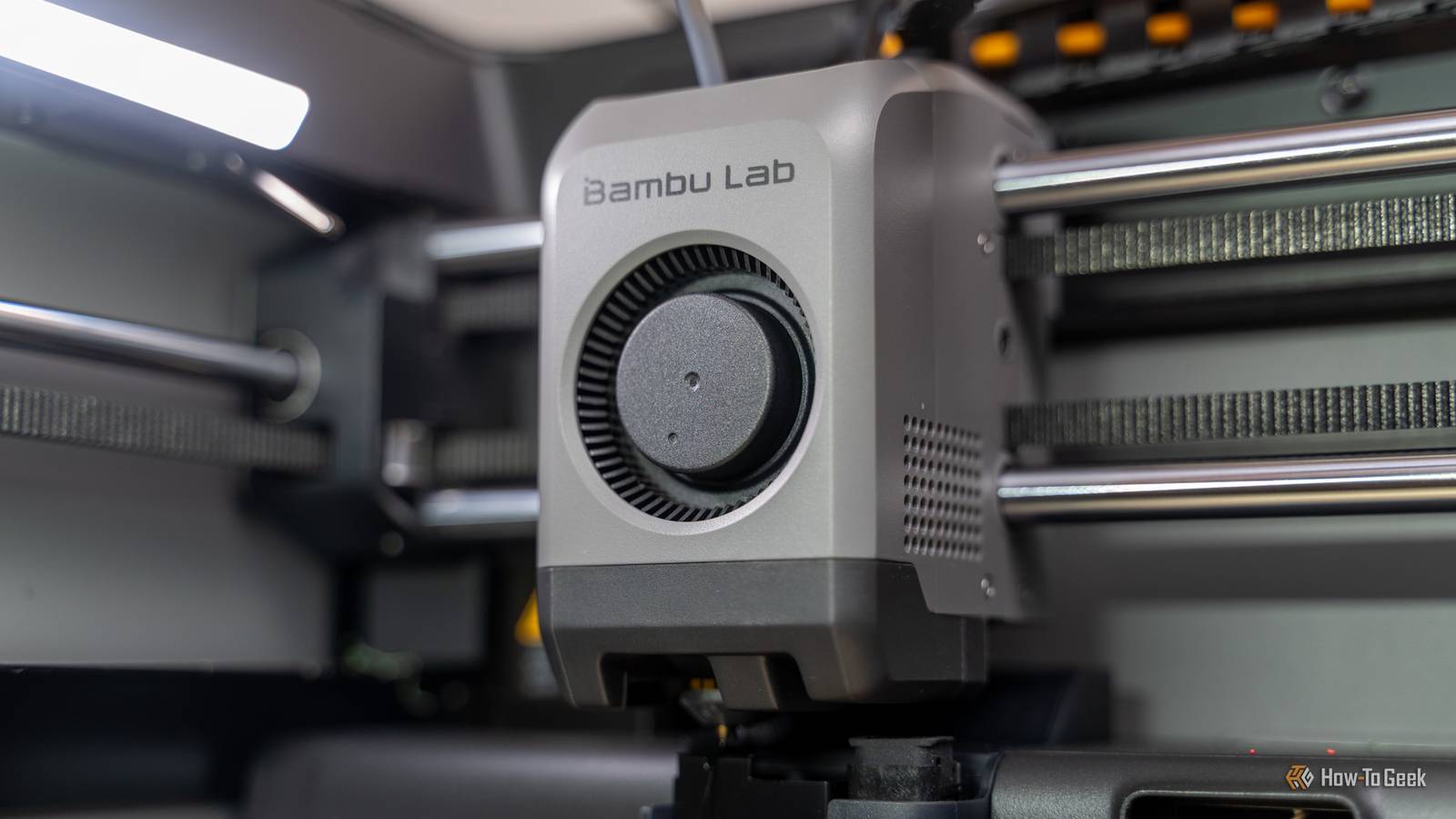
Once a print has failed, you’ll have little option but to throw it out and start again.Durability problems with the items you print can also lead to disappointingly short life spans, a problem that can be mitigated by picking the right material for the job (avoiding PLA if your item is going outside, for example).Some printers allow you to print in multiple colors and materials using attachments like Bambu Lab’s AMS and Prusa’s MMU.
In order to transition from one material to the next, the line must be cleared, which means wasting a small amount of filament between transitions.Thankfully, this problem is in the spotlight with Bambu Lab announcing the Vortek Hotend Change System for an upcoming printer, which should greatly cut down on waste and hopefully spark similar efforts from rivals.Resin printing requires the use of solvents like isopropyl alcohol, and you’ll eventually need to evaporate the solvent in order to dispose of the leftover resin responsibly after printing.
A failed resin print can require that you dispose of a whole “bath” of resin.Whether it’s resin or filament you’re printing, all of this material costs money.There’s another side to the “waste” argument, which is that using a 3D printer to design something that solves a specific problem or print a part that extends the lifespan of an existing product is the opposite of wasteful.
Just be aware that you’ll probably encounter plenty of failed prints and printer “poop” along the way.Don't be discouraged if you struggle on day one None of this advice is designed to put anyone off buying a 3D printer, but rather serves as a heads-up to some of the problems newcomers and veterans alike should be aware of.
Read More