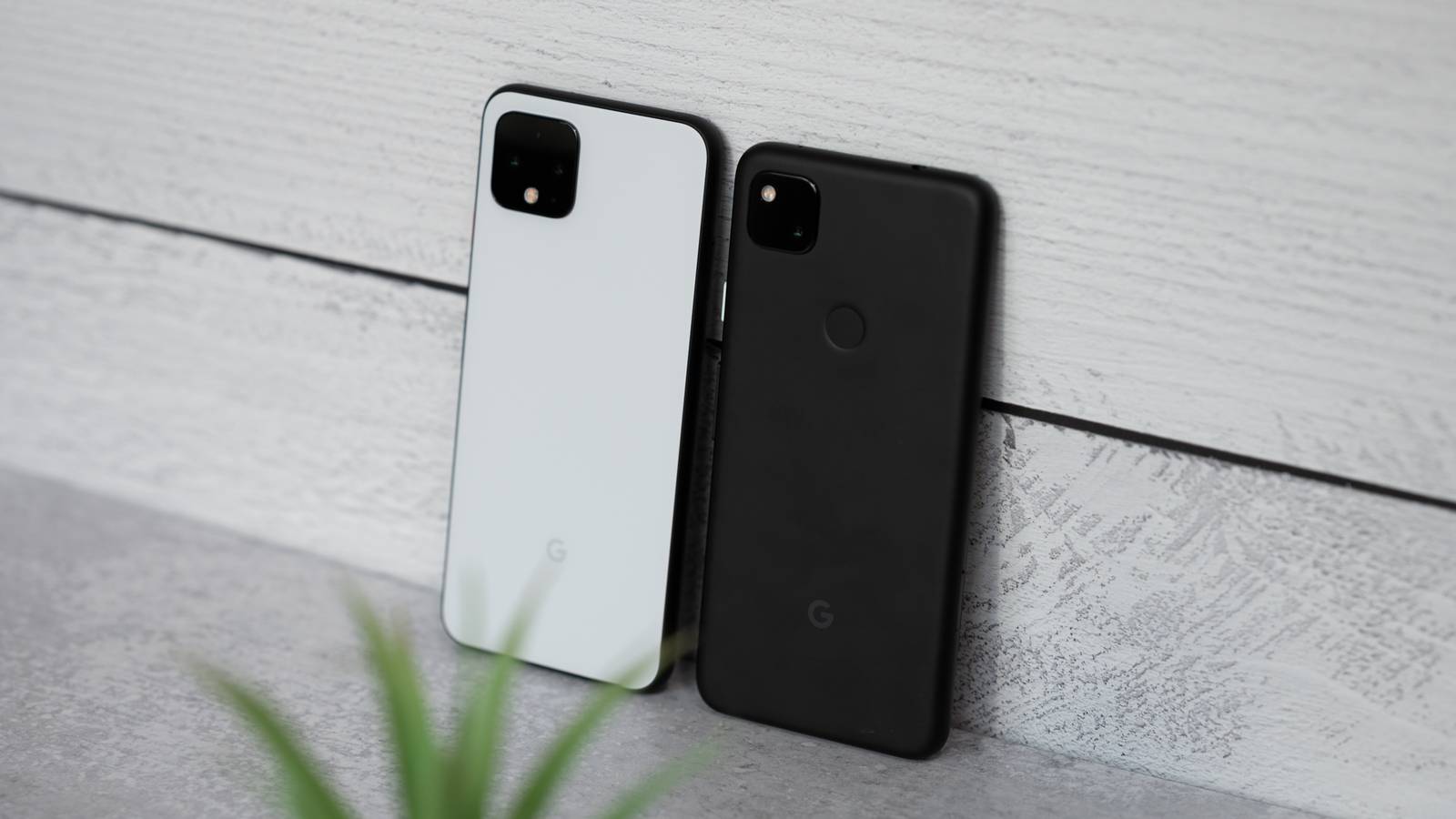
Seven years ago, Google introduced a more affordable series of Pixel phones, and we've seen 10 models since.The whole point of the lineup, at least to me, has been to give people the Pixel experience without the flagship price tag—and that's the basis on which I ranked them.This list is not a ranking of which Pixel A-series phone is the most powerful.
That would be a boring list, because the answer is always “the newest one.” Technology moves forward, chips get faster, cameras get better, and the latest A-series phone will always beat its predecessors on a spec sheet.Pixel 7a It did almost everything right, except the pricing Close The Pixel 7a introduced a lot of “firsts” for the A-series.It was the first in the series to get wireless charging.
It was the first to get a higher-refresh-rate display, matching the base Pixel 7’s 90Hz.It was also the first A-series phone to match the base model’s performance outright—with the same Tensor G2, 8GB of RAM, and 128GB of UFS 3.1 storage.It even had a higher-megapixel main camera than the Pixel 7, with a 64MP sensor compared with the base model’s 50MP.
Granted, the Pixel 7’s 50MP sensor was physically better, so photos generally came out nicer on the base model.But the 7a’s camera was still genuinely good.So why is it dead last? Well, because it made zero sense to buy.
The Pixel 7a launched at $499, compared with the Pixel 7’s $599 launch price.That’s only a $100 gap to begin with.But the 7a came out in May 2023, when the Pixel 7 was already six to seven months old and regularly selling for $449 to $499.
You could walk into a store and buy the objectively better phone for the same price, or less.Pixel 10a Google's laziest budget phone yet Close The Pixel 10a is just as pointless as the Pixel 7a, but for a different reason.Here, you do see a healthy $300 price difference between it and the base Pixel 10, so nobody’s getting undercut by their own sibling this time.
However, the problem is that the Pixel 10a is basically the Pixel 9a with some touch-ups.It has the same processor, the same RAM, the same storage, the same camera setup, and almost the same display specs.And since the Pixel 9a was already a year old when the 10a launched, you could basically get the discounted older model and have an almost identical user experience.
I have no idea what Google was thinking when it launched the Pixel 10a.Related People are leaving Google Pixel and I finally understand why It’s not us, Google.It’s you.
Posts 70 By Ismar Hrnjicevic Pixel 5a It was the midrange alternative to an already midrange phone Close The whole Pixel 5 generation was weird.The Pixel 5 itself wasn't even a flagship—it was a midrange phone with midrange specs, priced at $699.So having a midrange version of the Pixel 5 didn't really make sense.
Even so, the 5a launched at $449, which was $250 less than the base model's launch price.Even with the Pixel 5 being a year old and discounted, the 5a still usually undercut it by $50 to $100.And you got nearly identical specs: the same Snapdragon 765G and the same camera.
The compromises were a 60Hz display instead of 90Hz and 6GB of RAM instead of 8GB.It also had a full aluminum build and was the first A-series Pixel with an IP rating, which was genuinely nice.So it made some sense—until you remembered that the Pixel 4a 5G (not to be confused with the Pixel 4a) was still in circulation.
That phone was practically the same device as the 5a, minus the aluminum build.And being a year old at that point, it was selling for around $350 to $400.In my book, that made the 4a 5G the better deal and the 5a mostly redundant.
Pixel 6a Good, but not without its trade-offs Close The Pixel 6a is the first phone on this list that actually felt worth recommending.At $449, it was $150 cheaper than the base Pixel 6, and even six months after the 6-series launched, with discounts factored in, the 6a still came out cheaper than the base model—albeit not by a dramatic margin.However, more importantly, the Pixel 6a was the first A-series phone to have a flagship-level chip.
You got the same Tensor G1 as the base models—Google's first custom SoC for the Pixel lineup.It technically lagged behind the Snapdragon 8-series flagship chips of the time, but it was flagship-class in its own right, and day-to-day use was buttery smooth.It comfortably outperformed the Snapdragon 7-series and 6-series chips in the older A-series phones.
The primary compromises were the RAM—6GB versus the regular models' 8GB—and the camera.The 6a carried over the same 12MP main sensor the Pixel line had been using for the last six generations, and it was starting to show its age.In fact, that's exactly why the base Pixel 6 moved to a new 50MP sensor.
This made the 6a the first A-series phone with a steep camera-quality drop compared with its own generation, which stings given the A-series' roots.Pixel 9a A different kind of value proposition Close The Pixel 9a is where the A-series started carving out a new identity.Up through the Pixel 6 generation, the A-series was about giving you the same camera as the flagship.
After that, it became about giving you the same performance.Starting with the 9a, it became about delivering the core software experience at a cheaper price.With a $300 gap between the 9a and the base Pixel 9, you got the same Tensor G4 processor, but RAM dropped from 12GB to 8GB.
It was plenty for almost all smartphone tasks, but not for modern on-device AI features.However, that’s not necessarily a bad thing because a whole section of users genuinely doesn't care about AI.For them, this is a win-win as you're cutting a few hundred dollars off the price for features you never wanted.
The design also took a big pragmatic shift.Instead of mimicking the look of the base model, the 9a came with a more minimal design, with the camera module completely flush with the back.The lack of a camera bump meant the phone could lie flat on your desk without any wobble.
And they did this by making the phone slightly thicker, which allowed for extra room for a bigger battery—another trade most people would take any day.The main compromise was the camera.The 9a's 48MP main sensor is a step-down not just from the 9-series, but from the 8a's 64MP sensor too.
However, when you factor in that the base Pixel 10 came with the same 48MP main sensor the following year, it suddenly doesn't seem like such a bad deal.Related Google is turning the Pixel's best features into a subscription trap One of the best reasons to buy a Pixel is increasingly out of reach.Posts 79 By Nick Lewis Pixel 8a Nearly identical with a meaningfully cheaper price tag Close The Pixel 8a continued the same trend as the 7a, with near-identical hardware to the base model.
You got the same Tensor G3, the same 8GB of RAM, the same 128GB of UFS 3.1 storage, and the same 120Hz OLED display—basically the same core experience.It did have a weaker 64MP camera compared with the base model’s better 50MP sensor, but it was still good enough.So why does it rank so much higher than the 7a? Well, the 8a launched at $499, which was a $200 gap from the Pixel 8's $699 launch price.
So, even though it launched six months later and there were discounts on the Pixel 8, the 8a was still $50–$100 cheaper.Furthermore, I just felt it looked better than the regular Pixel 8.The 8a had a bubbly look, with more rounded corners, and that Aloe color variant just looked stunning.
That design choice was enough, at least for me, to tip the scales in favor of the 8a.Related You shouldn't own a Google Pixel if you aren't using these 6 exclusive features Pixel phones are brimming with useful exclusive features you ought to be using.Posts 19 By Goran Damnjanovic Pixel 3a and 3a XL The phone that proved budget didn't mean lesser The Pixel 3a and 3a XL are where it all started.
They were the first A-series phones, built around delivering the best of Google Pixel at an affordable price.The base Pixel 3 launched at $799, while the 3a came in at $399—a $400 gap.The Pixel 3 XL launched at $899, while the 3a XL cost $479—a $420 gap.
And crucially, both A-series phones had the exact same camera as the flagships.As such, if cameras were your primary reason for buying a smartphone, these were the phones to get.The downgrade was in the silicon.
The mainline models ran the flagship Snapdragon 845 with 64GB of UFS 2.1 storage, while the 3a duo got a Snapdragon 670 and slower eMMC 5.1 storage.So no, they weren't as snappy, and demanding games were off the table.But for day-to-day use, they were perfectly fine.
Pixel 4a and 4a 5G A masterclass in value Close And at number one, the Pixel 4a generation—which took everything great about the 3a lineup and did all of it better.First, the Pixel 4a had the biggest price gap between a base Pixel and its A-series counterpart.The Pixel 4 launched at $799, while the 4a launched at $349.
That's a $450 difference, and you still got the same main camera setup.On top of that, while the Pixel 4 ran the flagship Snapdragon 855, the 4a came with the Snapdragon 730G—an upper-midrange 7-series chip and a clear step up from the 3a's 6-series chipset.It also ditched eMMC storage for UFS 2.1.
So, compared with the 3a, the cost-to-performance ratio was through the roof.The Pixel 4a 5G was the larger sibling, and it too was a phenomenal deal.At $499 compared with the Pixel 4 XL's $899 launch price, you were looking at a $400 gap.
For that, you got the Snapdragon 765G SoC, the same 6GB of RAM, UFS 2.1 storage, and the same main camera module.And here's what makes it even more compelling—when the Pixel 5 launched, it too came with the same Snapdragon 765G and the same camera module the 4a 5G was already using.So the 4a 5G wasn't just a cheaper alternative to its own generation's flagship—it was a cheaper alternative to the generation's mainline phone, too.
Google really cooked with this generation.Related The 9 best Google Pixel exclusive features, ranked Some Pixel exclusives are so good they're a dealbreaker.Others just feel like Google experimenting with ideas.
Posts 12 By Dibakar Ghosh Do you agree with these rankings? So there you have it—every Pixel A-series phones, ranked.I tried to be as unbiased as possible here, but inevitably, the things I value more—e.g., camera quality over raw performance—did influence my rankings.I can absolutely see a world where the Pixel 8a or 9a takes the number one spot instead of the 3a and 4a.
So I'd genuinely like to know: How would you rank the Pixel A-series phones?
Read More