Most devices you use in your smart home are designed to do specific jobs.That doesn't mean that you can't make these devices do more than they were intended to do.There are some clever Home Assistant projects that can help you get more out of the devices you already own.
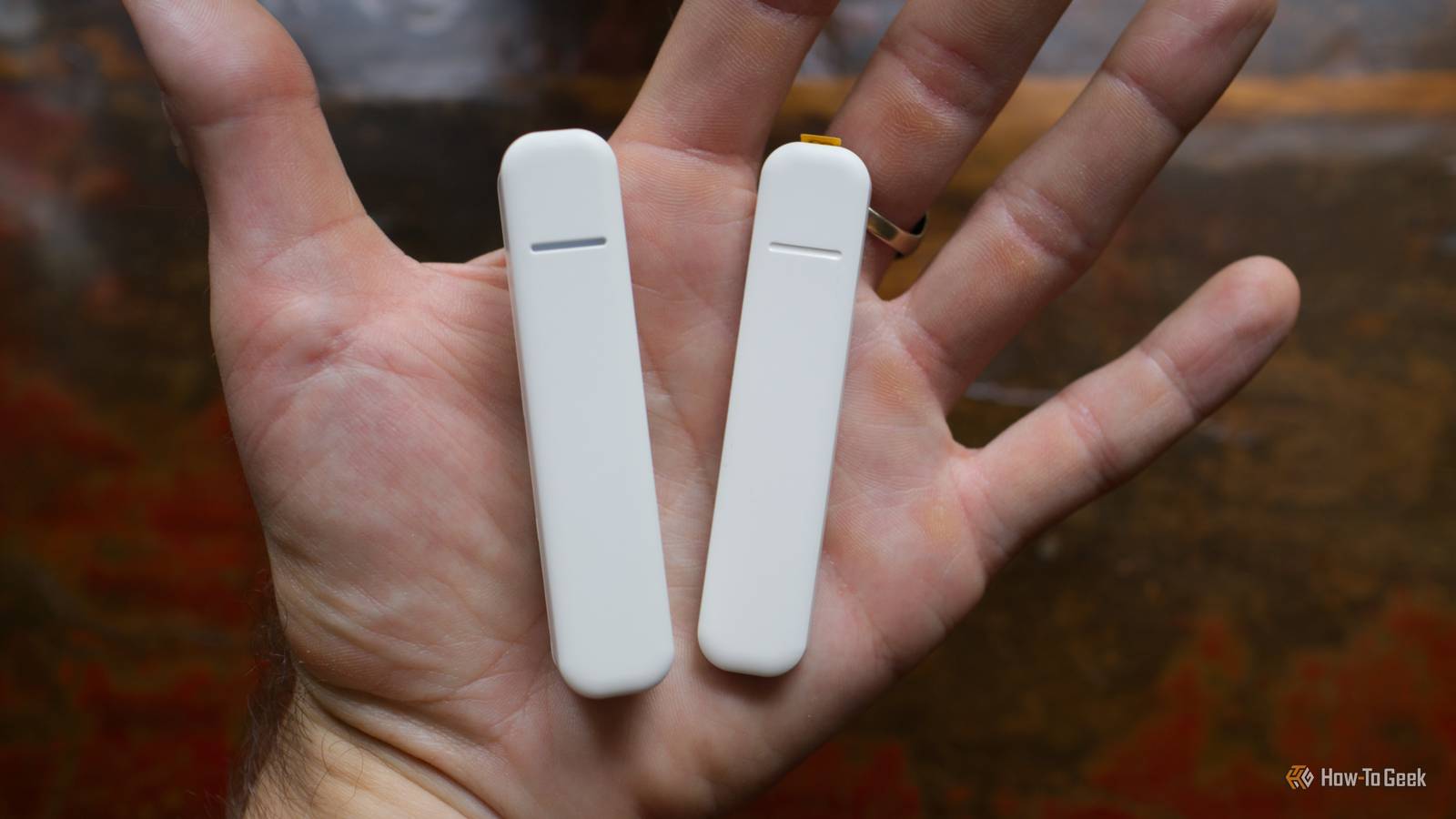
Put contact sensors where they normally wouldn't fit Bring your own magnets Close This is such a simple idea that I'm annoyed that I didn't think of it.Many contact sensors work on the same simple principle.There are two parts to the contact sensor: one that contains a reed switch, and one that contains a magnet.
When the two components are far apart, the reed switch stays open.When they're brought close together, such as by shutting a door or window, the magnetic field causes the contacts inside the reed switch to close, which changes the state of the sensor.The problem is that the magnetic half of many contact sensors can be quite bulky.
There are plenty of places around my home where I can't fit contact sensors because I can't manage to squeeze the magnetic part into the available space.One clever Home Assistant user posted on Reddit something that is obvious in hindsight: you don't have to use the contact sensor's magnet at all.You can use any magnet that's strong enough to close the reed switch when it's close by.
This means you can ditch the other half of the contact sensor and stick a slim magnet in its place.This allows you to put contact sensors in places where you wouldn't have been able to fit them before.You can even drill a small hole for a magnet and have it flush inside a door frame or door.
MYGGBETT Door/window sensor Compatibility Matter-enabled Colors White These smart sensors are incredibly cheap and offer all sorts of uses.$8 at Ikea Expand Collapse Turn a vintage tape deck into a media controller Bring dead tech back to life I think this might be one of the coolest Home Assistant projects I've seen in a long time.I'd experimented with turning the volume knob of my old hi-fi into a smart home control, because the knob just feels so good to turn.
This takes a similar concept to a whole new level.A Home Assistant user bought a broken 1980s Technics tape deck for $40.They decided to turn it into a retro controller for a Sonos speaker.
The plan was to use ESP32s to interface with the buttons and toggles, use rotary encoders for the volume knobs, and expose everything to Home Assistant.Within a couple of weeks, the user was back on Reddit, posting a video of their now-working retro music controller.Pressing play starts the music (with a small pause), with the tape counter rotating as music plays.
The volume can be controlled with the beautiful rotary knobs.Pressing the FF/cue button skips to the next track, and the tape select switch can be used to select which zones the music plays in.The volume for different zones can be controlled with separate knobs.
The thing I love the most is that the VU meters even work.It's honestly a thing of beauty and makes me really want to build one.You're probably not going to finish this project in a weekend, but you might be able to get the basics working.
Related The best smart home sensors are the ones you'll never see Your smart home doesn't need to look like one.Posts 1 By Tim Brookes Repurpose a roller blind motor to shut your door Paintbrush not included One of the biggest problems with smart locks is that you can't lock a door remotely if the door isn't shut.A smart lock can turn the lock, but shutting the door is all on you.
If only there were a way to automate shutting your door.Well, one clever Home Assistant user has done exactly that by repurposing some tech that they already owned.The project was built using a smart roller blind motor that can remotely open or close a blind.
Instead of the motor rotating multiple times to turn the cord of the blinds, the motor only rotates through 90 degrees.The user connected the motor to a small paintbrush, so when activated, the brush moves from vertical to horizontal, pushing the door just enough to close it.Eventually, they upgraded to a 3D-printed lever rather than a paintbrush, but the basic concept is still the same.
The motor rotates, and the arm pushes the door.As the user points out, these roller blind motors have the potential to be used in a wide variety of ways.With a 3D-printed rack and pinion, for example, the rotation of the motor could be turned into lateral movement, giving you even more control.
Your smart home devices may be more useful than you think These are just three examples of taking devices designed for one purpose and using them in new and innovative ways.Before you make your next smart home purchase, it's worth considering whether you could do the job with devices you already own.
Read More