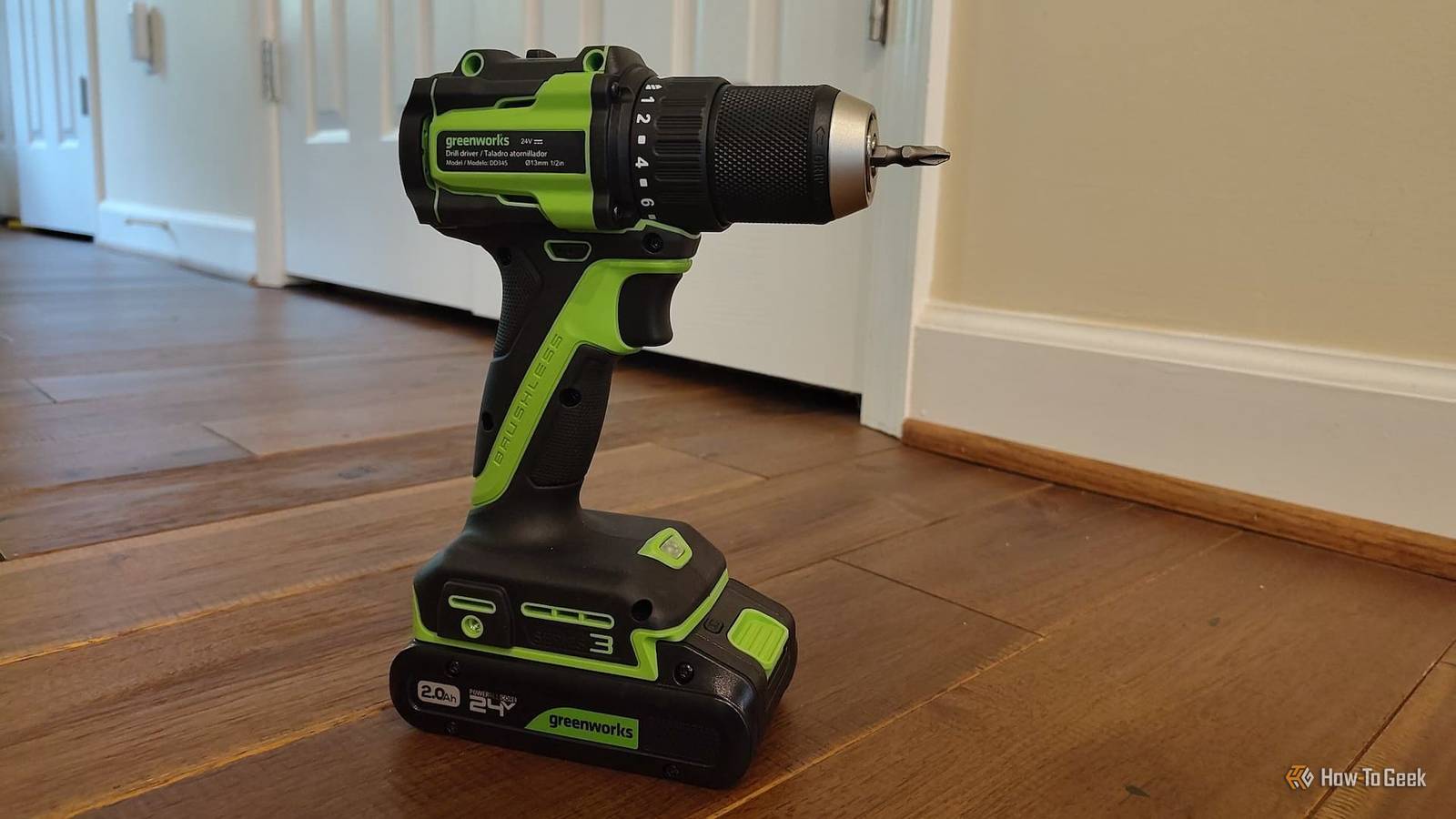
I've always dreaded turning on my car and getting nothing but that dry click from the battery.When nobody is around to give you a jump, scrolling through quick internet hacks sounds tempting, but don't be fooled.People post clips making power tools look fast and harmless, but rigging them together can damage what's actually under the plastic casing.
How tool power flows into your car battery Voltage differences are bigger than you'd think Close The thing about cordless batteries is that they store electricity just like a car battery does.Your typical 12-volt car battery packs six lead-acid cells in a series of strings, and when it's fully charged, it sits somewhere around 12.6 to 12.8 volts.While the engine's running, the alternator holds it up at 13.8 to 14.4 volts.
Most cordless packs with an 18V or 20V Max sticker on them are really lithium-ion cells wired in a five-cell series string.That 18V number is the nominal working voltage of those five cells at 3.6 volts apiece, and 20V Max is the peak you'd measure right off the charger at 21.0 volts, when every cell is resting at 4.2 volts.To get how these two things work together, you've got to know about voltage, current, and stored energy.
Voltage is the pressure pushing electricity between two points.Hook a fully charged 21-volt tool pack to a dead car battery sitting near 10.5 volts, and you've instantly got roughly a 10.5-volt difference between them.Current is just how quickly charge moves through a circuit.
A starter motor in a car demands a giant surge to spin the engine.A drill battery is made for far smaller continuous draws, and its internal battery management system (BMS) is only built to protect its cells from tool-sized loads.Cranking an engine is a whole different story.
Stored energy is the total capacity measured in watt-hours.A drill pack carries nowhere near the total energy a car battery does, but it does hold enough energy to dump a quick burst of charge.That gap in electrical pressure is the whole reason those TikToks work at all.
Wiring the tool pack to a dead car battery doesn't run the starter directly.What happens is the tool pack sits at a much higher voltage than the drained lead-acid battery, so it acts like a quick, short-lived charging source.That 10.5-volt difference shoves current out of the lithium cells and into the lead-acid battery over a few minutes.
Once the car battery soaks up enough energy to bring its voltage back up, it can hand over the big current burst you need to actually turn the engine.It only looks like it works, though.Under the hood, you could be doing a lot of damage.
A lot can go wrong during a jump attempt Real jump starters come with actual safety switches Anytime you use a battery in a way it wasn't meant to be used, you're asking for electrical and chemical reactions you can't control.The second you bridge a fully charged tool pack to a dead car battery with jumper wires or some improvised pins, you get an enormous current spike.That gap between the 21-volt pack and the 10.5-volt dead battery is huge.
There's so little resistance in the cables and batteries that the current can shoot way past safe levels.That sudden flood of electricity forces the car battery's plates into overdrive and throws off serious heat at every connection point.What the tool pack's battery management system does here depends on how you hooked things up.
Tool packs carry BMS circuits that kill the current once it passes their above-current limit, usually somewhere between 30 and 80 amps, and they also shut down when the cell voltage drops too low.During a jump attempt, a well-built BMS might just see the overload and cut out completely.The trouble is, plenty of tool packs leave their main terminals exposed, or the protection circuitry lives inside the tool body instead of the pack.
Wire straight to those terminals with jumper cables and you've skipped every safety control.Nothing's left to cap the current or keep an eye on heat.There are too many variables going on to do any of this safely.
Dedicated jump starters that you buy at the store have proper safety systems built in, so this is never an issue.They come with smart clamps that won't send current if you hook them up backward.The clamps also stay dead until they're properly connected, so you don't get sparks, and there's overcurrent protection to keep your car's electronics safe.
Online success videos hide the true damage Ruined gear costs more than the shortcut saves One of the worst excuses to do anything is "it worked fine for me." Under the right conditions, when everything works perfectly, sure, it will work.But the success stories you find online are a classic case of survivorship bias.People post the wins, never the times the battery got wrecked, or things went wrong.
Those videos also tend to get filmed under perfect conditions.You don't see the wear piling up inside the cells, or what happens on a bad day.Sometimes they just show the car turning on, and not that it died ten seconds later or caught fire.
Social media doesn't show you everything, just the stuff that gets you to click.If you're stranded and a tool battery is your only hope, it's worth a shot.Otherwise, it's not worth risking the damage when you could just call your insurance company for a jump.
There's a time and place, but it's rarely going to happen to you You might pull this off once in a true emergency, but you're trading a cheap roadside wait for ruined gear and melted wiring.Tool packs are built to run circular saws and drivers, not to dump raw current into a dead car battery.Waiting for a real service vehicle to show up is boring, but keeping your car and yourself safe is worth the extra half hour.
Read More