Matter is a cross-platform protocol that promises a fuss-free future full of devices that work with major proprietary and open-source smart home systems.So far, the vision has yet to be realized.If you’re new to this smart home thing, you might want to hold off on Matter for a bit longer.
What’s (the) Matter? An idyllic smart home vision Matter is a smart home technology that is designed with the cross-platform smart home future in mind.All major proprietary smart home platforms are on board (including Google, Amazon, Apple, and Samsung), as are Home Assistant, Homey, and other local-first platforms.The Matter protocol can work over Wi-Fi or Ethernet, but also using mesh network technology called Thread.
Not all Matter devices support Thread, but Thread is mostly commonly associated with Matter.If you’re a bit confused, think of Matter like a language and Thread (or Wi-Fi) as the medium that the conversation takes place over.Matter was designed to solve the incompatibility problem of buying a smart home device and having it locked to one or two platforms.
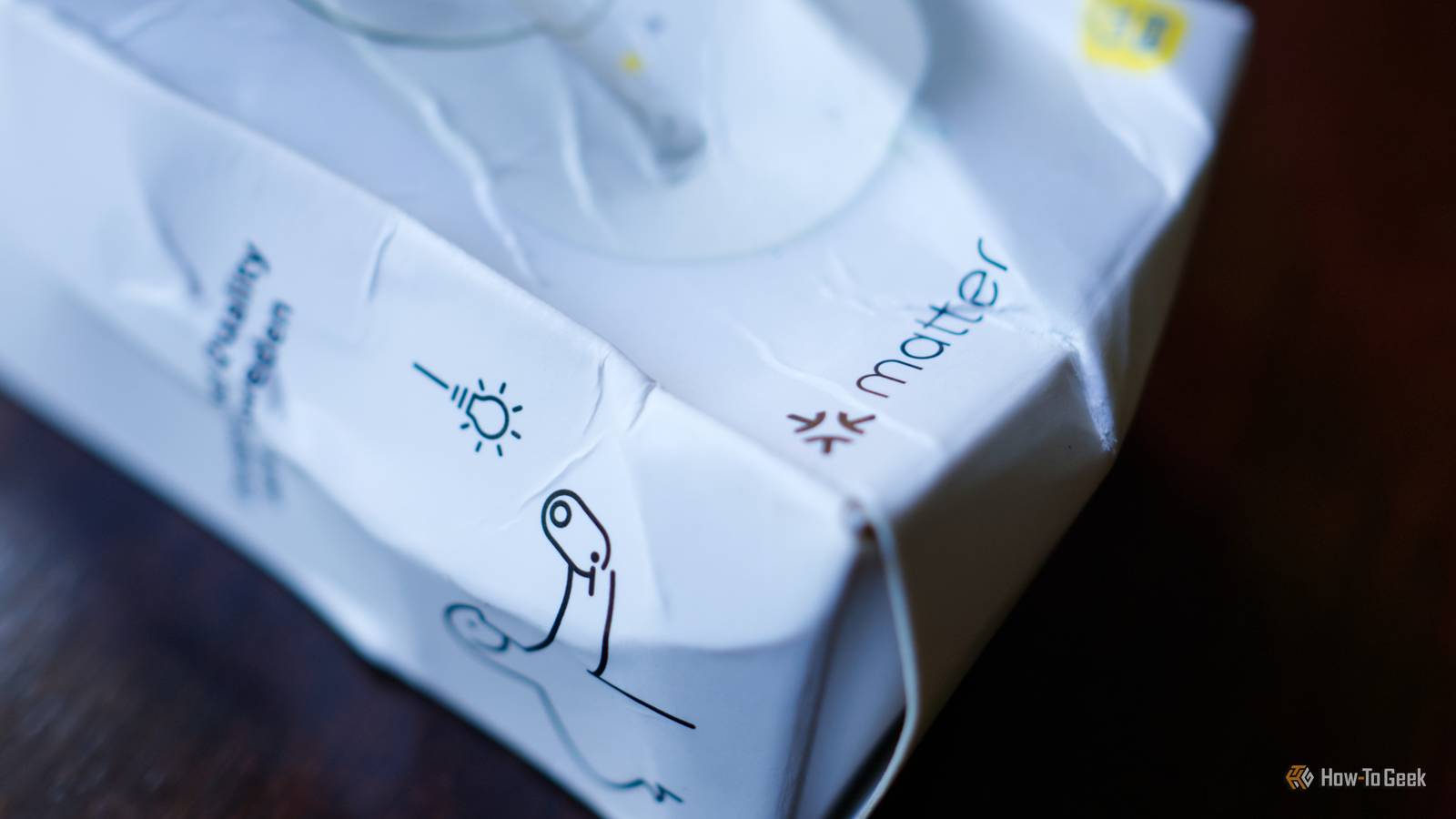
Native support at a platform level means not having to open manufacturer-specific apps to control it, using it in automations with devices from other brands, and having the freedom to migrate elsewhere if you desire.Thread is an open mesh network and has found its way into all manner of devices—known as Thread border routers—particularly smart speakers and hubs.Both of these technologies are easily recognizable from their respective logos, which you should find emblazoned on boxes and web pages.
It’s hard to ignore the Matter complaints The internet will let you know about it Unfortunately, Matter has had a rocky start.Like any new technology, the standard took years to get off the ground.This was followed by a slow trickle of comparatively overpriced devices.
We’re finally reaching a stage where Matter and Thread are being adopted on a grand scale, but things haven’t quite gone to plan for everyone.Matter is a standard, which hardware manufacturers design their hubs and devices around.This model relies on hardware manufacturers keeping up with the standard, and some have been slow to react.
Google Home is particularly bad in this regard, with Google’s Developer Center revealing support only extends as far as version 1.0 (with some limited support for 1.2).For context, Matter is on version 1.5 (which notably added camera support), with version 1.6 expected in 2026.This version mismatch isn’t obvious to anyone investing in smart home gear, so it could make for a nasty surprise.
The reality is that you’ll have to fall back on manufacturer apps, limiting automation potential, and defeating the whole point of the Matter project.Few communities have voiced criticism of the standard quite like those who use Home Assistant.It could be argued that Matter (and by extension, Thread) aims to solve a problem that doesn’t exist on Home Assistant, and the cacophony of complaints is hard to ignore.
Some of these include devices dropping off the network for good, continued dependence on manufacturer apps to add devices, happy ending tales of ditching Matter and going back to Zigbee, and unpredictable levels of compatibility between different combinations of hubs and devices.Matter is getting there (slowly) So close, no matter how far I’m a happy Home Assistant user with a house full of IKEA’s old Zigbee devices.I don’t have any complaints (aside from the fact that I can’t buy them anymore).
But I’m also a big fan of expanding my smart home, and I don’t need much convincing to add more devices or protocols to my server.Right now, I see no reason to move away from Zigbee.Thankfully, Home Assistant means I don’t have to, but I’m left wondering why I would invest in a device like the Home Assistant ZBT-2 radio when I could spend the money on more Zigbee light switches and sensors instead? Home Assistant Connect ZBT-2 Dimensions (exterior) 83x83x179mm Weight 157g The Home Assistant Connect ZBT-2 supports both Zigbee and Thread, although it must be set up for use with either one of the two protocols.
It offers 4x the responsiveness of the previous model, and is designed to be easy to open for modding, with accessible pins and pads.$65 at Amazon Expand Collapse Matter has come a long way, and 2025 brought IKEA into the fold.Its lineup of Matter over Thread devices has made the technology finally feel affordable.
IKEA went as far as selling these devices for less than the previous range of Zigbee accessories, and there are some standout inclusions.Until recently, IKEA’s range lacked two of the most common powered devices: smart plugs and smart bulbs.That’s changed with the recent rollout of the Grillplats ($8) smart plug and Kajplats (from $9) lighting range.
These devices are essential for building healthy Thread networks, since they act as repeaters, expanding the range of the mesh network.Right now, there’s not a killer new IKEA device that doesn’t already work with my existing Zigbee network.I find myself waiting patiently for a reason to add a Thread border router to my smart home for use with Matter devices, and who knows how long that will take? Mesh networks to use instead For me, Thread is the most alluring part of the Matter system.
IKEA hit the nail on the head when the company adopted the mesh network technology for all of its smart home devices, since it removes the reliance on Wi-Fi.If you’re going for a Matter smart home, make it a Matter over Thread smart home.Until then, consider Zigbee instead of Thread if price and device availability are your primary concern.
There are plenty of manufacturers still making Zigbee devices that aren’t IKEA, with price and selection being the main selling points.Z-Wave is another solid alternative that can skirt the interference problems associated with Zigbee and Thread, and also enjoys longer ranges than either.Hopefully in a few years, the Matter protocol will have matured to a point where the vision is fully realized and IKEA’s smart home won’t be struggling for reasons outside of its control.
Read More