It took me a while to figure out which 3D printer model was right for me, but it didn’t take long to realize which I should be getting.That’s because there are only three things you need to consider to answer this question.Most models are built around common size constraints The Creality Ender 3 is commonly cited as the most popular 3D printer of all time.
Its build volume of 220x220x250 mm has greatly impacted the way models have been built and distributed over the years, becoming something of a “default” size for many 3D models posted on resources like Printables, MakerWorld, and Thingiverse.Though you can always scale things up and down or make changes to the model using a slicer, by virtue of most 3D printer owners having a printer that’s around this size, you’ll rarely run into many models that require a build volume that’s much larger.Though the Ender 3 introduced many to 3D printing, Bambu Lab’s accessible and affordable printers have settled on a slightly larger 256x256x256 mm build volume.
This includes the entry-level A1, the older flagship X1C, and the newest all-rounder P2S that (anecdotally speaking) is flying off shelves.Prusa’s Core One+ open-source darling has a similar build volume of 250x220x270mm, while Creality’s base model K2 manages a slightly larger 260x260x260mm.A clear pattern has emerged among 3D printer manufacturers and those who are buying them: “Ender 3 or slightly larger” is probably all you need.
The reality is that printers with roughly this build volume take up a fair amount of space without being overbearing in a small room or household setting.This makes them ideal for at-home printing, where you might not have the space for larger models like Bambu Lab’s H2 series or Prusa’s XL model.If you want compatibility with the vast majority of models you’ll find online without breaking the bank, a printer with a build volume of around 256x256x256 mm is the one to choose.
What you’re printing matters I’m going to go out on a limb and guess that most people reading this will be printing relatively small items.You probably wouldn’t be on the fence if you knew that large one-piece items are a dealbreaker.You’re probably just wondering if the added cost and size are worth it for the occasional print.
There are a few instances where larger printers are very handy.Think enclosed helmets for cosplay, large vases or planters, figurines that don’t require any assembly, and oversized bespoke models that you’ve designed yourself.With this in mind, many of the most useful and alluring prints on the internet are usually smaller items.
Small items don’t require a lot of filament, so they’re cheap to make.Small things also print relatively quickly, depending on the level of detail required.Even if you do decide to take on long and expensive print jobs, you’ll find that many models are presented in a way that makes them easy to print on “Ender 3 or slightly larger” printers.
Unless you have specific use cases in mind for larger prints, and you’re prepared to get through a lot of filament in order to achieve them, buying a larger printer “just in case” doesn’t make a lot of sense.Don’t write off baby printers altogether Not everyone has the room or budget for a printer the size of the Bambu Lab P2S or Prusa Core One+.Even the A1 and newer Ender 3 models (which now include bed leveling) can take up more room than you’d like in a small apartment.
This leads many people to consider smaller printers like the Bambu Lab A1 mini and Prusa Mini+.If these printers are all you have room for, and you’re happy with a smaller build volume of 180x180x180mm, I say go for it.Any 3D printer is better than no 3D printer at all if you’re looking to tinker, learn, and explore a new hobby.
Subscribe to the newsletter for practical 3D-printing guidance Get smarter about picking the right printer—subscribe to the newsletter for clear build-volume advice, model-compatibility tips, and practical buying guidance so you can choose a printer size that fits your projects and space.Subscribe By subscribing, you agree to receive newsletter and marketing emails, and accept our Terms of Use and Privacy Policy.You can unsubscribe anytime.
I primarily source a lot of models from MakerWorld, which is a model repository run by Bambu Lab, and I’m constantly seeing “A1 mini friendly” versions of larger prints.Both MakerWorld and Printables (Prusa’s equivalent) allow you to filter by printer type, with plenty of models available for smaller printers.You can see the difference in build plate size between the Ender 3-like P2S and the A1 mini below: As an added bonus, these smaller printers are naturally cheaper than their larger counterparts, with plenty of Bambu Lab A1 mini printers on the used market offering even deeper discounts.
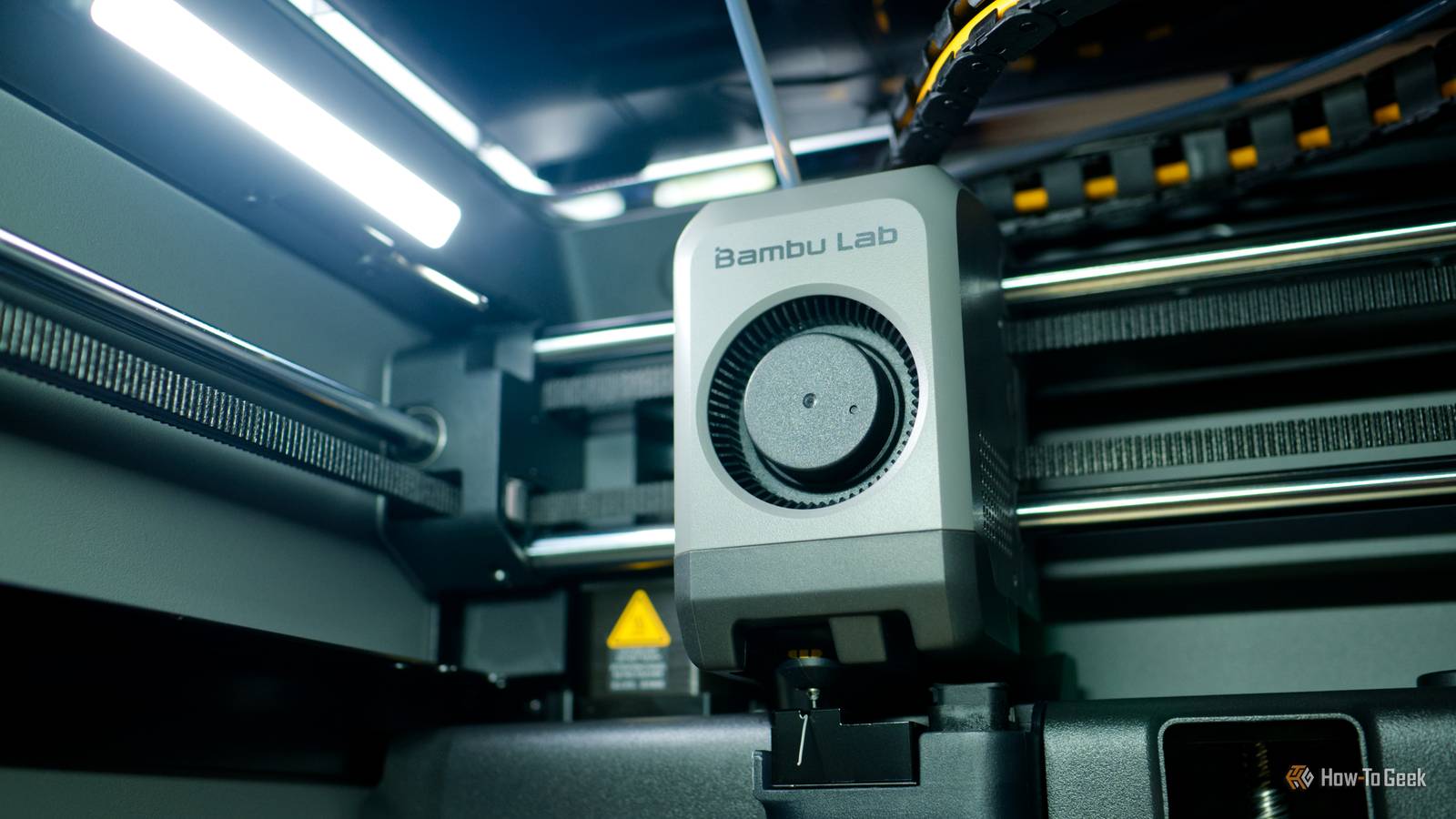
Bambu Lab P2S Build Volume 256x256x256mm Printing Speed 600mm/s The Bambu Labs P2S 3D printer is ready to go out of the box and can have you printing within 15 minutes.It features up to 20-color printing with the AMS unit, has an upgraded built-in camera for remote monitoring and time lapses, and has an enclosed body for printing even high-temperature filament.$549 at Bambu Lab Expand Collapse Bambu Labs A1 mini 3D Printer Build Volume 180x180x180 Printing Speed 500mm/s The Bambu Lab A1 mini 3D printer is ready to go out of the box and can have you printing within 30 minutes.
Offering full-auto calibration, this compact 3D printer features a 180mm build volume and is compatible with the AMS Lite for multi-color printing.It also features built-in vibration and flow-rate calibration, which are typically features only found on more premium printers.$299 at Bambu Lab Expand Collapse The second-hand 3D printer market can be alluring for those looking to save some money.
While there are plenty of bargains to be found, you should tread carefully before buying a second-hand printer.
Read More