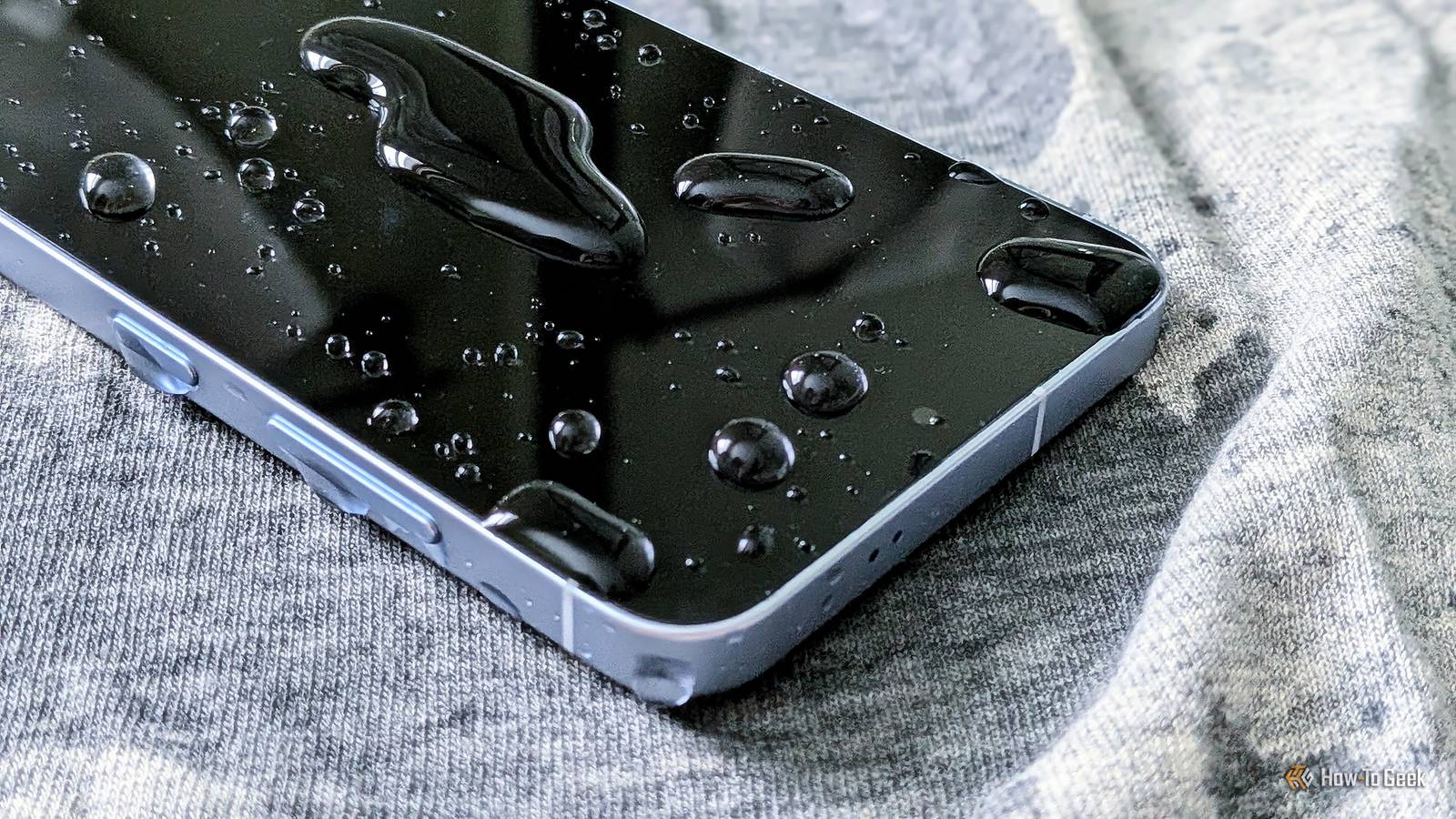
One of the biggest advances in gadgets over the last decade has been water resistance.Nearly every phone now has a rating telling you that water is nothing to worry about.That’s not exactly true, though.
“Waterproof” is a complicated concept when it comes to phones.Let’s demystify it.What do “waterproof” ratings mean? There’s a good chance you’ve purchased a phone with an IP68 rating, or maybe even an MIL-STD rating.
These certifications are designed to help you know what level of protection you can expect.So let’s talk about what those letters and numbers actually mean.“IP” stands for “International Protection,” and it was created by the International Electrotechnical Commission (IEC).
The first number is for solids—things like dirt, dust, wires, and even fingers.The second number is for water.Solids go up to 6, while water goes up to 9.
The “6” in “IP68” means “Dust-tight,” and “8” means “Protected against the effects of continuous immersion in water.” MIL-STD ratings are used by the US military, and most phones don’t have them.However, if they do, it’s usually MIL-STD-810.This rating system is not as straightforward as IP.
Essentially, a bunch of tests are conducted on the device, including everything from solar radiation to extreme temperatures.The letters and numbers simply refer to the test version that was used.Having any MIL-STD rating is good.
Now, regardless of the rating, one word you won’t see used is “waterproof.” That word suggests a device is completely impervious to water in any scenario, which is not the case with phones.The more accurate term is “water-resistant,” which simply means it has some level of defense against water.Not all water is the same The biggest mistake you can make is assuming that all water is created equal.
The tests that determine these ratings typically use clean, still freshwater.The ocean or the chlorinated pool at the Y is a completely different beast.Saltwater is corrosive and can eat through the rubber gaskets that keep water from entering the internals.
Even if you manage to dry it out afterwards, salt crystals left behind in your charging port can cause long-term damage.Swimming pools are slightly safer—some devices are designed specifically for swimming in pools—but they bring their own issues, too.Chlorine can degrade the adhesive seals over time.
The important thing to remember is that if your phone does take an accidental dip in the ocean or a pool, give it a quick rinse with clean water—and don't put it in rice.Even the temperature of the water plays a role.Taking your “waterproof” phone into a hot shower or sauna might seem harmless, but the heat can soften the glue holding everything together.
And let’s overlook the fact that water is not the only type of liquid.Your phone was not tested against acidic, carbonated Coke Zero or sticky orange juice.Related Stop Putting Your Phone in Rice For nearly as long as smartphones have existed, people have been putting them in rice after dropping them in water.
This often-repeated "trick" to save a water-logged phone has gone too far.Allow us to explain.Posts Under pressure The other part of the equation is pressure.
That’s the difference between dropping your phone in the bathtub and using it while scuba diving.ATM (Atmospheres) ratings tell you how much pressure your phone can handle.1 ATM is sea level, or 0 pressure.
3 ATM bumps up to “under 100 feet,” 5 ATM is “Under 165 feet,” and so on.Wearable devices more commonly have ATM ratings than phones.Pressure isn’t only about depth—it can also present itself through direct force.
Like holding your phone under a pressure washer or crashing into the water while tubing.That high impact can blast right through the “water-tight” seals.IP68-rated devices have pressure protection for splashes and reasonably powerful jets, but only the rare IP69 rating has the best protection against water pressure.
It doesn’t last forever The last thing to know is that water resistance has an expiration date.Your phone is at its most protected when you first open the box.Over time, the rubber gaskets and adhesives that keep water out naturally age and lose their effectiveness.
Protect your phone — subscribe to the newsletter for water insights Subscribe to the newsletter for clear, practical coverage of phone water resistance—IP and ATM ratings, real-world risks, and device-care advice.The newsletter focuses on gadget protection and helps you interpret ratings to protect your gear.Subscribe By subscribing, you agree to receive newsletter and marketing emails, and accept our Terms of Use and Privacy Policy.
You can unsubscribe anytime.However, it’s also important to consider that you also have an impact on your phone’s water resistance.Every time you drop your phone on the sidewalk or bend it slightly in your pocket, you could be jostling those internal seals and creating tiny entry points for water to enter.
The moral of the story is to stop thinking about your phone as being invincible against liquids.Even in the most ideal, perfect conditions, your phone is only “water-resistant.” Repeated exposure to water and the daily wear and tear slowly worsen those protections over time.You don’t have to be afraid of getting your phone wet, but be smart about it.
Related 5 ways to repurpose an old Android phone How many phones have you owned over the course of your life? I generally sell my old ones, but sometimes there’s one that’s either not worth much or isn’t in good condition.That doesn’t mean they need to sit around in a drawer.Here’s what you want to do with that old device.
Posts 29 By Bertel King
Read More