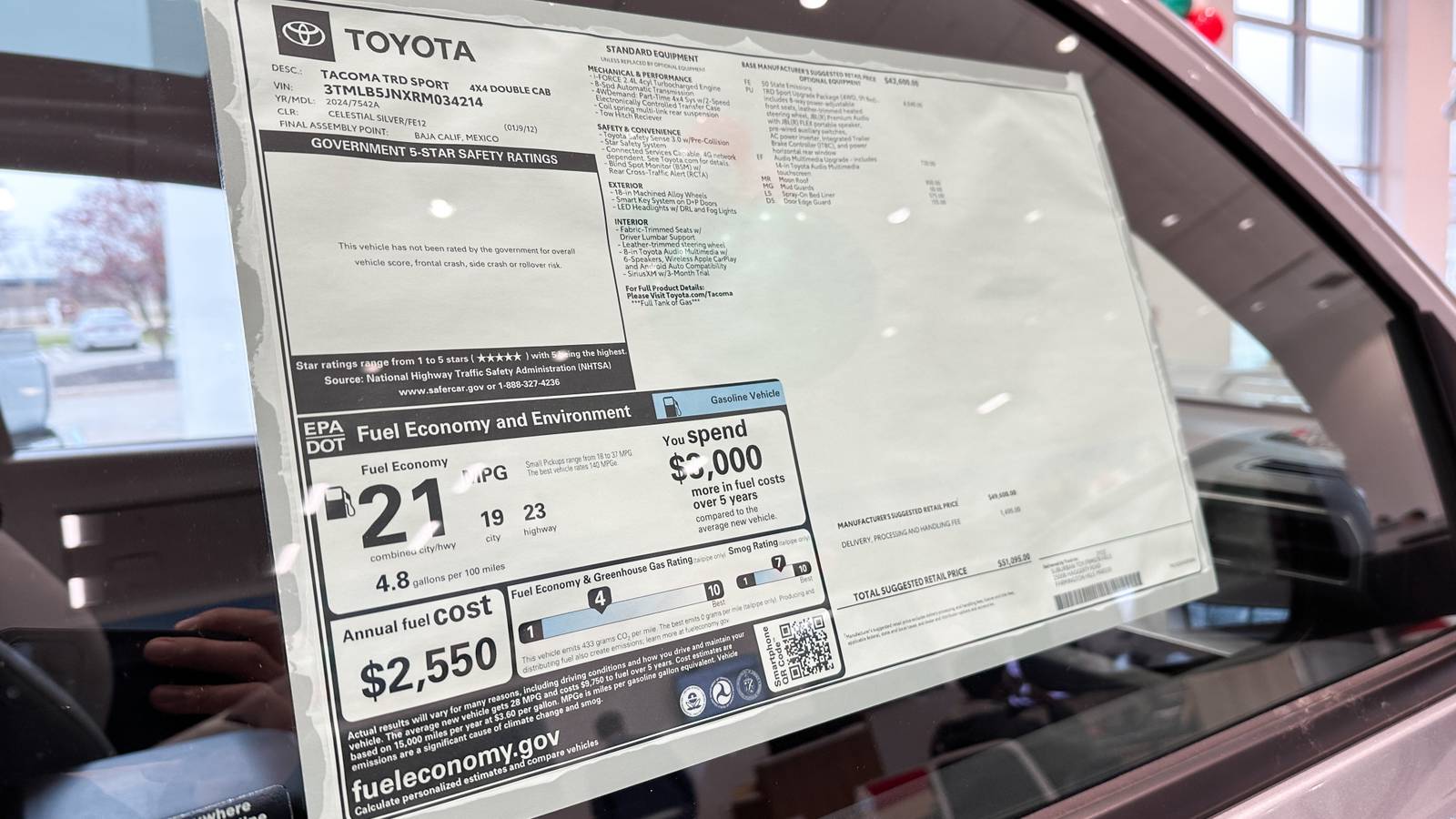
Buying a car always reminds me how strange the whole process is.I’ve done it several times now, and every trip to the dealership still manages to surprise me.Not because of the cars themselves, but because of how much effort goes into nudging buyers toward features they didn’t walk in asking for.
Some of it is subtle, some of it is straight-up upsell, and a lot of it hides behind words like premium, smart, or advanced.By the time you’re sitting at the salesperson’s desk signing paperwork, it’s easy to lose track of what you actually wanted versus what sounded good in the moment.This last time around was especially eye-opening.
It forced me to be honest about which features genuinely improve my day-to-day driving and which ones just inflate the sticker price.Knowing that difference matters more than ever, because modern cars are packed with options that look impressive on a spec sheet but don't age well in real life.If you go in with a clear idea of what's worth paying for and what isn't, you don't just end up happier with the car.
You usually save a surprising amount of money, too.The biggest lesson from this purchase wasn't about brands or trims.It was about restraint.
Knowing what to ignore matters just as much as knowing what to buy.Here are the things I definitely won't pay for.When ownership turns into a subscription, I'm out Subscription features are an immediate dealbreaker for me, especially when they lock functionality behind a monthly fee that's already built into the car.
Heated seats, heated mirrors, performance unlocks, remote start.If the hardware is there when I buy the vehicle, I shouldn't have to keep paying just to use it.I don't mind paying for services that genuinely cost money to run, like connectivity, semi-autonomous driving, or roadside assistance.
But charging rent on basic features crosses a line from convenience into nickel-and-diming.BMW is the clearest example of why this bothers me.The company famously experimented with subscriptions for heated seats and other features that were physically installed in the car, only accessible if you kept paying.
Even though BMW later walked some of that back after backlash, the business model stuck.It changed how I look at brands.I'd rather give my money to a manufacturer that respects ownership instead of one that treats my car like a long-term billing opportunity.
Related I Won't Buy a New Car Without These 10 Tech Features From advanced safety features to driver assistance features and connectivity, these are the tech features I can't live without.Posts 33 By Adam Gray Features that look good but don't do much Gimmick modes are another easy pass for me.Every new car I drove seemed to come with a dial, button, or menu full of drive modes like Sport, Eco, Snow, Custom, plus a few creatively named extras that promise to transform how the car feels, but in actuality they barely matter.
Most of the time they just tweak throttle response or steering weight, and once the novelty wears off, I'll most likely leave the car in its default setting and never touch them again.The same goes for cosmetic upgrades and unrealistic driving modes that look impressive in ads but don't match how people actually drive.Ambient lighting themes, animated gauge clusters, off-road modes on vehicles that will never leave pavement.
They add complexity and cost without making the car easier, safer, or more enjoyable to live with.I'd rather pay for features that work in the background than for buttons I forget about after the first week of ownership.Related The 4 hidden things costing you money on gas every winter In extreme cases, it’s costing you up to $1 per gallon.
Posts 2 By Carl Anthony Big screens that don't make cars easier to use Oversized touchscreens are another feature I won't pay extra for, especially when they replace simple knobs and switches that worked just fine.I get why manufacturers love them.A big screen looks modern, it's easy to market, and it lets them move a lot of controls into software.
But living with one is a different story.When basic things like climate control, seat heaters, or audio settings are buried three menus deep, the car becomes harder for me to use instead of easier.That's friction I would feel on every single drive.
Related 3 insider tricks to get VIP treatment at any car dealership Red carpet treatment, even if you buy something used.Posts By Carl Anthony What bothers me most is that this isn't progress so much as cost cutting dressed up as innovation.Physical controls let you make adjustments by feel, without taking your eyes off the road.
Touch-only interfaces force you to look down, poke around, and hope you hit the right spot.I'd rather have a smaller screen paired with real buttons than a giant tablet that turns everyday driving tasks into a distraction.Where I think spending extra actually makes sense After cutting through the features I know I don't want, the list of things I'm willing to pay for gets a lot clearer.
These are the features that make driving safer, less tiring, or simply easier without demanding attention.They're not flashy, they don't need a learning curve, and they don't exist to pad a spec sheet.The safety features I'll always pay for When it comes to safety tech, I'm much more willing to spend the money, especially on features that work in the background and only step in when you actually need them.
Blind-spot monitoring, automatic emergency braking, a good backup camera, evasive steering assist.These aren't flashy or fun to show off, but they earn their keep in real traffic, with real consequences.They reduce stress, cover blind spots you can't always see, and help prevent the kinds of mistakes that happen when you and everyone around you are distracted or in a hurry.
This matters even more in our day-to-day life.My wife commutes every morning up and down a busy highway and then through town, often in the dark.Knowing the car has strong IIHS crash-test scores and safety systems that are actively watching for problems goes a long way toward making her feel safer (me too) and more in control on the way to work.
That peace of mind is worth paying for.These are the kinds of features that don't feel like upgrades at all.They feel like they should be the baseline for a modern car.
Related In-Car Wi-Fi Sounds Cool, but I Will Never Actually Use It I’ll pass, thanks.Posts 10 By Oluwademilade Afolabi Why better headlights are always worth paying for Better headlights are another area where I won't hesitate to spend the money.If you've ever driven on dark, unlit roads, you know how much of a difference good lighting makes.
This isn't about style or how aggressive the front end looks at night.It's about being able to see what's ahead of you, sooner and more clearly.A strong, well-aimed headlight setup reduces eye strain, improves reaction time, and makes night driving feel far less tense, especially on roads where there's no ambient light to fall back on.
I live in a rural area, and that means a lot of driving on unlit country roads where your headlights are doing all of the work.There's no glow from streetlights, no storefronts, and often no shoulder to speak of.In those conditions, good road illumination is critical.
Being able to clearly see the road edges, animals, debris, or a sudden change in terrain gives you more time to react and a lot more confidence behind the wheel.Better headlights aren't a cosmetic upgrade.They're a safety feature I rely on every single night.
Driver-assist tech that reduces workload Adaptive cruise control and hands-off driving assistance are features I'm absolutely willing to pay for, even though they ended up just out of reach this time.Unfortunately, they weren't available in the class of car I was shopping for.If there had been an option on the cars I was seriously considering, I would've dropped the cash without hesitation.
These are the kinds of features that actually reduce workload instead of adding it.How-To Geek Report: Subscribe and never miss what matters Unlock your tech-savvy potential and master the digital world with How-To Geek.Subscribe By subscribing, you agree to receive newsletter and marketing emails, and accept our Terms of Use and Privacy Policy.
You can unsubscribe anytime.Long highway drives are where these systems really shine.Adaptive cruise that smoothly handles traffic, combined with lane-centering or hands-off assistance, takes the edge off commuting and road trips in a way few other features can.
You're still paying attention, still in control, but you're not constantly managing speed and spacing.It makes driving feel calmer and more sustainable, especially in stop-and-go traffic or long stretches of highway.That's real value, and it's exactly the kind of tech I'd prioritize when it fits my budget.
The spec-sheet red flags I look for One of the easiest ways to spot marketing features on a spec sheet is to look for options that sound impressive but don’t clearly explain what they do in everyday driving.Vague names, branded modes, and long feature lists often mask small functional changes.If a feature needs a paragraph of fine print to explain its limits, or only works in very specific situations, that’s usually a sign it exists more to sell the car than to improve it.
As a rule of thumb, features that reduce workload, improve visibility, or step in during real-world mistakes tend to hold their value.Choosing features that actually matter At the end of the day, buying a car comes down to making a lot of small decisions that add up fast.For me, the goal isn't to strip a car down to the cheapest possible version or chase every new feature that sounds impressive.
It's about choosing upgrades that make driving safer, calmer, and easier over the long haul, and skipping the ones that just inflate the price or add friction.When you're clear about what actually improves your experience behind the wheel, the buying process gets simpler, the car fits your life better, and you're far less likely to second-guess the choices you made.
Read More