Many smart home devices offer subscription plans that can add additional features.Some of these subscription plans are worth the price for what you get, but there are plenty of smart home devices that can actually do more without a subscription.Security cameras Local storage gives you more history for free Many smart security cameras come with subscriptions that offer a wide range of features.
Several popular brands require a subscription to access key features.With an Arlo camera, for example, you need to pay to access video history, smart zones, package detection, video search, and more.With Arlo, even with a Premium subscription that can cost as much as $49.99 per month, you only get 60-day video history.
If you want to see what happened 61 days ago, you're out of luck.The alternative is to set up your own local storage system.Some camera models offer their own network video recorders (NVRs) that can store your recordings in your home.
You can replicate this without a subscription by using a self-hosted NVR such as Frigate.Using local storage, the amount of video history that you keep is only limited by the amount of storage space you have.You can keep far more than 60 days of history and not have to pay a thing.
The other major benefit of opting for a local system rather than a subscription is that your video recordings stay on your local network.You don't have to worry about the view from every security camera in your home ending up on a third-party server.Video doorbells You shouldn't have to pay to see who was at your front door Close Video doorbells are another common example of smart home products that often offer subscription plans.
You may need a subscription plan for features such as person and package detection, for extended live viewing of your doorbell feed, or even to use more than one doorbell camera.With the latest wired Nest Doorbell, for example, you only get six hours of event video previews.If you want to see who came to your door six and a half hours ago, you can't access that recording without a subscription.
Even when you subscribe, the most expensive Google Home Premium subscription only gives you 10 days of 24/7 recording history and 60 days of event-based video history.A video doorbell with local storage and no subscription can give you far more access to your video history.As long as you have space to store the video, you can access history from as far back as you want, completely for free.
Garage door openers You don't have to worry about losing third-party access Smart garage door openers take a useful device and make it even more useful.A smart garage door opener can allow you to open your garage door remotely, give you real-time alerts when your garage door is opened or closed, guest access, in-car controls, and more.Some garage door openers include integrated cameras.
These cameras can require subscriptions to access event history, motion detection, package detection, and more.You don't need to pay for these features, however.With a cheap camera and a local NVR such as Frigate, you can get motion detection and event history without a subscription, and potentially keep that history for far longer than a subscription allows.
One big reason to steer clear of these cloud-based services is that they may not always be available.Chamberlain blocked the API that was used by Home Assistant to control garage door openers that worked through the myQ integration.People who had built automations around this API were suddenly unable to use them.
Related You can build a smart garage door opener for $10—here's an easy process that works Make your garage door smart for less.Posts 1 By Adam Davidson Home security systems A subscription may only be worthwhile for professional monitoring If you want an alarm system that is professionally monitored, then you're going to need to pay a subscription fee.There's no free local solution that can fully match a monitored alarm system.
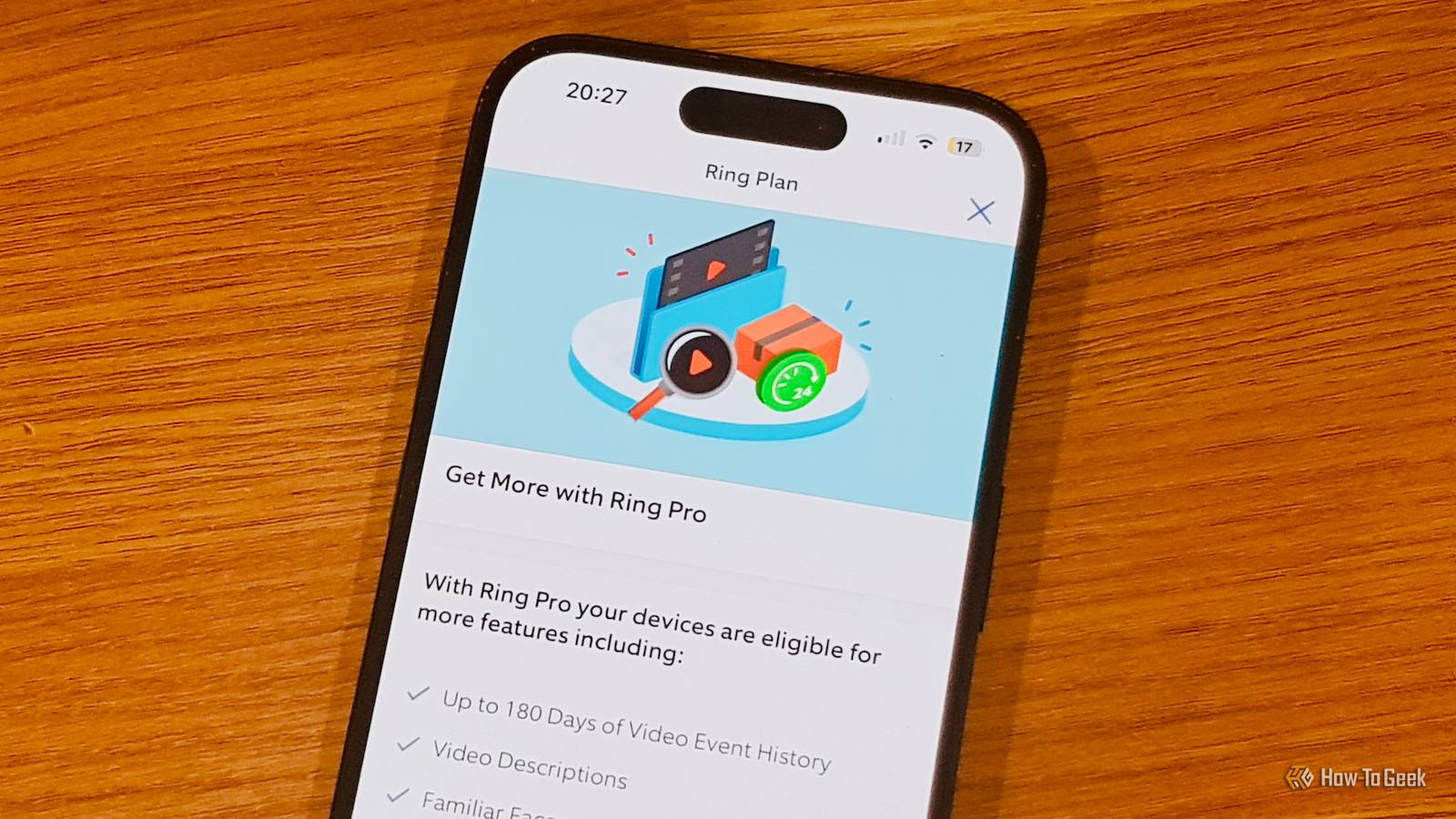
If you don't need that service, however, then you can set up an alarm system that can work better than many subscription-based alarm systems.For example, with a Ring Alarm, you need a subscription just to be able to arm and disarm your alarm through the app.If you don't have a subscription, you can't even turn your alarm on or off using your phone.
Even with a subscription, you're usually limited to a relatively small range of compatible products.If you have some IKEA contact sensors, for example, you won't be able to use them with your Ring Alarm system.If you set up your own local system using smart home software such as Home Assistant, you’re not limited by brand; you can integrate almost any security devices into your system, even if they use different communication protocols.
Being able to add more devices to your system can give you more flexibility than using a limited range of compatible devices, and you don't have to pay a subscription fee.Sometimes you can get more for less While some smart home subscriptions can be worthwhile, there are plenty that may not be worth the money.You can often get a better experience using local solutions that don't need a subscription at all.
Read More