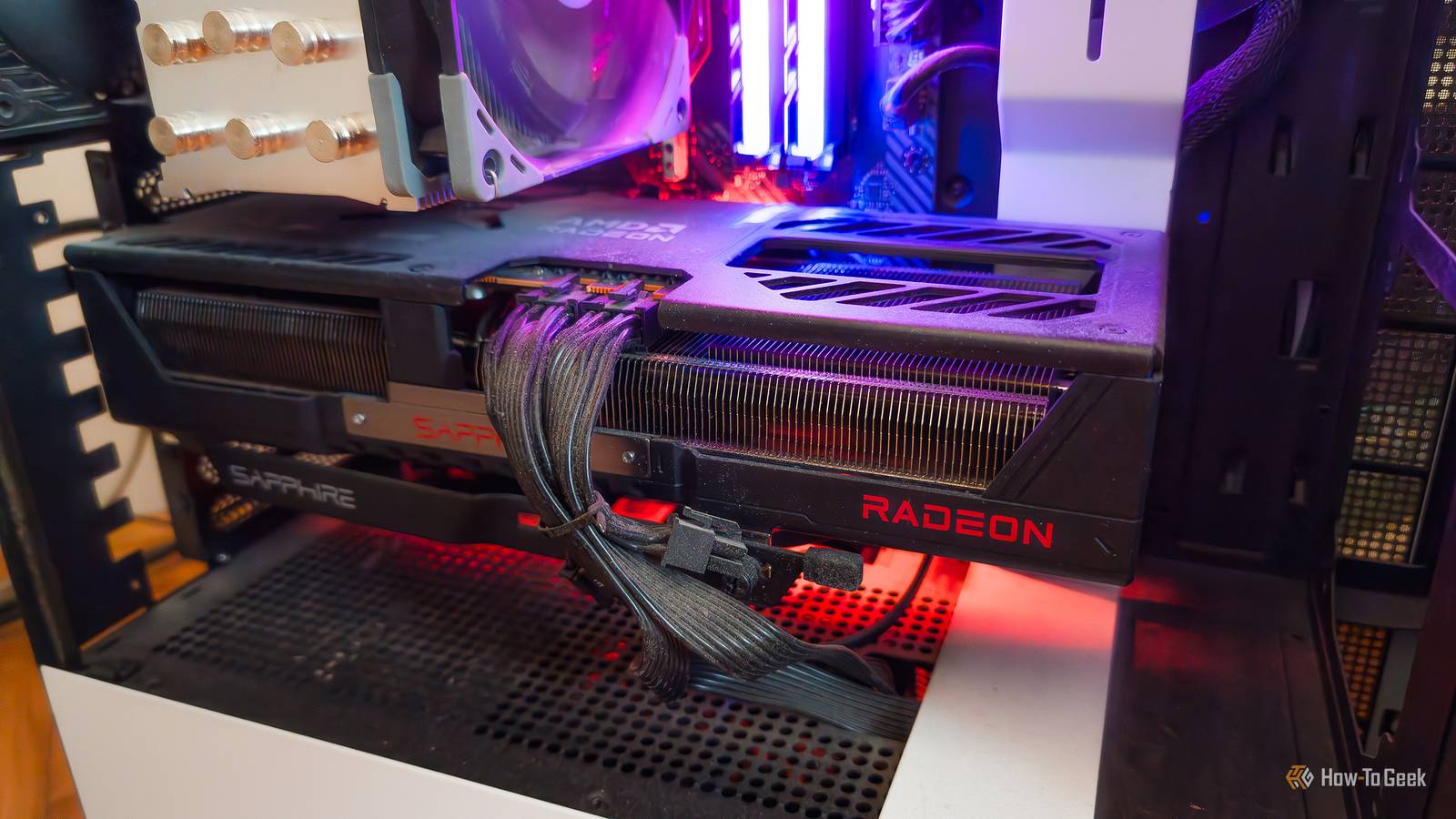
I had used NVIDIA GPUs for about a decade until I replaced my trusty RTX 3070 with an RX 9070 XT in early 2025.The AMD graphics card was, and still is, impressive when it comes to gaming performance, but after making the switch, what surprised me most was the software, not the hardware.The biggest shock after switching to an AMD GPU was AMD Software AMD Software was so much better than what NVIDIA offered at the time Close During my years with NVIDIA, the NVIDIA Control Panel was the main configuration utility I used to adjust all GPU-related settings.
The app was anything but pretty, and while its XP-era design did carry a dose of nostalgia, the fact of the matter is that NVIDIA should've updated it years ago.NVIDIA GPU owners also had access to GeForce Experience, a more modern-looking piece of software that packed some extra features and options, but the Control Panel remained the de facto control software for NVIDIA graphics cards.The company released the NVIDIA app in beta in early 2024 with the promise that it would, over time, replace the Control Panel.
Despite officially launching later that year, I still had to use both the NVIDIA app and the Control Panel right up until I switched to AMD because many options were still nowhere to be found in the former.But then I upgraded to an RX 9070 XT, and was shocked by how good AMD's Software: Adrenalin Edition was.It featured a modern UI, was teeming with options and features, and was miles ahead of NVIDIA's woefully dated Control Panel.
I had used the app before on my ASUS ROG Ally, but I only opened it a few times because everything I needed was included in ASUS's Armoury Crate.Starting to use it daily with the RX 9070 XT was a proper revelation.Every option I might need was within easy reach.
I didn't have to juggle two different apps to adjust settings; the software notified me as soon as a new GPU driver was available, capturing gameplay was super simple, and the entire package looked and worked dramatically better than I'd expected.Another thing I liked, and still do, is that per-game profiles are front and center, allowing me to quickly and easily configure GPU-related settings for each game.On the other hand, NVIDIA GPU owners had to constantly switch between the Control Panel and the NVIDIA app until May 2026, when NVIDIA finally retired the legendary Control Panel and migrated all of its features to the new app.
While the latest version of the NVIDIA app is on par with AMD Software: Adrenalin Edition in most areas, there's still one where AMD's software is way ahead.I also like the fact I don't need third-party software to undervolt and overclock my RX 9070 XT NVIDIA really dropped the ball in this department Close Undervolting and overclocking NVIDIA GPUs has always required third-party software.While the NVIDIA app includes a few basic performance tuning controls, you still have to use tools such as MSI Afterburner to properly overclock or undervolt your NVIDIA graphics card.
On the other hand, every setting I need to undervolt and overclock my RX 9070 XT is right there in AMD Software: Adrenalin Edition.Not only that, but the entire process is very straightforward.All I have to do is click Performance, open the Tuning tab, and enable a Custom tuning preset.
I can then undervolt and overclock the graphics card in just a few clicks, which is much simpler than doing the same on NVIDIA GPUs.I can even tune GPU performance on a per-game basis, which is very handy because some games can handle higher undervolt values, while others will immediately crash.Unreal Engine 5 titles are especially sensitive in this regard.
AMD Software also lets me create custom GPU fan curves, another feature that's missing from the NVIDIA app.If you've got an NVIDIA GPU, you have to, once again, reach for MSI Afterburner or another app such as Fan Control, which is pretty darn great to be honest, but still.The latest version of the NVIDIA app is a fine piece of GPU control software, but the company really needs to implement better overclocking features, which I doubt it will do considering how little both NVIDIA and AMD care about gamers nowadays.
At least AMD implemented useful overclocking and undervolting features before going all-in on AI.Despite having the superior software experience, AMD still trails NVIDIA in terms of GPU features There's no two ways about it: AMD Software: Adrenalin Edition topples the NVIDIA app when it comes to ease of use, the number of features, user experience, per-game profiles, performance tuning, and more.But when it comes to graphics features, AMD still needs to step up.
For instance, you still can't use multi-frame generation on AMD GPUs, despite NVIDIA and Intel both offering it for quite a while.Multi-frame generation can be very handy on my 175Hz monitor, allowing me to max out its refresh rate as long as I can achieve a base frame rate of about 65 "real" FPS.At least AMD has been working on it, if nothing else.
Another thing I envy NVIDIA GPU owners for is RTX HDR, which works great with virtually any DirectX 9 game or newer and is much better than Windows 11's Auto HDR feature.After upgrading to an OLED monitor, RTX HDR is the one NVIDIA feature I wish I could use on my AMD GPU.But other than that, I'm more than happy with the RX 9070 XT.
It's a beast in every game I've played, runs extremely quietly and relatively cool, FSR 4 is almost as good as DLSS 4, at least to my eyes, and I can enable it in every game with DLSS support thanks to OptiScaler.If AMD comes up with an RTX HDR equivalent, I'll never look over at NVIDIA's yard again.Sapphire NITRO+ AMD Radeon RX 9070 XT GPU Cooling Method Air GPU Speed 2520Mhz The AMD Radeon RX 9070 XT from Sapphire features 16GB of DDR6 memory, two HDMI and two DisplayPorts, and an overengineered cooling setup that will keep the card cool and whisper quiet no matter the workload.
$720 at Amazon Expand Collapse
Read More