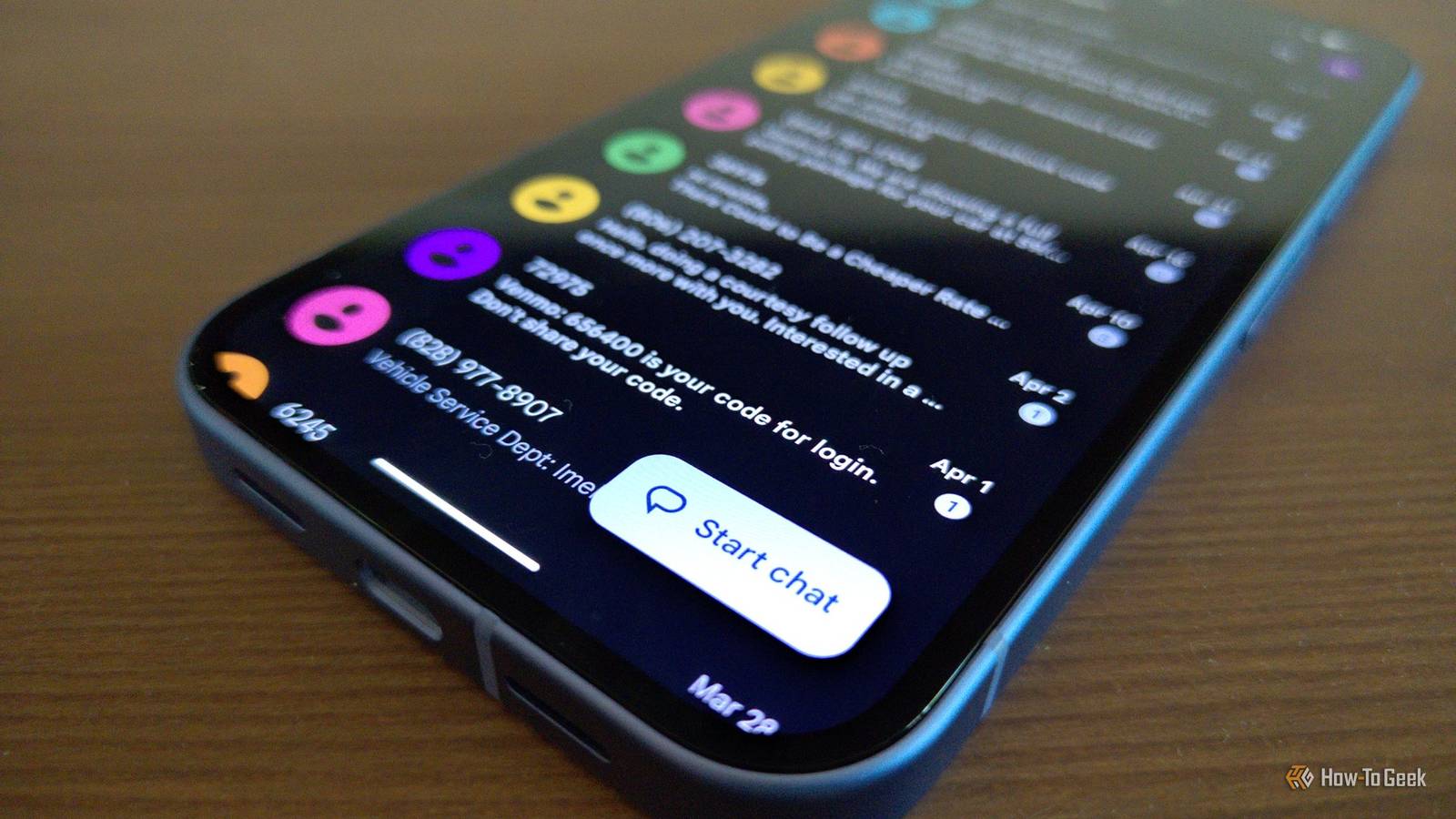
RCS was supposed to fix texting.I personally held out hope for it, a lot.Yet, years after Google began pushing it, the experience still feels inconsistent and incomplete.
What went wrong? What’s going wrong with RCS? A standard that behaves differently everywhere Close RCS was pitched as a modern replacement for SMS, with typing indicators, read receipts, high-quality media, and better group chats.In practice, the experience depends on a long chain of cooperating parties: the carrier, the messaging app, the operating system, and the person on the other end.When one link is out of date or misconfigured, features quietly stop working, and users rarely get an explanation.
Fragmentation is the root of the problem.RCS is a specification maintained by the GSMA, but carriers implement it on their own timelines, and some have relied on third-party providers to run their infrastructure.Google stepped in with its own Jibe platform to smooth things over, yet the result was still a patchwork.
Google even began withdrawing from hosting its own RCS servers, shifting responsibility back to carriers.It became even messier.I used RCS actively on my Android phone for years, and it disappeared because my carrier never bothered to add support for it.
Cross-platform messaging adds another layer.Apple adopted RCS in iOS 18, which removed some of the worst green-bubble pain, such as grainy images and missing typing indicators.But messages between iPhone and Android still did not get the end-to-end encryption that Google Messages offers between two Android users, since the standard’s encryption extension had to be agreed upon and rolled out separately.
For anyone who cares about privacy, a chat that is only sometimes encrypted is hard to trust.Smaller frustrations also add up.Messages can fail to send without warning, switching phones can leave RCS broken until you re-register your number, and the same conversation can behave differently depending on which app you open it in.
None of these problems is catastrophic on its own, but together they make RCS feel like a feature you have to babysit rather than a service you can rely on.Why IM apps remain unbeatable One company, one experience, and no carrier in the way Apps like WhatsApp, Signal, and Telegram have a simple advantage: the same company builds the client, runs the servers, and decides when new features ship.When WhatsApp adds a feature, it reaches users through an app update, not through a negotiation with hundreds of carriers worldwide.
That control is exactly what RCS lacks, and it explains why messaging apps have been able to move faster for more than a decade.The feature gap is also wide.Dedicated apps handle large file transfers, voice notes, high-quality voice and video calls, disappearing messages, polls, reactions, and multi-device sync with little friction.
Signal and WhatsApp both encrypt conversations end to end by default, so users do not have to wonder whether a particular chat qualifies.You can start a conversation on your phone, continue it on a laptop, and trust that the history follows you.Reach matters just as much as features.
WhatsApp serves billions of people, and in many countries it is effectively the default way to contact anyone, from family to local businesses.That network effect is difficult to dislodge.People do not pick a messaging platform in isolation; they pick the one where their contacts already are.
Signal has earned a loyal following among privacy-focused users, and groups tend to settle on whichever app is easiest for everyone to install.These apps also work the same way over Wi-Fi anywhere in the world, without worrying about roaming charges, carrier support, or whether the recipient’s phone number is registered correctly.They are tied to an account rather than to a fragile mix of SIM, carrier, and handset settings.
For many people, the reliability alone is reason enough to stop using the default messaging app and tell their friends to join them elsewhere.What RCS could do to catch up Consistency, real encryption, and fewer moving parts For RCS to compete, the first priority is end-to-end encryption that works across platforms and is on by default.The GSMA has already moved toward adopting the Messaging Layer Security protocol for this purpose, and Apple and Google have both signaled support.
The challenge is getting it deployed reliably, with clear indicators that tell users when a chat is protected, so nobody has to guess.The second priority is consistency.A baseline set of features should work the same way on every carrier and every device, with no silent downgrades.
Stronger certification requirements and faster carrier rollouts would help, as would clearer error messages when something goes wrong.If a message cannot be delivered as RCS, the app should say so plainly instead of quietly reverting to SMS.Third, RCS needs to solve the identity problem.
Because it relies on phone numbers, it inherits the phone network's weaknesses, including SIM swaps, number recycling, and registration glitches.Offering a more robust way to verify and manage identity, while keeping the convenience of using a number you already have, would remove one of the most common sources of broken conversations.Finally, the standard has to offer something dedicated apps cannot.
Business messaging, verified senders, and tight integration with the phone’s native tools are promising areas, but only if the core experience is dependable first.Better multi-device support and richer group management would also help.Until RCS can promise that it simply works, millions of people will keep reaching for the apps that already do.
RCS still has plenty of catching up to do RCS has improved texting, but fragmentation, inconsistent encryption, and reliance on carriers keep it behind dedicated messaging apps.Until it delivers a reliable, secure, and uniform experience everywhere, WhatsApp, Signal, and similar services will remain the safer choice for everyday conversations.
Read More