The Steam Deck was the first truly successful handheld gaming PC, but the market had multiple competitors well before Valve opened the floodgates and ushered in a new era of handheld gaming.The granddaddy of them all was the OpenPandora, which came out back in 2010.In 2016, GPD released the GPD Win, the first proper handheld gaming PC that ran Windows and was powered by an x86 CPU.
But two years earlier, one device promised a Steam Deck long before the actual Steam Deck.That handheld was the Smach Z, and even though, for a few short years, it looked like it might actually launch, it never saw the light of day.Back in 2014, the Smach Z was called SteamBoy, and it looked like the holy grail of handheld gaming A portable Steam Machine that could play almost any Steam game In 2014, Valve's original Steam Machines were the talk of the PC gaming world.
Valve had ambitious plans for its Linux-based gaming ecosystem, and while the company’s first foray ended unceremoniously, Steam Machines were seen as the next big thing in PC gaming around that time.The same year, a development team from Spain revealed a portable Steam Machine dubbed SteamBoy.The device ran SteamOS and packedbeefy hardware for a handheld at the time.
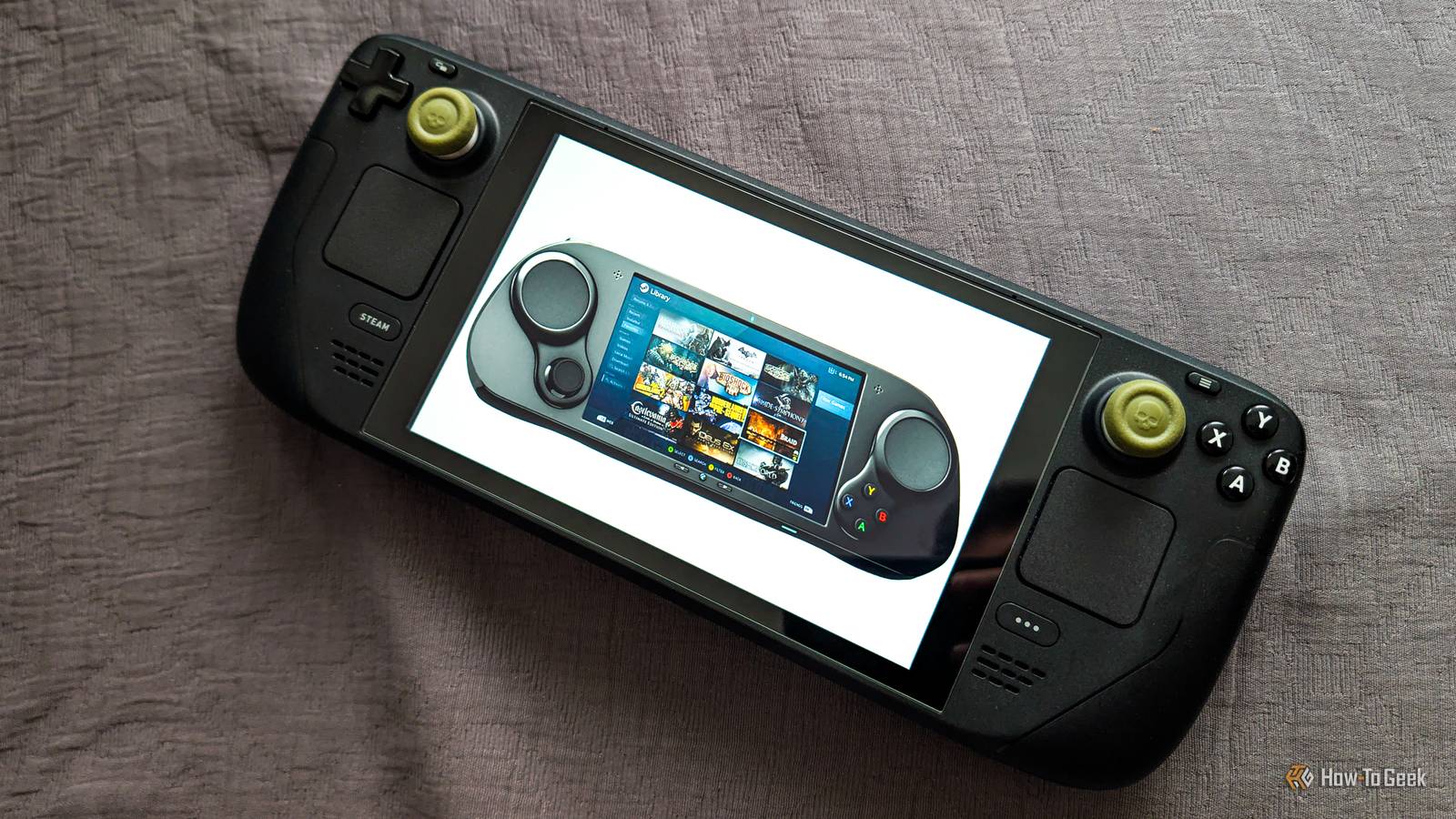
It featured a quad-core CPU, 4GB of RAM, 32GB of storage, a 5-inch touchscreen, and Wi-Fi support.The team behind SteamBoy claimed their handheld could play “the majority of current games in Steam,” and that it was going to be “the first device that allows [you] to play Steam games on the go.” Quite lofty promises for a small startup.Design-wise, SteamBoy was reminiscent of the original Steam Controller cut in half with a screen placed in between, similar to how the PlayStation Portal is basically two halves of a DualSense with a screen between them.
The original promise was to bring SteamBoy to the masses by 2015, and I have to confess I was really hyped about it.Even though I had some reservations, I couldn’t wait to see it in action.But alas, the project started hitting bumps soon after the reveal, the first of many being the name change.
After changing its name to Smach Z, the project ran into all kinds of trouble Delays, failed promises, and scam accusations The initial problem with the handheld was that the team behind SteamBoy didn’t actually have Valve’s permission to use Steam in its name.So the team renamed it Smach Zero, then changed it again to Smach Z.Otherwise, the original plan remained in place.
The Smach Z team launched a Kickstarter campaign in December 2015 that went well for about a week.After the first week, pledges slowed to a halt, and ultimately, Smach Z’s first Kickstarter campaign was canceled.The reason wasn’t just that it fell far short of its funding goal, but also that the developers didn’t have a working prototype of the device, which was the first real red flag.
Besides that, interested people wanted it to run Windows instead of the original SteamOS, which is understandable since early versions of SteamOS had really poor game support.Close The Smach Z team returned with a working prototype at Gamescom 2016.Even though the handheld ran only a few games, and those games ran quite poorly, the demo was enough to reignite interest in the device.
After all, it was a dream for many PC gamers to play their favorite games on the go, myself included.I remember seeing a few Smach Z Gamescom videos back then, and while I was disappointed with the overall performance, I hoped the project would come out soon.Anyway, the Smach Z team launched a second Kickstarter campaign the same year, this time with more detailed specs: an AMD SoC with a Radeon R7 iGPU, 4GB or 8GB of RAM, a 6-inch screen, and up to five hours of battery life.
We also got prices: €299 for the standard version and €499 for the Pro version.These prices sounded legit since GPD’s first handheld PC, the GPD Win, cost about the same when it launched in late 2016.The second Kickstarter campaign was a success, and the developers followed it up with an Indiegogo campaign.
According to Notebookcheck, the two campaigns raised over $1 million combined.But unlike the GPD Win, which was already in gamers’ hands, the Smach Z missed its original 2017 release date.And things only got worse from there.
In mid-2017, the YouTuber StopDrop&Retro threw a wrench in Smach’s plans with a video showing the prototype used Steam Controller parts and a motherboard from a cheap Linx Windows tablet.It was sort of a big scandal.Around the same time, the Smach Z developers fell out with the hardware provider, Rhomb.io, which triggered another round of delays.
Several hardware revisions later, the Smach Z finally opened preorders But the competition was already ahead Close With 2017 gone, the development team stated the handheld would finally arrive in 2018, this time with improved AMD hardware.Preorders opened on Smach’s website in March 2018, but unfortunately, the price also dramatically rose, starting at $699 for the base version.The plan was to deliver the handheld to backers by mid-2018, with general availability later that year.
As you’ve probably guessed by now, the release was delayed again, with a revised launch supposedly set for 2019.I remember that, by then, I was pretty sure the Smach Z would end up as vaporware, especially after a pretty poor showing at Tokyo Game Show 2018, where the handheld couldn’t even power on.That looked embarrassing since the project was already more than four years old.
Then 2019 came, and we finally got some working prototypes of the redesigned handheld.At E3, the prototype actually ran some AAA games, and while they ran super poorly, they were at least running on the device itself.The Phawx, a well-known PC handheld YouTuber, received a prototype and published several videos on his channel, which he later removed.
The unboxing video was reuploaded, and after rewatching it, I was reminded why I stopped being excited about the Smach Z at the time.Doom (2016), the only game he tested, didn’t look great, even on the compact screen.On top of that, some buttons didn’t work, and the SD card slot wasn’t connected to the mainboard.
I gave up on the saga after that, and I wasn’t surprised by the events that followed.Unlike the Smach Z team, GPD was cooking and had already released the GPD Win 2 in 2018.The Nintendo Switch was also a massive hit, selling like hotcakes.
On the other hand, the Smach Z was dead in the water for years, and it looked like it would never ship, which ultimately proved true.After multiple delays, the Smach Z ended as vaporware The same year Valve announced the Steam Deck, and the rest is history 2019 came and went, and aside from The Phawx, no one else got to use the Smach Z outside of demo units available at trade shows.Then 2020 arrived, and the Smach Z missed another release date because the team said there were production defects.
Even though some backers asked to receive units with the defects, no one did.In May 2021, after a few more delays, Smach, the company behind the Smach Z, announced it had lost its private investment and might soon enter bankruptcy.In the end, no one who preordered it got a unit, and the Smach Z became vaporware.
The silver lining is that the same year, Valve announced the Steam Deck.Unlike the Smach Z, the Deck actually launched in early 2022, after a short two-month delay, and quickly became the most popular PC handheld on the market.I got my Steam Deck in February 2023, and I got hooked immediately.
More than three and a half years later, I’m still neck-deep in handheld PC gaming and can’t wait to see what Valve has in store with the Steam Deck 2.The Smach Z offered a dream its team couldn't turn into reality When I first heard about it, the Smach Z sounded too good to be true.Despite my initial reservations, I was ready to throw my money at it as soon as it hit store shelves.
Ultimately, though, it became a massive disappointment and a cautionary tale of failed promises from a team that bit off more than it could chew.That said, for a few short years, it looked like the Smach Z would give PC gamers a Steam Deck long before the actual Steam Deck came out.
Read More