We’re starting with business in this weekend’s 3D Printing News Briefs, then moving on to defense.We’ll move on to young 3D printing entrepreneurs, and finish with some research out of MIT.Kind Designs Raises $10 Million in Pre-Series A Financing Round Living Seawalls.
Image courtesy of Kind Designs Miami-based climate resilience company Kind Designs announced that it has raised $10 million in a Pre-Series A financing round, which brings its total funding so far to $21.5 million.Returning investors Mark Cuban and former Washington D.C.Mayor Adrian Fenty joined the round, as well as new investor Kyle Kuzma, an NBA forward.
The company creates large-scale 3D printed Living Seawalls that help hold back water, restore marine ecosystems, and improve water quality.Kind Designs says that demand for these has risen as coastal communities are working to replace aging shoreline infrastructure with solutions that are more “resilient,” and it now also offers Living Seawall Tiles, Living Shorelines, and 3D Printed Artificial Reefs.In 2026, the company says it generated $10 million in contracted revenue, built out a $175 million active pipeline, and expanded its projects to luxury hospitality and even federal defense applications.
This infusion of capital will be used for several purposes, including to speed up expansion into new markets, like California and New York, add to its engineering and operations team, and triple production capacity at the company’s seawall factory.With Florida’s Governor Ron DeSantis recently signing new legislature to make it easier to approve living shoreline projects, Kind Designs won’t be slowing down anytime soon.“The seawall industry is a multi-hundred-billion-dollar market that has never had a true technology company.
We’re building one of America’s most important tech companies to put resiliency on the map as the next great industrial category,” said Anya Freeman, the founder and CEO of Kind Designs.US Navy Schoolhouse Adds Phillips Hybrid & Markforged Systems The US Navy’s Deployed Advanced Manufacturing Initiatives highlight workforce development and point-of-need production by integrating metal and polymer AM across both shore-based and shipboard operations.These priorities are directly supported by the Navy’s Schoolhouse in Danville, Virginia, which just procured several hybrid and additive manufacturing systems to expand fleet readiness.
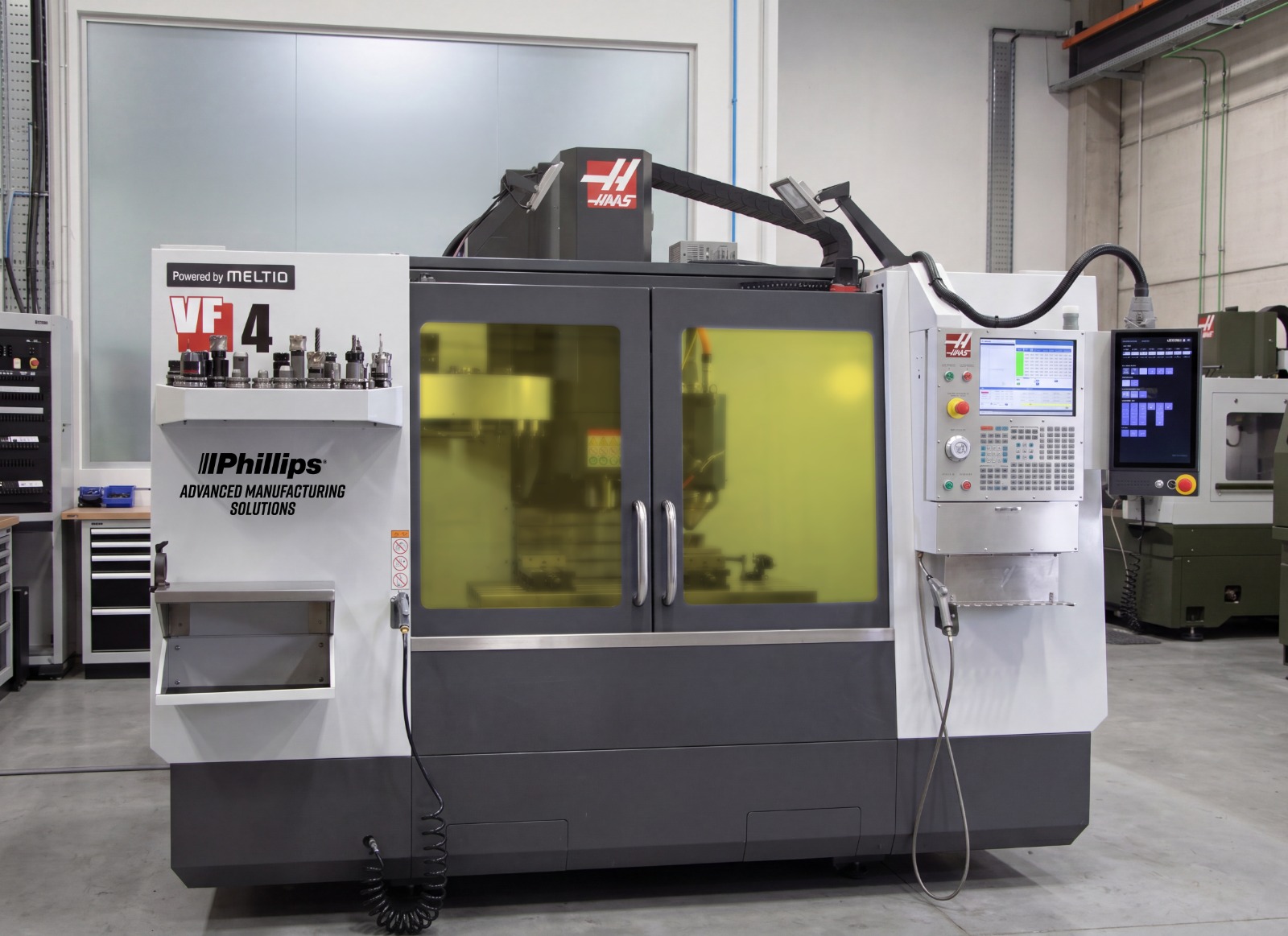
The investment by the Schoolhouse, which is owned by Naval Sea Systems Command (NAVSEA) and operated in collaboration with the Institute for Advanced Learning and Research (IALR), includes 12 Phillips Federal hybrid manufacturing systems.The hybrid Phillips systems are built on Haas TM-1P CNC platforms and integrated with Meltio’s Directed Energy Deposition (DED) technology, enabling the repair of worn parts, fabrication of new components, and restoration of high-value assets.Also purchased were 12 Markforged X7 composite 3D printers, so sailors can rapidly print strong parts, fixtures, tooling, prototypes, and replacement components. BlueForge Alliance executed the procurement of the Phillips and Markforged systems on behalf of the Navy, and the machines will give Navy personnel in the Afloat Training Program critical hands-on experience with composite AM, metal hybrid manufacturing, and production-ready workflows.
“This effort reflects a highly collaborative approach between the Navy, BlueForge Alliance, Meltio, Markforged, and Phillips Federal to deliver real-world manufacturing capability for the fleet.By training sailors on the same hybrid and additive systems they will encounter aboard ship, the Navy is accelerating readiness, improving sustainment outcomes, and strengthening its advanced manufacturing workforce,” said Bobby Keithley, Vice President of Sales & Product Strategy, Phillips Federal.“Hybrid manufacturing provides a powerful advantage by combining additive and subtractive processes, enabling sailors to produce new components, repair worn parts, and reduce dependence on traditional supply chains when operating in contested or remote environments.” Preteen & Twin Have Successful Business Making and Selling 3D Printed Toys A Bambu P2S.
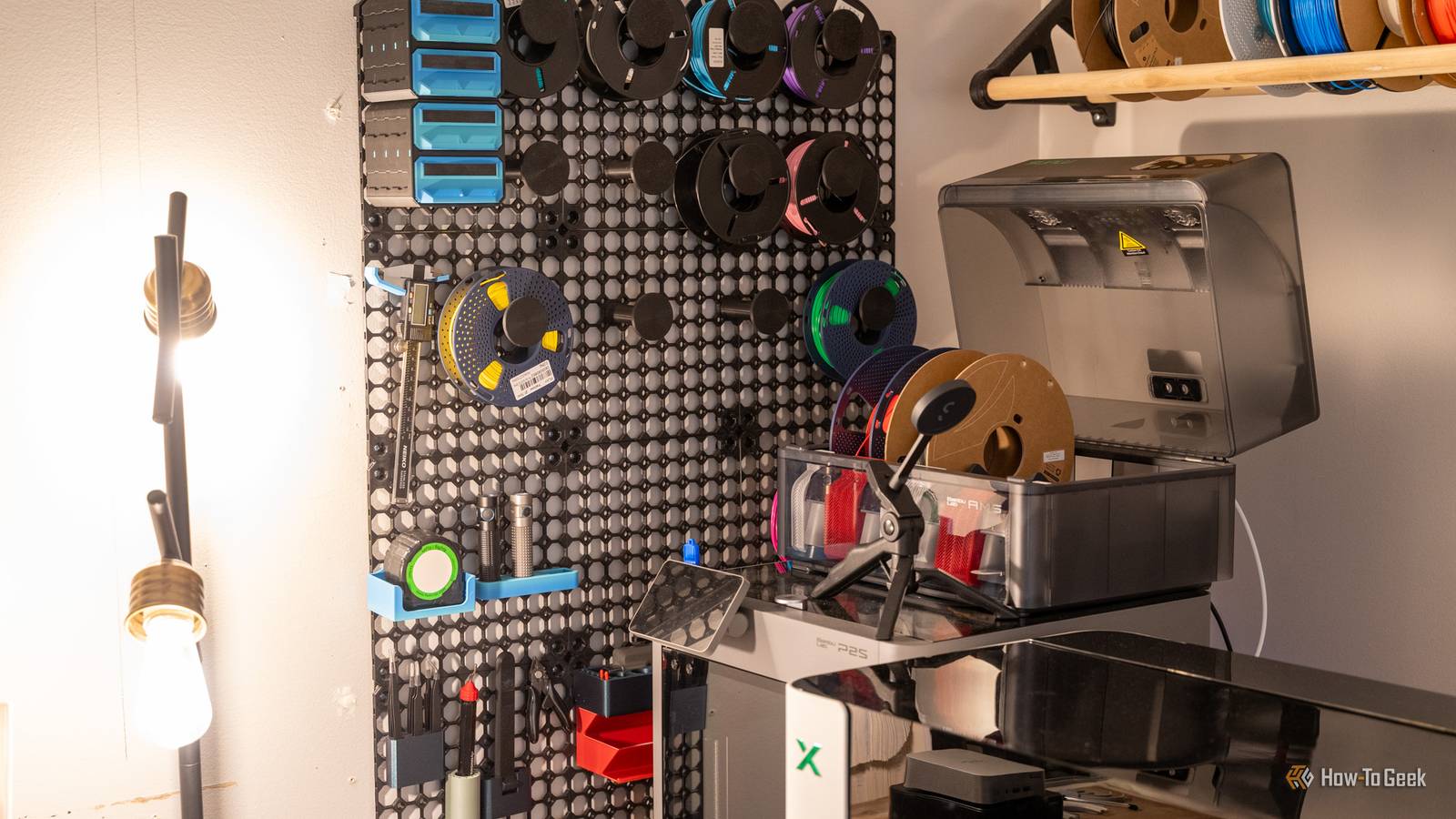
Image courtesy of Bambu Lab.When I was 12 years old, I ran the occasional lemonade stand with my friends, and occasionally had baby-sitting gigs.That’s nothing compared to 12-year-old Aaron Osirus, who runs a custom 3D printing business out of his playroom! He saw his classmates carrying 3D printed fidgets at school, and thought he could replicate the plastic toys at home.
Aaron’s parents loaned him $600 to buy a 3D printer, likely a Bambu system, with an automatic material system that can switch colors during printing.Selling to his classmates and neighborhood kids, Aaron customizes each order based on preferred color, design, and size before setting the price and timeline for his wares.The demand became so great, Aaron’s twin brother Alain even came onboard to help run the business, which offers repeat customers a 50-cent discount.
None of their 3D printed toys cost customers more than $5, and after labor and supplies, the twins make about $200 in profit each month, which reflects broader industry trends.Additionally, they say they’ve learned important lessons about customer service, investing, and entrepreneurship, and have grown closer through this endeavor.“Follow your dreams,” Aaron says to other young entrepreneurs.
“Just try your hardest.You’ve got to save up the money.You’ve got to plan for everything.” Alain agrees, stating, “Chase your dreams.
Outcompete everyone else in your business.Show them what you’re made of.” MIT Researchers Develop Reusable Supports with Water Soluble Interfaces Vat polymerization 3D printing is great for making high-resolution resin parts with smooth surface finishes.Unfortunately, you need support structures during the printing process to hold up any overhangs, or thin, weakly supported features, and the supports have to be manually removed once printing is complete, which isn’t great for that smooth finish.
Additionally, these structures generate a lot of non-recyclable plastic waste.A team of researchers from MIT decided to take on this challenge, and developed water-soluble support interfaces that are reusable, which cuts back on waste.There are other ways to get around these issues in resin 3D printing, such as multi-material resins systems or volumetric printing, but as the researchers explain, these approaches “impose constraints on hardware, resin formulations, and part geometry.” So the MIT team developed a top-down resin printing method, with water-soluble resin applied at the support tips only; this forms an interface between the part and the supports.
Once the part is printed, the interface is dissolved in a water bath by applying high-frequency sound waves.The part is released from the supports with little force, and the prefabricated supports remain intact, so they can be used again.“We characterize how the interface geometry is related to the support pillar diameter and offset distance to accommodate the soluble support interface, with the best set of print parameters yielding artifacts comparable in size to manually separable, monolithic supports.
A single set of supports is reused with no observable change in the support function or release behavior across four print cycles.We demonstrate batch production of several dozen miniature parts released simultaneously, a print-in-place chain assembly, and a model dental aligner on contour-matched supports,” the researchers wrote in the abstract for their research paper.“Continued development of the reusable, dissolvable interface approach could enable fully automated, zero-touch VP production of complex polymer parts in large quantities.” Subscribe to Our Email Newsletter Stay up-to-date on all the latest news from the 3D printing industry and receive information and offers from third party vendors.
Print Services Upload your 3D Models and get them printed quickly and efficiently.Powered by FacFox Powered by 3D Systems Powered by Craftcloud Powered by First Mold Powered by Xometry 3DPrinting Business Directory 3DPrinting Business Directory
Read More