I tend to hold on to my vehicles for a long time, which means things eventually wear out or stop working the way they should.I also try to handle repairs myself whenever it makes sense.Sometimes that's as simple as replacing a sensor or tracking down a bad connection, but the hardest part is usually figuring out what's actually wrong.
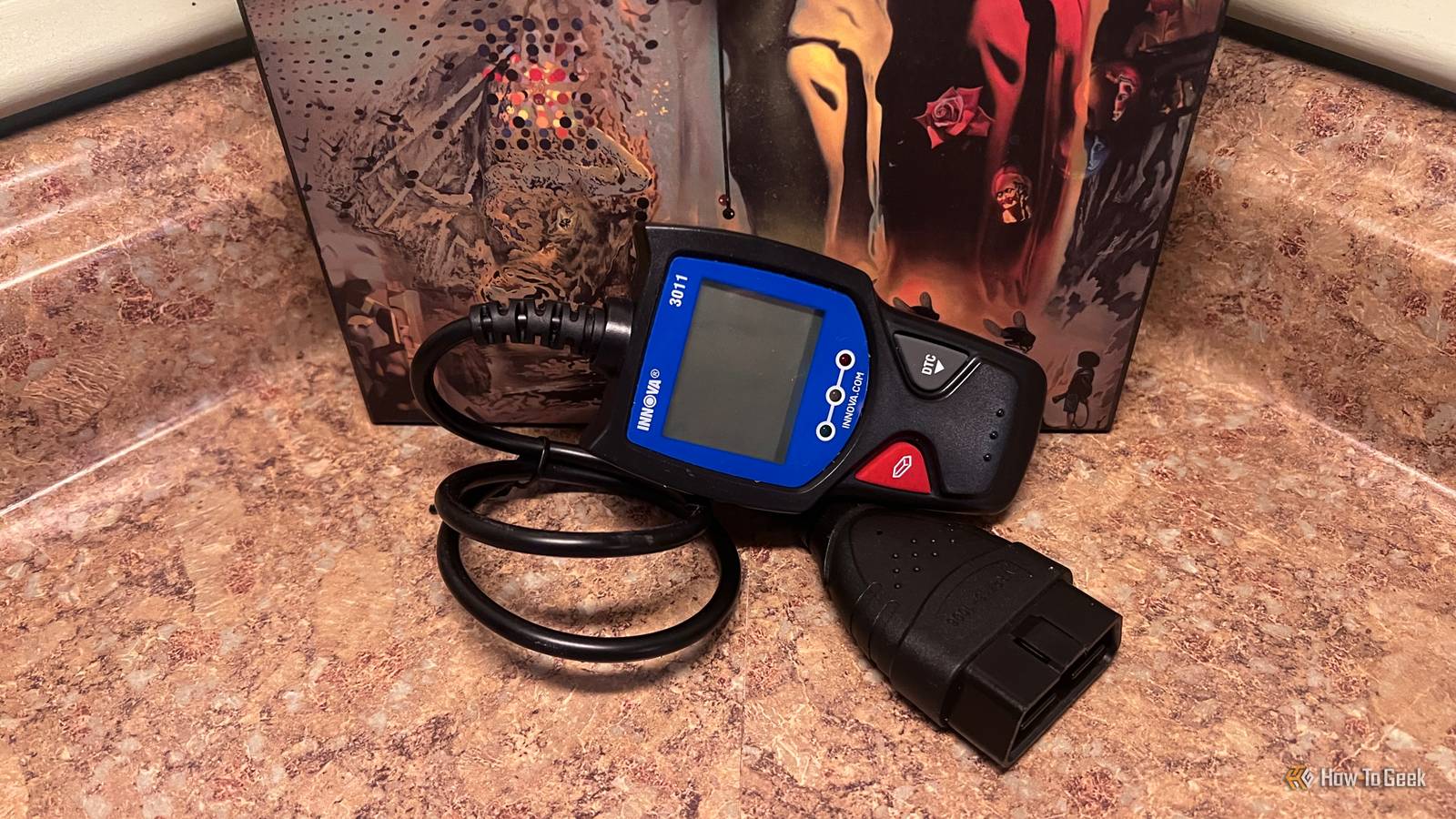
That's where my OBD-II scanner has earned a permanent spot in my toolbox.I originally bought it to read check-engine codes, but I've found that I can view quite a bit more information than that.Depending on the scanner and the vehicle, it can show you what was happening when a fault occurred, tell you whether the car is ready for an emissions test, and even display information from the engine while it's running.
It won't replace proper troubleshooting, but it gives me a much better place to start before I begin replacing parts or paying a shop to diagnose the problem.Read and clear the code behind your check-engine light The code gives you a much better place to start troubleshooting Close You're driving down the road thinking about your day and suddenly the check-engine light comes on.It happened to me a couple of months ago after my wife filled up the tank.
The gas cap apparently wasn't tightened all the way, and after driving for a bit, there it was.Thankfully, that one was an easy fix.I plugged in my OBD-II scanner, pulled the code, and had a pretty good idea where to start looking.
That's the most obvious use for an OBD-II scanner, but it's also the one I use the most.A trouble code doesn't necessarily tell you which part has failed.Instead, it points you toward the system where the vehicle detected a problem.
Clear the code and see if it comes back Most OBD-II scanners also let you clear trouble codes and turn off the check-engine light.Sometimes I do that after fixing the problem, but other times I use it as part of troubleshooting.My Suburban is more than 20 years old, and occasionally a code will pop up that doesn't immediately point to a serious problem.
In those cases, I'll clear it and keep an eye on things.If the light stays off and the code doesn't return, it may have been a temporary issue.If it comes back, I know I need to dig deeper.
One thing to keep in mind is that clearing the codes also resets the vehicle's emissions readiness monitors.That matters if you have an inspection coming up, and I'll get into that in more detail below.Related Your car might have an open safety recall—here’s how to check Checking only takes a moment.
Posts By Carl Anthony Check emissions readiness before an inspection Your scanner can tell you whether the car is ready to be tested I'm lucky these days because Florida doesn't require the kind of periodic vehicle inspections I dealt with when I lived in New Jersey, New York, and Pennsylvania.New Jersey requires periodic emissions inspections for many vehicles, New York requires annual safety and emissions inspections, and Pennsylvania requires annual safety inspections, with emissions testing also required in many counties.If you live somewhere that requires emissions testing, your OBD-II scanner can save you a wasted trip.
Most scanners have an I/M readiness screen that shows whether the vehicle's emissions monitors have completed their self-tests.If too many of those monitors still show as "not ready," the car may not be ready to pass an OBD-based emissions inspection.This becomes especially useful after you've cleared a trouble code or disconnected the battery.
Doing either can reset those monitors, and they don't all become ready again immediately.The vehicle has to be driven under the right conditions while the computer runs the tests again.Before heading to an inspection station, I can plug in the scanner and check the readiness screen first.
If several monitors still aren't ready, I know the car needs more drive time before I bother taking it in.See whether the fault captured freeze-frame information Freeze-frame data shows what the engine was doing when the code was set My current Innova scanner is pretty basic, but it does tell me when freeze-frame data was captured along with a trouble code.I can't actually view that data on this scanner, but knowing it's there is still useful.
It means the vehicle's computer saved a snapshot of operating conditions from around the time the fault was detected instead of leaving me with only the code itself.Freeze-frame data becomes much more useful with a more capable scanner or a PC-based diagnostic tool that can actually display it.Depending on the vehicle and the fault, that snapshot might include engine RPM, vehicle speed, coolant temperature, engine load, fuel-trim readings, or other sensor data.
If a problem only happens when the engine is cold or under load, for example, that information gives you more context about what was happening when the code appeared.That's one reason I plan to move to a scanner that connects directly to a PC.A better setup would let me see it and use it as part of the troubleshooting process instead of working from the trouble code alone.
Watch live engine data while the car is running Live data lets you see what changes in real time A more capable OBD-II scanner lets you watch live engine data while the vehicle is running.Instead of looking at a snapshot from when a fault occurred, you can watch readings such as coolant temperature, engine RPM, fuel trims, or sensor values change in real time.That can be useful when you're trying to track down a problem that only shows up while the engine is running or under certain conditions.
A basic scanner is more useful than it looks Even an inexpensive OBD-II scanner gives you more to work with than a simple check-engine code.Once you start using the available data, it becomes a much more useful troubleshooting tool.It will definitely help you narrow things down before you spend money or start taking things apart.
Read More