You wouldn’t download a car, 3D print it at home, and then assemble the pieces into a life-size replica… right? That’s the idea behind Print Your Vehicle, a project with lofty ambitions of making life-sized 3D-printed car models a reality.The good news is that the project is completely free, open-source, and some cars are already available.The bad news is that there’s a long way to go yet.
Print Your Vehicle has 1:1 scale vehicle models Free and open source Close Print Your Vehicle is an aptly-named effort that hopes to democratize the car building and restoration process.At the time of writing, there are four ready-to-print models available, with 628 meshes of real-world vehicles.Models come in the form of pre-sliced STL and 3MF files, which can be sent straight to your printer, along with assembly guides for putting the model together.
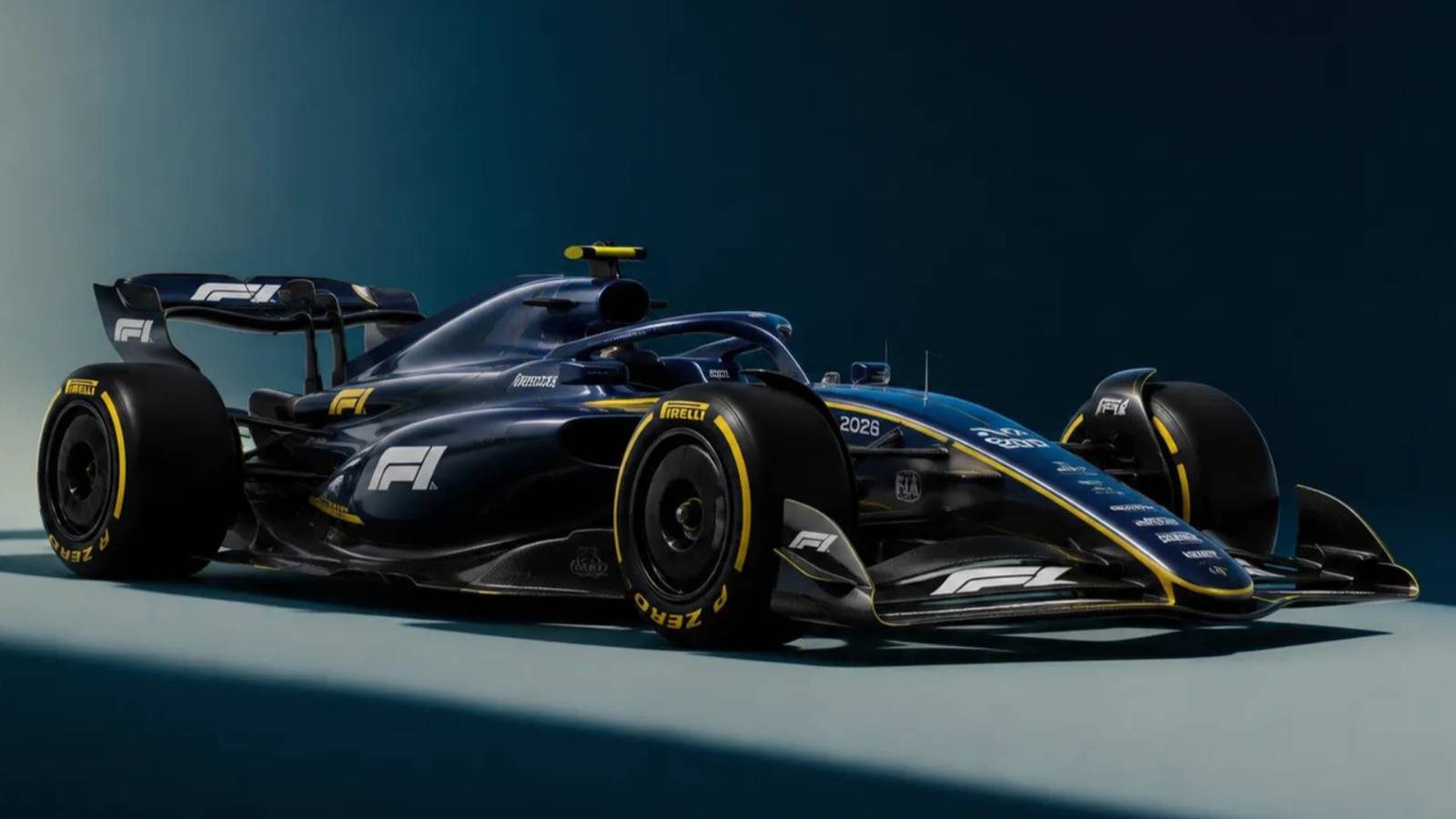
Right now you can download a ready-to-print Koenigsegg Jesko, a Lamborghinig Aventador SVJ, a Lamborghini Countach, and a 2024 Formula One car.The Jesko consists of a 114 MB ZIP file download, which expands to 268 MB of STL files, a gallery, and a readme file.The models are divided between body, interior, and additional elements like wings and spoilers.
Within these categories is further segmentation by part, like doors, hoods, and bumpers.The parts are made to fit a “standard” print bed size of 220x220x220mm, and cut up into pieces that shouldn’t cause your slicer to cook itself while generating the necessary G-code to print.In total, the Jesko is made up of 580 parts for a complete build, with a recommended layer height of 0.2mm and 15-20% infill density.
Every model is different, and no precise filament calculations are provided.I did a bit of napkin math and worked out that a 1:1 scale Koenigsegg Jesko requires in excess of 20KG of filament.You’re looking at potentially weeks to produce one of these when you factor in printing, finishing, and assembling.
Despite this, it’s hard not to be impressed by a project of this scale and potential.The project has greater ambitions More cars, scale models, and more In an illuminating Reddit thread, the project author laid bare their ambitions and concerns for the project.The main roadblock is the workflow involved in converting meshes into printable models.
Meshes are complete car models, often ripped from sources like video games and online models, or scanned using handheld 3D scanners.These need to be converted into “clean printable geometry,” which can be a labor-intensive process.This involves identifying the part, removing non-print geometry like decals and rivets, and then combining these into a complete model.
From here, the mesh needs to be audited, repaired, and split into individual prints before it makes the cut.This is why the project has more than 600 meshes ready to go but relatively few printable models.Current meshes range from the humble Ford Focus to rally monsters like the Lancia Stratos HF.
The author has been upfront about the difficulties in making this work: “I have been experimenting with Blender, retopology, shrinkwrapping, quad remeshing, surface reconstruction, PN-triangles, Point2CAD etc.but there are still a lot of problems around topology, thickness, splitting large parts, tolerances and preserving the original surfaces.” Automation is the eventual goal, with the pipeline itself also likely to be the subject of an open-sourcing effort.This could pave the way for a more efficient mesh-to-print pipeline that could be used to bring other digital 3D files to life.
\Some have expressed concerns about potential legal ramifications should the project take off (to which the author’s response was “please torrent everything before it happens”).Bike models are also in the pipeline, as are scale models “once I figure this out … shouldn’t be too hard to implement, I guess.” What are you going to do with a 3D-printed model car? Anything you want, of course If PYV achieves its goals, it will make a huge library of printable vehicles available free of charge.These will be made available via a desktop app which allows you to configure, scale, and select appropriate materials before producing the parts.
While these ambitions are clearly stated, what you end up doing with 3D-printed car models is a lot more open-ended.Building actual cars is only one part of the picture, though it is an important one.The project’s raison d’être can be traced back to TV shows about passionate individuals building and restoring cars.
The idea took shape thanks to dedicated communities of enthusiasts on Facebook and YouTube who would document their builds at home.The author states that: “Some print in PLA and fiberglass over it, while others use the print just to make a mould.For parts staying on the car, ASA is usually better for heat and UV.” You can use models to print molds and then create your own parts for restoration projects, printing just what you need rather than the whole car.
Now PYV has become a community of its own, with a Discord, Facebook Community, and GitHub repository.You can be a part of it by writing code, contributing models, scanning new ones, or otherwise engaging with other enthusiasts.The project likens itself to “LEGO for grown-ups,” and that’s an apt comparison.
Ever wanted to have a life-size F1 car hanging on your garage wall? What about printing a realistic interior for a racing simulator? With some work, you can already scale down models to create something much smaller, just for fun.At this stage, it can feel like the PYV project is out of its depth.The legality has yet to be tested, and success is contingent on a workflow that’s still in the design stage.
Even so, the fact that there are models ready to print has me very excited for what’s to come.Love being inspired by ideas like these? Check out these ambitious ESP32 projects.
Read More