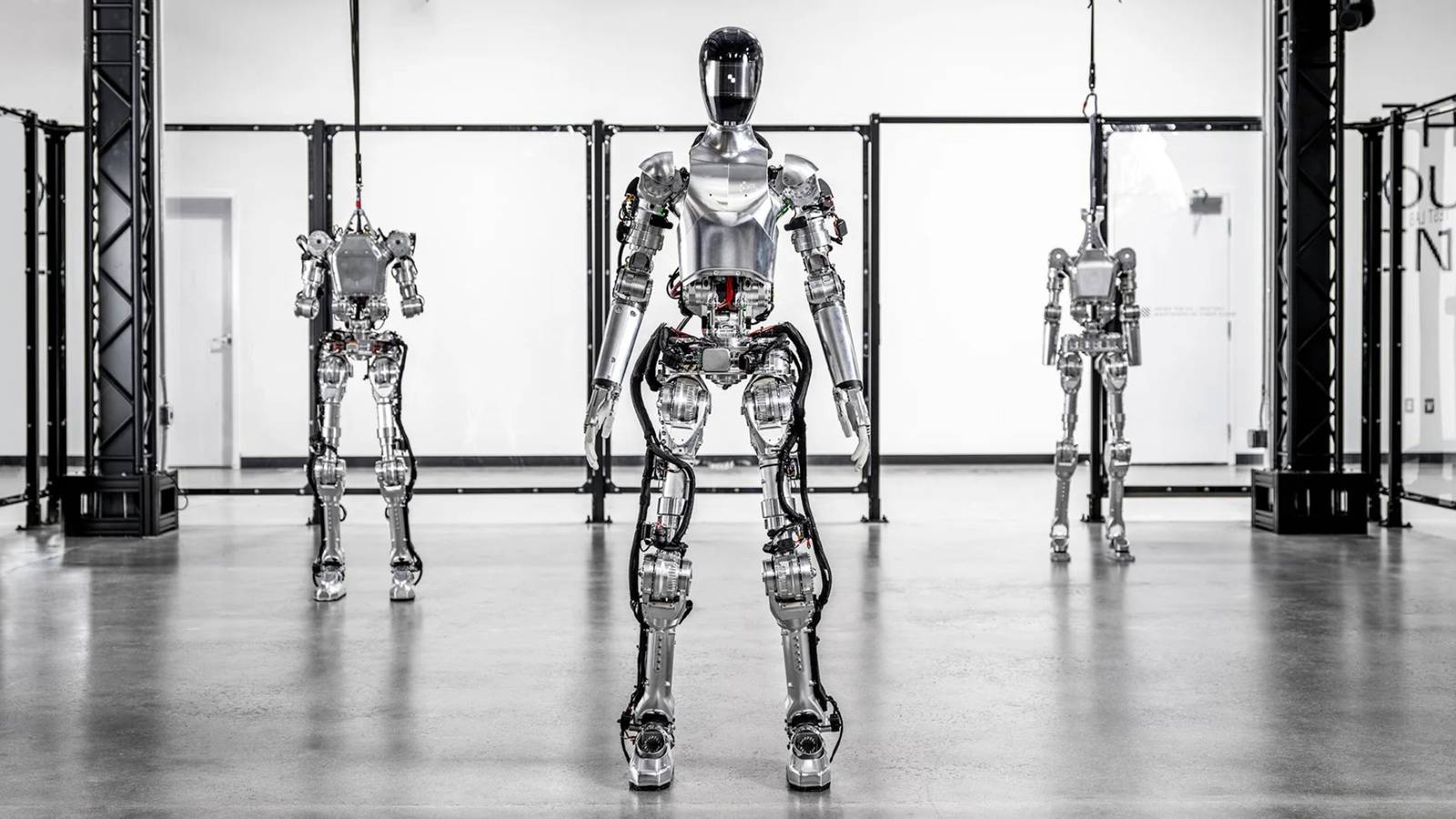
In the movies, robots are often human-shaped, mainly because to have a robot in the movie at all, you had to use the "dude in a suit" method.However, since we're also watching a story to entertain people, it's easier to make them care about a robot that looks like a person.The big exception might be R2-D2 and C-3PO.
No one likes the latter and people adore the former.But now that the robots of sci-fi are rapidly becoming a part of real life, humanoid robots get most of the marketing push and attention.Companies like Figure, whose shiny metal men are displayed above, spend a bundle on slick videos showing off how these bots work in factories and even help clean your kitchen.
But are there any real-world practical reasons a robot has to resemble a human? Why can't it just be a box of arms with tools on the end? Surprisingly, it turns out that while not all robots should be humanoid, some of them have several reasons to go bipedal.Humanoids make sense as a "brownfield solution" We live in a humanoid-shaped world Close The first reason you want robots that are humanoid is the simple fact that most of the spaces where we want robots to work were designed for humans.The whole reason those figure robots can step into a factory and start doing useful work is because the factory was designed for humans to work within and operate.
Instead of having a robot that just mops the floor, or cleans your windows, or walks your dogs, a humanoid can slot into the human-shaped hole that exists from the time when we did these things ourselves.This is what's known as a "brownfield" solution, where you take existing infrastructure and repurpose it.So you can convert a factory that relies on human labor into one that's automated without building a whole new factory from scratch.
One day, we'll have factories and other spaces where humans never go, and so there will be no reason to have humanoid robots in there either.The whole "factory" could just be one massive robotic system that takes in parts and raw materials on one end and puts out products on the other.We also understand and like humanoids better It's hard to have sympathy for a box on wheels Humans are wired to communicate with, respond to, and understand other humans.
So for robots that are specifically meant to interface with humans, it makes sense to give them at least some human-like features.A face to look at, eyes to make contact with, expressions, body language, personality, and the list goes on.In other words, a major reason humanoid robots will end up justifying their existence is the same reason you don't just use the command line, or program your computer with raw binary code.
Human beings need human-friendly communication, and a screeching Dalek from Doctor Who isn't it.It turns out the true nature of AI works best for humanoids Yes, humanoid robots are actually easier to develop thanks to how AI learns Those are both old arguments above, but as this new age of AI technology and vast neural nets gets into full swing, it's becoming clear that having human robots may actually be necessary to make them useful.The reason comes down to how the AI software that will occupy robot bodies learns.
If you want to teach a robot how to operate a dishwasher, the most direct way is to have it watch millions of human beings perform the task.This can include (as Techradar reports) having your robot AI watch videos.Which is what Google and other research teams do.
MIT Technology Review also reported on an interesting situation where gig workers are paid to strap cameras to their heads, and then film themselves in first-person doing chores around their homes.Some of the major humanoid robot companies that want to sell you a household robot have humans remote control them at times using VR headsets.All of this helps the AI learn how to handle the massive variety and chaos that happens in reality, but because all this learning is based on humans doing human things in environments built for humans, it works best with humanoid robots.
This won't be true forever It's a little funny to think that the reason we're sending an army of C-3POs into factories and homes instead of R2-D2s is because it's hard for a bin on wheels to learn from an upright ape.However, as AI improves, simulation training gets better, and the field of robotics advances, I think this reliance on human-based training data will become less important.After all, we do have impressive robots that have body plans that don't resemble humans at all, and they're also using advanced machine learning methods to figure out how to open doors, or move boxes, or whatever else is expected of them.
Right now, humanoid training data is easy to get, and straightforward to apply, but the variety of bots that will roam the world this century will likely be quite robust.
Read More