Hyundai thinks it has found a solution to one of the biggest problems holding EVs back.Its first extended-range electric vehicle is due in 2027, promising more than 600 miles of total range by combining electric motors with a gasoline engine that works as a generator.The technology could offer a compelling middle ground between hybrids and fully electric vehicles, delivering EV-like performance without the same level of range anxiety.
And while Hyundai isn't the first automaker to experiment with the concept, its upcoming model could help bring EREVs firmly into the mainstream.In order to give you the most up-to-date and accurate information possible, the data used to compile this article was sourced from Hyundai websites and other authoritative sources.Related Mazda proved big screens were a mistake — then ruined its best SUV with one Despite new tech, the crossover feels more generic than ever before.
Posts 2 By Tyler Dupont An EREV fixes the biggest problem with electric vehicles Something to bridge the gap While a lot of people like the idea of owning an EV, there are still a couple of hurdles to going electric.Range has always been one of the biggest concerns buyers have, with most modern EVs in America only able to go about 300 miles on a single charge.Hyundai has, however, announced that they will be launching EREVs next year, which aim to eliminate range anxiety.
An EREV offers the best of both worlds There are a number of different kinds of powertrains on the market today, with the most common being internal combustion engines, hybrid systems, and electric motors.If you were unsure about going fully electric, you have always had the choice of a plug-in hybrid, which offers a small amount of electric-only range and runs on gasoline the rest of the time.The technology that Hyundai is looking to employ essentially does things the other way around.
An EREV, otherwise known as an Extended Range Electric Vehicle, is the opposite of a traditional plug-in hybrid.It comes with a smaller battery pack than most EVs as well as a small internal combustion engine.Instead of the engine powering the wheels, though, it acts as a generator for the battery pack.
This means that EREVs operate as EVs, powering the wheels via electric motors.The benefit of this is that EREVs generally have quite a lot of range, with the internal combustion generator keeping the battery charged on longer trips.The battery might be smaller than what you get in traditional EVs, but it should still offer well over 100 miles on a charge.
They're less complex than plug-in hybrids, which means they should be more reliable.The engine is also able to run at a constant, optimized RPM, making it more efficient than engines that send power to the wheels.Related Mercedes gave its new C-Class three AI assistants that compete to answer your questions You can now hold a back-and-forth conversation with your Mercedes while driving.
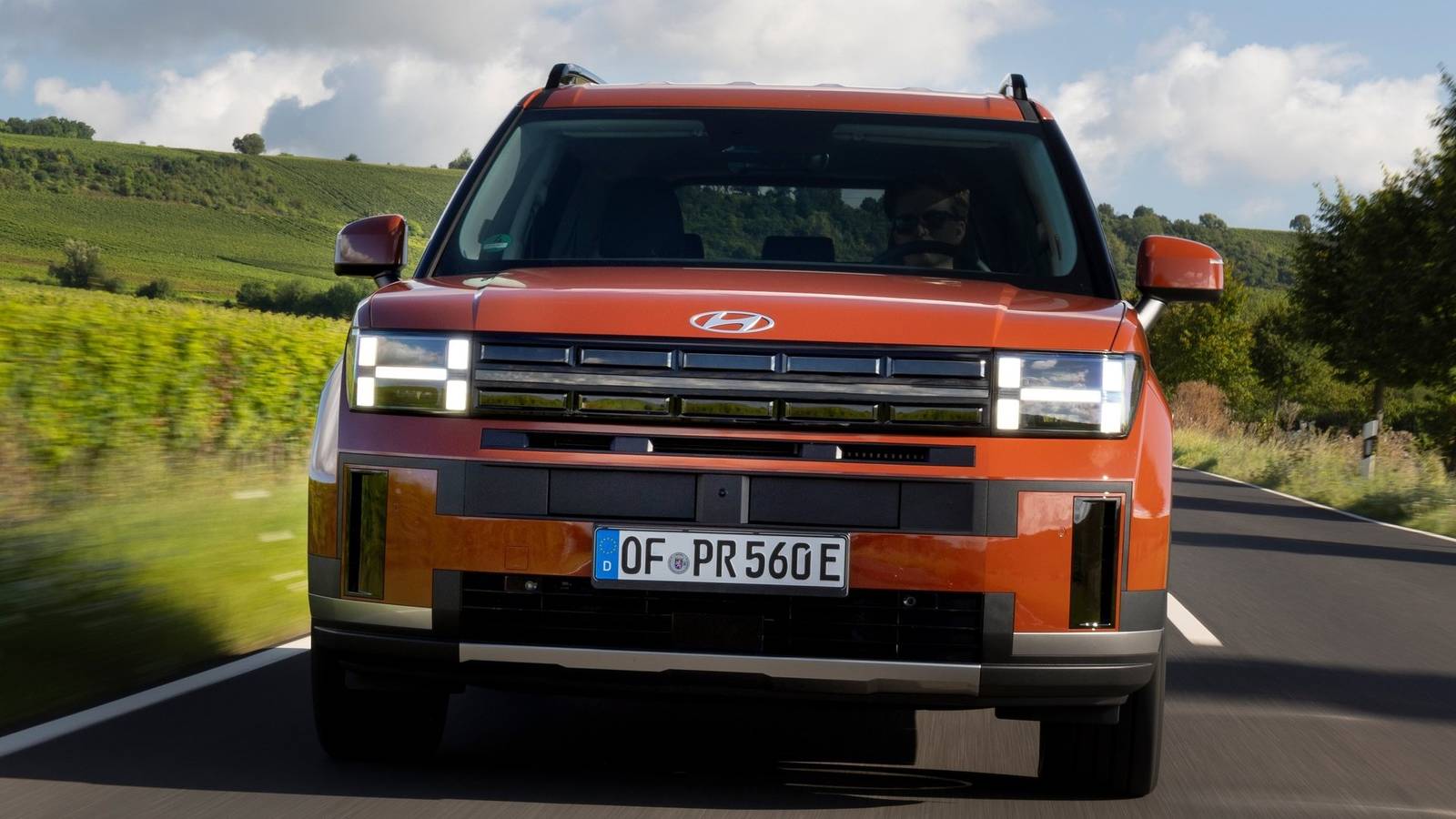
Posts 1 By Carl Anthony Hyundai and Genesis plan to introduce EREV models by early 2027 EREV variants of existing models Close At Hyundai's 2026 CEO Investor Day presentation in Seoul, South Korea, the brand announced that they would be adding EREV models to both the Hyundai and Genesis lineup.It is planned that the first two models, one for each brand, will be hitting the market early next year.The Santa Fe and GV70 get the EREV treatment The first of Hyundai's models to receive an EREV variant will be the Santa Fe.
The brand has said that the new model will feature a pair of electric motors, one powering the front axle and the other the rear axle, meaning these models will be all-wheel drive.Hyundai says that it should deliver upwards of 600 miles of range and the same kind of acceleration that we've come to expect from fully electric SUVs.Genesis will also be launching an EREV variant.
This is a little more surprising; Genesis only just announced their first traditional hybrid model last week.Regardless, the Korean luxury brand will be adding a GV70 EREV to their lineup next year, though.There isn't any indication as to whether or not the GV70 will feature the same powertrain as the Santa Fe EREV, but the brand has said that their model should deliver around 640 miles of range.
Related This Genesis SUV has no B-pillar, and an AI that runs the vehicle Without a B-pillar to anchor a conventional hinge, the rear door needed a different way to swing open.Posts By Carl Anthony Hyundai isn't the first brand to develop an EREV They won't be the last either While Hyundai has brought the technology into the mainstream conversation in the U.S., they aren't the first brand to implement the technology.There have been a number of automakers that have put out EREVs, and in China they have become relatively common.
There are also a number of automakers who have EREVs planned for release soon.A rich history and a promising future The first modern EREV produced was the Chevrolet Volt, first launching all the way back in 2010.BMW also tried their hand at the technology, with the i3 hatchback in 2013.
A number of Chinese automakers have brought the technology into the mainstream as well.Mazda also released a pretty neat version of the setup in the MX-30 in 2022, using a rotary engine as the internal combustion generator.Looking forward, a number of other automakers have EREV models in the works.
Stellantis will utilize the technology in a variant of the Jeep Wagoneer as well as the RAM 1500.Ford is also looking to replace the now discontinued F-150 Lightning, and it is said that it will use an EREV powertrain.Even Scout Motors, an upstart automaker, has plans in the works.
EREV technology could help buyers find a happy medium The automotive market is in a pretty turbulent place right now.Even though EVs are still showing significant growth, there are a lot of places with limited infrastructure, and range anxiety is still a problem for people who drive a lot.Extended range EVs could bridge the gap, offering the best of both worlds.
Hyundai being one of the first automakers to bring the technology into the mainstream in the U.S.is a bold, but potentially very profitable move for the brand.
Read More