You’ve probably seen carbon fiber used in high-end products, like on race car wings and road bike frames.Many modern 3D printers have nozzles that are tough enough to print filaments that are infused with carbon fiber, but not everyone is aware of the potential dangers associated with doing so.What’s the problem with carbon fiber? Tiny needles suspended in plastic Carbon fiber is made up of lots of tiny fibers made of carbon atoms that are around 5 to 10 micrometers in diameter.
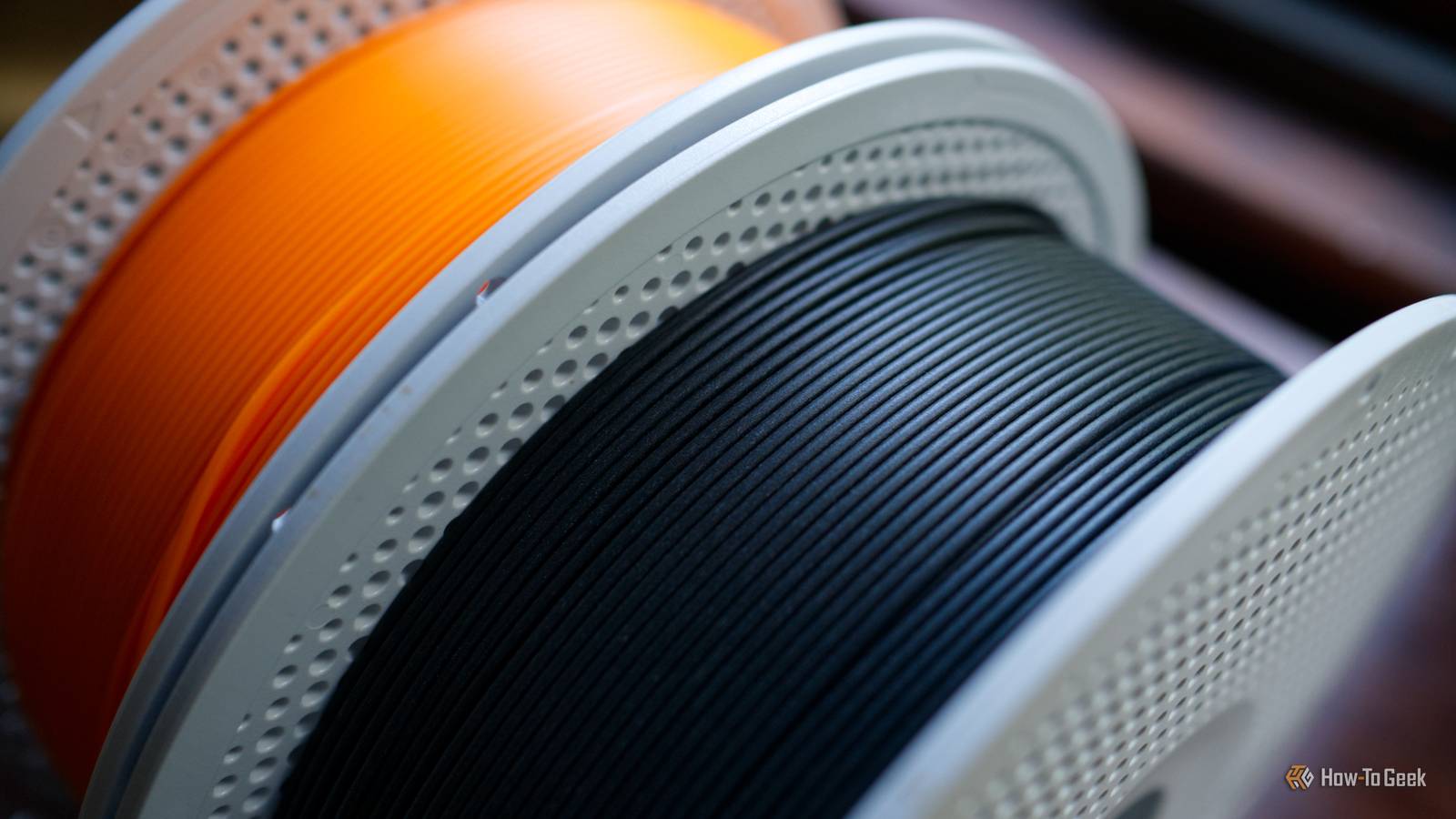
The material is famed for its strength and rigidity, while remaining lightweight.Carbon fibers are used alongside other materials to form carbon fiber composites.In 3D printing, carbon fiber is combined with plastics to form a polymer that can be extruded like any other.
These fibers are known to pose risks to human health, including irritation to the skin, eyes, and mucous membranes.Small shards of fiber can easily become lodged in skin, and airborne carbon fiber dust can become lodged within lungs if breathed in.As a result, the handling of carbon fiber (and composites or polymers that contain it) usually requires the use of personal protective equipment (PPE).
This includes heavy-duty gloves to protect the skin, eye protection, fitted N95 or P2 masks to prevent inhalation, and a HEPA-filtered vacuum cleaner to deal with dust.There is some evidence to suggest that carbon fibers are carcinogenic when inhaled deep into the lungs.One limited study concluded that “a possible weak carcinogenic potency is seen at the higher dosage.” There is no evidence that this danger is present when handling “cured” carbon fiber objects.
The potential for harm has led some to make the controversial claim that carbon fiber dust is somehow comparable to other airborne threats like asbestos.This appears to stem from the idea that it’s much harder for the lungs to get rid of these particles from the soft tissue.This isn’t necessarily the case for the skin outside of your body, which is constantly shedding.
The dangers posed by carbon fiber printing at home Do 3D printers cause particles to become airborne? The first time I saw evidence of carbon fiber particles posing a danger to 3D printer owners was when YouTuber Nathan Builds Robots released a video showing how easy it is to transfer particles from filament to skin.With the purchase of a relatively cheap digital microscope, Nathan was able to see individual carbon fibers suspended in a piece of broken filament.He then took a look at his hands after handling the filament and noticed that carbon fibers had easily transferred and were now lodged in his skin.
After a little more digging, I found a video by a creator called StrelkoMania who claims to have found evidence of airborne carbon fiber particles when printing carbon fiber-infused Nylon filament.They constructed a shroud within a Bambu Lab X1C, which was weighed before and after printing, and it appears to have collected both larger and smaller particles.It’s worth watching the full video to understand the limitations of such a test, and it’s clear that more stringent testing should be done to provide a clearer picture.
The precaution that you should only print carbon fiber filaments in an enclosed printer, and take precautions when cleaning up, isn’t a bad idea.It should go without saying that the risk increases exponentially if you break, saw, or sand printed objects created with carbon fiber.Prusa Research performed tests on its own carbon fiber reinforced material, which appears to assuage concerns about the short-term (72-hour) safety of wearing an item made with the filament.
Prusa confirmed that it uses a type of carbon fiber that lacks sharp edges, making it harder to catch on skin and tissue.With this in mind, not everyone uses Prusa filament and not all filaments are made equal.Approaching this material with a “safety first” mindset seems responsible, as is the case with materials like ABS, which can release harmful gases.
Prusa CORE One+ Available in a kit or preassembled, the CORE One+ is a fully enclosed CoreXY 3D printer with active temperature control designed for top print quality and speed.Easy to set up and made to last, this rugged machine is perfect for beginners and professionals alike. CORE One+ kit CORE One+ preassembled Expand Collapse Prusa MK4S 3D Printer Build Volume 250 x 210 x 220 mm Printing Speed 170mm/s The Prusa MK4S 3D Printer is one of the most well-known and well-loved 3D printers on the market.
As one of the main companies behind the open source initiative of 3D printing, the Prusa MK4S still supports open-source software and firmware when other companies are building their own closed-source alternatives.As the 2025 iteration of the classic Prusa 3D printer, you'll get all the modern amenities including fast and reliable printing, easy setup, and Prusa's proven reliability.Pre-Assembled Expand Collapse Do you really need to print with carbon fiber? There may be better filaments that pose less risk There’s undoubtedly a place for carbon fiber polymers in 3D printing, but the benefits of a material like PLA-CF, which blends the relatively weak PLA with carbon fibers, are the subject of some debate.
For tougher filament types like ASA-CF and PPA-CF, the benefits are easier to see.Deals Save on Maker & Creator Deals: Filament, PPE, and Tools Shop Maker & Creator deals for safer printing: discounts on carbon-fiber and alternative filaments, enclosed printers, HEPA vacuums and dust extractors, fit-tested respirators, gloves, and finishing tools.Save on essentials that cut risk and cleanup time.
Deals Explore Maker & Creator Deals For many hobbyist 3D printer owners, PLA is the go-to choice.It’s cheap, hardy enough for prints that don’t require temperature and impact resistance, and incredibly easy to print with.PETG is another solid option that adds strength and resistance to the elements.
Unless you have a very clear idea of the benefits of using carbon fiber reinforced filaments, you probably don’t need them.Airborne carbon fiber filaments are just one of the risks that your 3D printer poses.All 3D printer owners should take some basic precautions to minimize the chance of harm.
Read More