The term “Japandi” is a portmanteau of “Japan” and “Scandi,” and models bearing this label are very well represented in 3D printing model repositories.But this popularity goes beyond aesthetics, since these models are particularly well-suited to this method of manufacturing.Here’s why.
Add How-To Geek on Google Add as Preferred Source Follow on Google Discover What is Japandi? Minimalism doesn’t have to be cold Close Japandi is a style of both architecture and interior design.It rose to prominence in the mid-2010s, fusing two principles from each culture: Japan’s “wabi-sabi” acceptance of imperfection and transience, and the Scandinavian concept of cozy contentment known as “hygge” (from the Danish and Norwegian languages).The style embodies a sense of minimalism that isn’t marred by rigid adherence to straight lines or perfectly-machined materials.
Instead, Japandi embraces natural materials like stone and wood, making peace with the imperfect nature of such substances, but remaining uncomplicated in a manner that feels unfussy.While you might have preconceived notions of what 3D-printed items can and should look like, it’s important to remember that your printer is just a means to an end.Items can just as easily be unabashedly functional as they can be heavily stylized.
Japandi falls somewhere in the middle of these two concepts.The style’s popularity among model authors likely comes down to a few different factors.Many like the look of these items, since they can be relatively simple without lacking personality altogether.
Simple designs are also relatively easy to author.There’s also the snowball effect that occurs as a style grows in popularity, where people opt for a unified aesthetic within their spaces.But there is another slightly more practical reason that I think Japandi models are so popular.
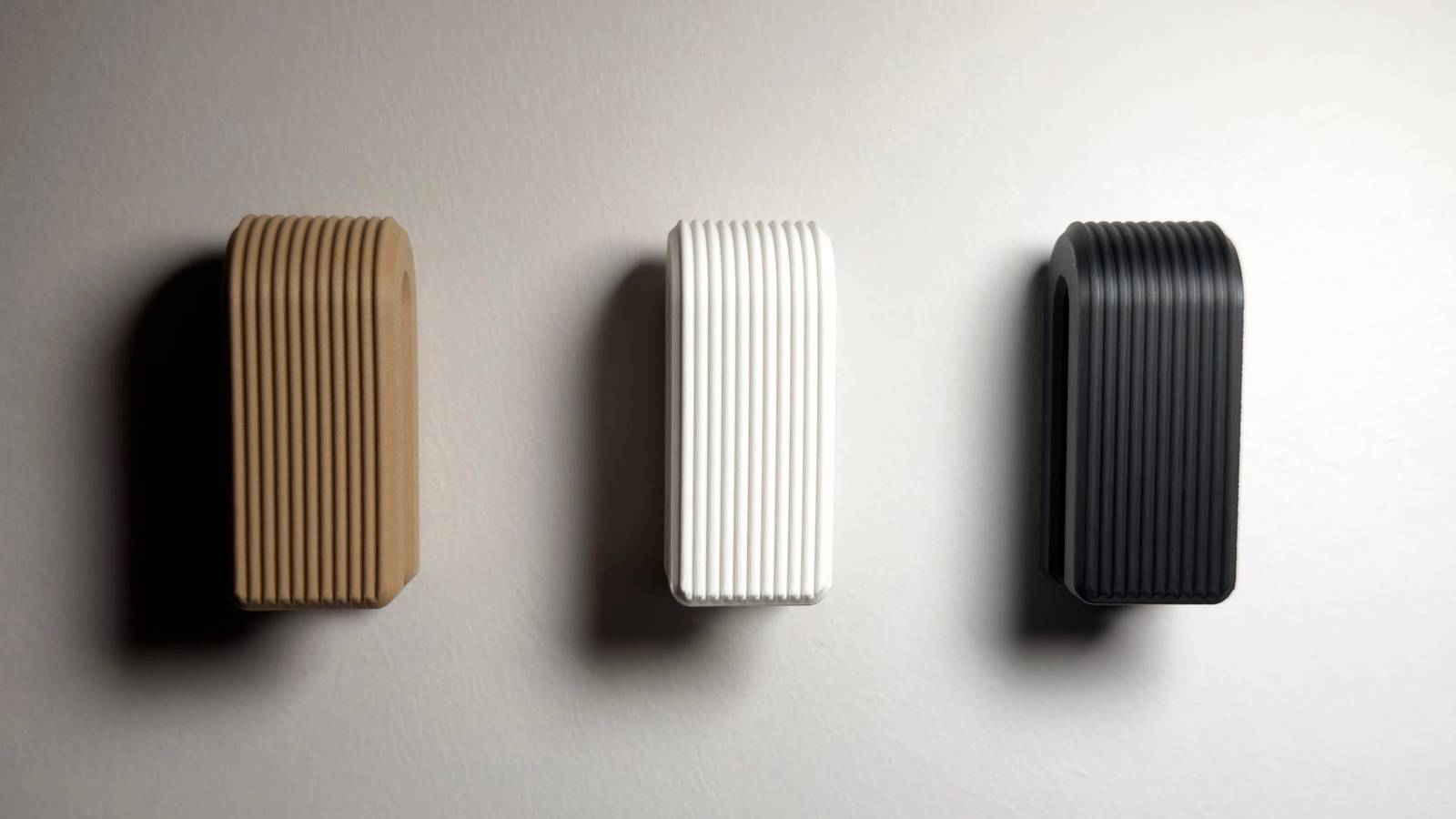
3D printed items that look the part What layer lines? One thing that’s worth noting is that the way the 3D printing world has interpreted “Japandi” can often be summed up as “textured.” To be precise, there’s a very specific “ribbed” look that is enduringly popular among model authors designing vases, organizers, plant pots, and similar items.These models feature prominent vertical lines, usually running from the top of the model to the very bottom.Sometimes the lines are wavy; sometimes these lines take on criss-cross patterns or mesh.
Overwhelmingly, they are straight lines that are represented in photos in filaments that perfectly reflect the natural raw materials that the style has become associated with: warm browns, off-whites, textured stone, filaments that contain real wood dust, or plain old matte black.The key here is that these bold surface elements provide a clear focal point that distracts you from the unavoidable blemish in every 3D print: layer lines.Even if you print with the smallest nozzle on the market, with the smallest layer lines you can muster, you’re still going to see layer lines.
It’s an unavoidable fact of 3D printing.This goes a long way towards explaining why Japandi toothbrush holders and towel hooks are so prominent on websites like MakerWorld.One could also argue that, while filament like PLA is a world away from the raw materials that Japandi items are so closely associated with, 3D printing as a process embraces Japandi philosophies like the “wabi-sabi” ideal of embracing imperfections and the minimalist desire to produce simple and practical objects.
Go full Japandi today Some models to start you off Searching for Japandi on MakerWorld gives you a good overview of what the style involves and how it translates to 3D printing.You can quite easily use the style as a basis to tie together various elements in a room, or simply pick a Japandi model where necessary to add a bit of flair to an otherwise boring design.For best results, invest in some warm and natural-looking filament that will complement the room you’re printing for.
With natural shades, this is relatively easy.Matte colors are good here too since they tend to blend in and appear more muted than the semi-gloss and shimmer of regular PLA or silk.Bambu Lab’s PLA white marble and PLA wood are good choices for that natural look, among the natural-looking PLA mattes and PETG mattes.
While PLA is perfect for items that remain indoors, away from moisture, and largely out of the sun, PETG can add an element of water resistance that is great for bathroom items too.There’s a whole world of Japandi 3D printing projects out there to explore, from Christmas baubles and vases to planters, towel hooks, phone chargers and curtain tiebacks.Japandi models feature heavily in prints designed for the home, particularly in areas like bathrooms and living rooms.
Read More