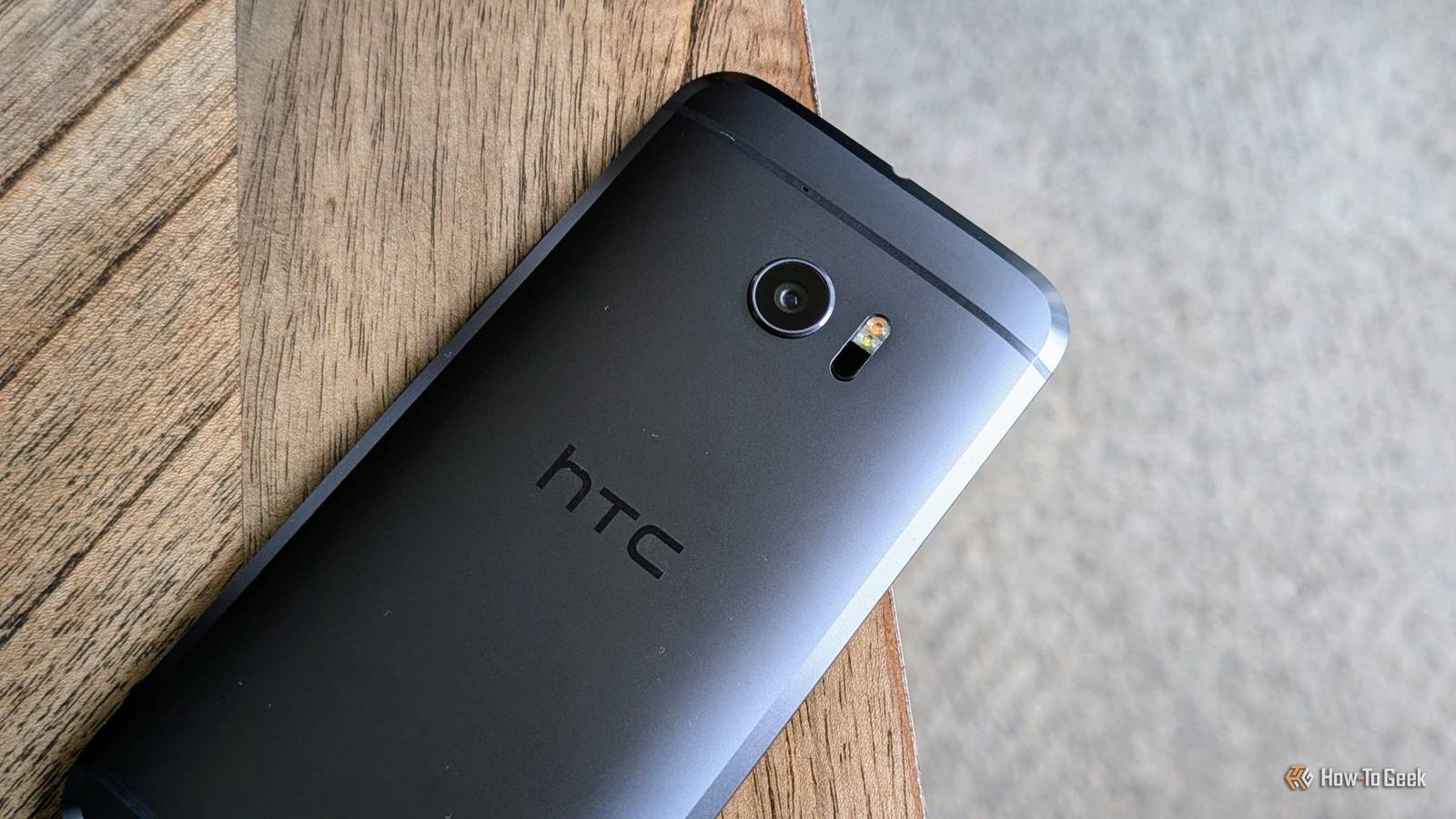
HTC is one of my all-time favorite smartphone brands.It was at the forefront of the market from the very beginning, making the very first Android phone, the T-Mobile G1.Between 2008 and 2017, HTC released a ton of marvelous Android phones—here's my selection of the 10 best the company ever made.
The sale of a good chunk of its smartphone division to Google in 2017 marked the end of HTC's smartphone era.While HTC has released a number of Android phones since then, the company's spirit was gone the moment many of its best and brightest engineers became part of Google.The early 2010s were jam-packed with brilliant Android phones bearing the HTC logo, but even releasing what many consider the best Android phone of all time couldn't save the company.
This list is subjective, of course, and I'm sure there will be plenty that aren't found below.10 HTC Evo 4G A marred masterpiece The Evo 4G was a beast of a phone when it landed in mid-2010, the Android counterpart to the legendary HTC HD2, the best Windows Mobile phone ever.Debuting as the first 4G phone, it used Sprint's WiMAX network, which turned out to be a dead-end technology that ultimately contributed to Sprint's decline.
Despite Sprint's spotty coverage, its $10 monthly fee to access the network, and a number of other issues, such as the infamous 30Hz screen cap and abysmal battery life, the Evo 4G was such a powerful phone for its time, jam-packed with cutting-edge technology, that it earned a spot on this list.9 HTC Tattoo The first budget Android phone The HTC Tattoo was my first Android phone, and it was also one of the first proper budget Android offerings.If it weren't for it, I probably wouldn't have entered the exciting world of the then-nascent smartphone OS until much later than I did when I got my hands on one in April 2010.
Despite its limitations, I have fond memories of the phone, which I played around with for weeks on end after bringing it home.I loved pressing all those brilliantly tactile physical buttons, something I sorely miss on modern phones.While I didn't mind the lack of a GPU all that much, which made many games a no-go on the budget handset, the inclusion of a resistive touchscreen was what hurt it the most.
Still, the Tattoo paved the way for future budget Android offerings, and for that, it deserves a place on this list.Oh, I just remembered that we never got that Android 2.1 Eclair update.Booo! Google Pixel 10a 7 SoC Google Tensor G4 Display 6.3-inch Actua display The Google Pixel 10a is a barely updated version of the Google Pixel 9a, with a slightly brighter screen and an upgrade from Gorilla Glass 3 to Gorilla Glass 7i.
Google has shaved the remaining few millimeters from the camera bump, making it completely flat.Unlike prior versions of the Pixel a series, this model year does not share the same Tensor processor as the mainline Pixel 10.$499 at Amazon $499 at Google Store $500 at Best Buy Expand Collapse 8 HTC Droid DNA/HTC Butterfly A multimedia powerhouse with an Achilles' heel The HTC Butterfly launched as the Droid DNA in the US, and my gosh, this phone was a multimedia powerhouse.
It had a huge 5-inch 1080p display (the second-ever phone to boast one), a beefy Snapdragon S4 Pro SoC with a quad-core CPU, fantastic speakers, and an excellent camera, at least for 2012.It was well received, but the decision to omit the microSD card slot from the US version, stemming from Verizon's attempt to corral users into signing up for its cloud storage service, was the phone's Achilles' heel.Having only 11GB of usable storage just wasn't enough for such a powerful device.
On the flip side, the international version, which packed a microSD card slot, was the best smartphone in the world at the time of its release.7 HTC Desire Better than the Nexus One Google selected HTC to manufacture the first Nexus phone, the legendary Nexus One, with the Desire being HTC's own version of it.It packed the same internals, as well as the same splendid AMOLED display, with the Desire being the better of the two if you ask me.
There were some differences.Most notably, while the Nexus One used a mechanical trackball and capacitive buttons, the Desire featured that cool-looking optical trackpad and a collection of physical buttons (swiping between Home screen pages with the optical trackpad felt cool as heck back in the day).I always wanted one, but it was way out of my price range as a broke college student, so I had to make do with an HTC Tattoo, and later an HTC Wildfire, which at least also had that cool optical trackpad.
6 HTC Dream/T-Mobile G1 The first Android ever The first Android phone ever wasn't a looker, and its multimedia capabilities left a lot to be desired (the lack of a 3.5mm headphone jack was a massive omission), but the HTC Dream was the vessel that showed Android's potential.Back when it came out, its clunky, chunky design, complete with that legendary slide-out keyboard, made it look like an ugly duckling next to the sleek-looking iPhone 3G.However, its tight integration with Google services and the open nature of Android (oh, the irony) made it a favorite among smartphone enthusiasts, while also making HTC the favorite smartphone brand for many geeks, myself included.
Google Pixel 10 $599 $799 Save $200 Brand Google SoC Google Tensor G5 Display 6.3-inch Actua OLED, 20:9 RAM 12 GB RAM Storage 128 GB / 256 GB Looking to upgrade to a Pixel but not sure if you need all the bells and whistles of the more expensive models? You won't be disappointed with the standard Pixel 10 model.Coming in striking colors, Gemini features, and seven years of updates, you can't go wrong with this purchase.$599 at Amazon $799 at Best Buy $799 at Google Store $799 at AT&T Expand Collapse 5 HTC One S A mid-ranger that trumped flagships The original version of this list featured the HTC One X, but I ultimately decided to include the One S because it was hands down the best mid-range Android phone at the time of its release and, in my opinion, one of the best mid-range Androids ever.
Although its beefier cousin, the One X, featured the almighty Tegra 3, the One S was the better overall package thanks to its gorgeous AMOLED display, a similarly beefy dual-core Qualcomm Snapdragon SoC, and 1GB of RAM, which was unheard of for a mid-ranger at the time.The phone was a triumph of HTC's engineering, but it also exposed the company's biggest weakness.Despite its powerful hardware, it only received an update to Android 4.1.1, even though it was more than capable of running Android 4.2.2 and Sense 5.
Ultimately, HTC's lack of long-term software support was one of the reasons for its fall from grace.4 HTC Hero The birth of HTC Sense Close The Hero was HTC's third Android phone and the first to debut the cult-classic HTC Sense Android skin, along with that iconic Home screen clock and weather widget I still adore.While it was never considered a looker, it was one of the most comfortable phones to use thanks to its angled chin, a rich selection of physical buttons, and the very handy trackball.
One of my friends owned one, and my HTC Tattoo paled in comparison to the Hero, which was the best Android phone of its time.The phone had multiple versions released for different markets, the most interesting one being the US-exclusive Droid Eris, which launched on Verizon.Its successor, the HTC Legend, remains a modern work of art in the form of a smartphone.
3 HTC 10 A well-rounded flagship that came out too late The HTC 10 entered the market in 2016, and while it was the best flagship of that year, the company had already been in freefall for quite some time.Despite being one of the best HTC Android phones ever, it wasn't enough to save the aging incumbent.The 10 had it all: superb build quality, a fantastic display, eye-catching design, an excellent camera, and top-tier hardware, but nothing short of a miracle was going to save HTC.
2016 was also the year Samsung released one of the best Galaxy phones ever, the Galaxy S7 Edge, which took the Android world by storm and rained on the HTC 10's parade.2 HTC One (M8) One of the best phones I've owned Oh my, what a beautiful phone the HTC One M8 was.So sleek, so curvy, so alluring, so darn handsome.
But the phone was much more than its looks.The display was brilliant, the speakers were the best darn speakers I'd ever heard on a phone, the on-screen buttons were a revolution at the time, and the Snapdragon 801, combined with 2GB of RAM, made the phone more than usable even in 2018, when I finally upgraded to a Xiaomi Mi Mix 2.Close Even that 4MP camera wasn't bad at all.
I took some pretty cool photos with it, and while they can't compare to photos taken with modern camera superphones, they still look quite nice for a phone from 2014, if I do say so myself.I'll never forgive myself for dropping it onto a ceramic tile floor and shattering its screen a few years ago.What a phone it was.
1 HTC One (M7) There can be only One Now, I'm clearly biased, and a list like this is expected to be subjective to a degree, but I managed to keep that bias in check and gave first place to the one and only HTC One (M7).Despite featuring the Snapdragon 600 instead of Qualcomm's flagship chipset at the time, the Snapdragon 800, the HTC One ended up becoming HTC's most beloved phone and, for many other Android enthusiasts and me, the best Android phone ever.At a time when everyone was copying Apple, HTC came forward with a bold aluminum unibody design and a pair of huge speakers above and below the display that made the One M7 stand out from the crowd and turned it into an instant classic.
The HTC One M7 was a product of an era when companies were able to design phones with unique, eye-catching identities you could instantly recognize from a mile away.It sure beats the army of same-looking all-screen slabs we've got today.Sadly, the One M7 couldn't reverse HTC's decline Despite releasing its best phone of all time, HTC failed to reverse its decline.
A few years after the One M7's release, the company was a pale reflection of its former self, reduced to just a few percent of the global smartphone market before ultimately fading into oblivion.Sure, the company still makes phones, but modern HTC phones have little in common with the legendary brand that was at the forefront of the Android revolution in the early and mid-2010s.
Read More