Espressif’s ESP32 series is the go-to choice for many people looking to take on microcontroller-powered projects.Not only are they cheap and versatile, but they’re also available in a variety of configurations for just about every need.Despite this, there are some good alternatives you might want to consider if you’re looking to expand your arsenal of development kits.
ESP8266 Older tech at a lower price The ESP8266 walked so that the ESP32 could run.Unlike the ESP32 series, which is mostly comprised of dual-core chips, the ESP8266 is a single-core Wi-Fi-only offering.Because it’s old, it also happens to be cheaper.
Considering that ESP32 variants already provide excellent value for money, this will be most noticeable for those making bulk orders.Like the ESP32, the ESP8266 has an official software development kit (SDK) from Espressif itself.It’s also compatible with a huge variety of alternative SDKs including ESPHome, MicroPython, Tasmota, and the open-source ESP-Open-SDK.
WLED offers a practical example of the ESP8266’s performance limitations, where the ESP32 can control up to 10 LED outputs per chip while the ESP8266 is limited to just three.SparkFun ESP8266 Thing The SparkFun ESP8266 Thing is a breakout and development board for the ESP8266 WiFi SoC – a leading platform for IoT or WiFi-related projects! $20 at Spark Fun Expand Collapse Raspberry Pi Pico 2 (RP2350) RISC-V cores and wireless-free variants The RP2350 is a chip used in the Raspberry Pi Pico 2 (and its wireless variants), an evolution of the RP2040 seen in the original Pico.Whereas Espressif jammed wireless connectivity into (almost) every variant, the Pico 2 lacks Wi-Fi and Bluetooth altogether in its most basic state unless you opt for a “W” model.
The RP2350 used in the Pico 2 also has two RISC-V cores in addition to two ARM-Cortex cores.You can use both RISC-V, both ARM-Cortex, or one of each simultaneously.In its non-wireless version, the Pico 2 consumes less power, and also offers theoretically improved security for those concerned about wireless “interference.” Raspberry Pi Pico 2 Dual Arm Cortex-M33 or dual RISC-V Hazard3 processors @ 150MHz, 520 KB on-chip SRAM; 4 MB on-board QSPI flash, 2 × UART, 2 × SPI controllers, 2 × I2C controllers, 24 × PWM channels, 1 × USB 1.1 controller and PHY, with host and device support, 12 × PIO state machines.
26 multi-purpose GPIO pins, including 4 that can be used for ADC. $10 at Amazon Expand Collapse nRF52840 (and similar) Ultra low-power for Bluetooth projects The nRF52 line is a series of ultra-low-power chips from Nordic Semiconductor, with the nRF52840 sitting at the top of that line.These are very lightweight chips that feature only a single-core 64MHz ARM-Cortex processor and 256kB of RAM at most.
The nRF52840 in particular includes Bluetooth Low Energy (BLE) 5.4, with support for Bluetooth Mesh, Thread, and Zigbee wireless protocols.The kicker is that these chips lack Wi-Fi, which is what makes them so efficient in the first place.A great practical example of this technology is a DIY temperature and humidity sensor hidden in a picture frame.
The creator of this project picked the nRF52840 over every ESP32 variant on account of its comparatively tiny power draw.Seeed Studio XIAO nRF52840 Seeed Studio XIAO nRF52840 by Nordic is carrying wireless capability for the first time and it supports Bluetooth Low Energy 5.4, also able to operate with low power consumption.It will be your best microcontroller for Bluetooth applications.
$10 at Seeed Studio Expand Collapse Teensy 4.1 (and similar) ARM-based power at a price Teensy is a microcontroller project from PJRC, which is now manufactured by SparkFun.Teensy 4.1 is the latest version of the board, and features an ARM-Cortex processor running at 600MHz, 1MB of RAM, and almost 8MB of on-board flash memory.The boards are directly compatible with the Arduino IDE, which means they can be used for all sorts of projects where additional power is a concern.
Teensy 4.1 also includes Ethernet, an SD-card slot, a whole host of digital audio and S/PDIF ins and outs, with a total of 55 I/O pins.The Teensy lacks wireless communication without additional components, while being adept at real-time audio processing and more complex operations.Teensy 4.1 The Teensy 4.1 delivers record-breaking 600 MHz ARM Cortex-M7 processing power in a larger form factor, featuring 8MB flash, Ethernet, a microSD socket, and a USB host port.
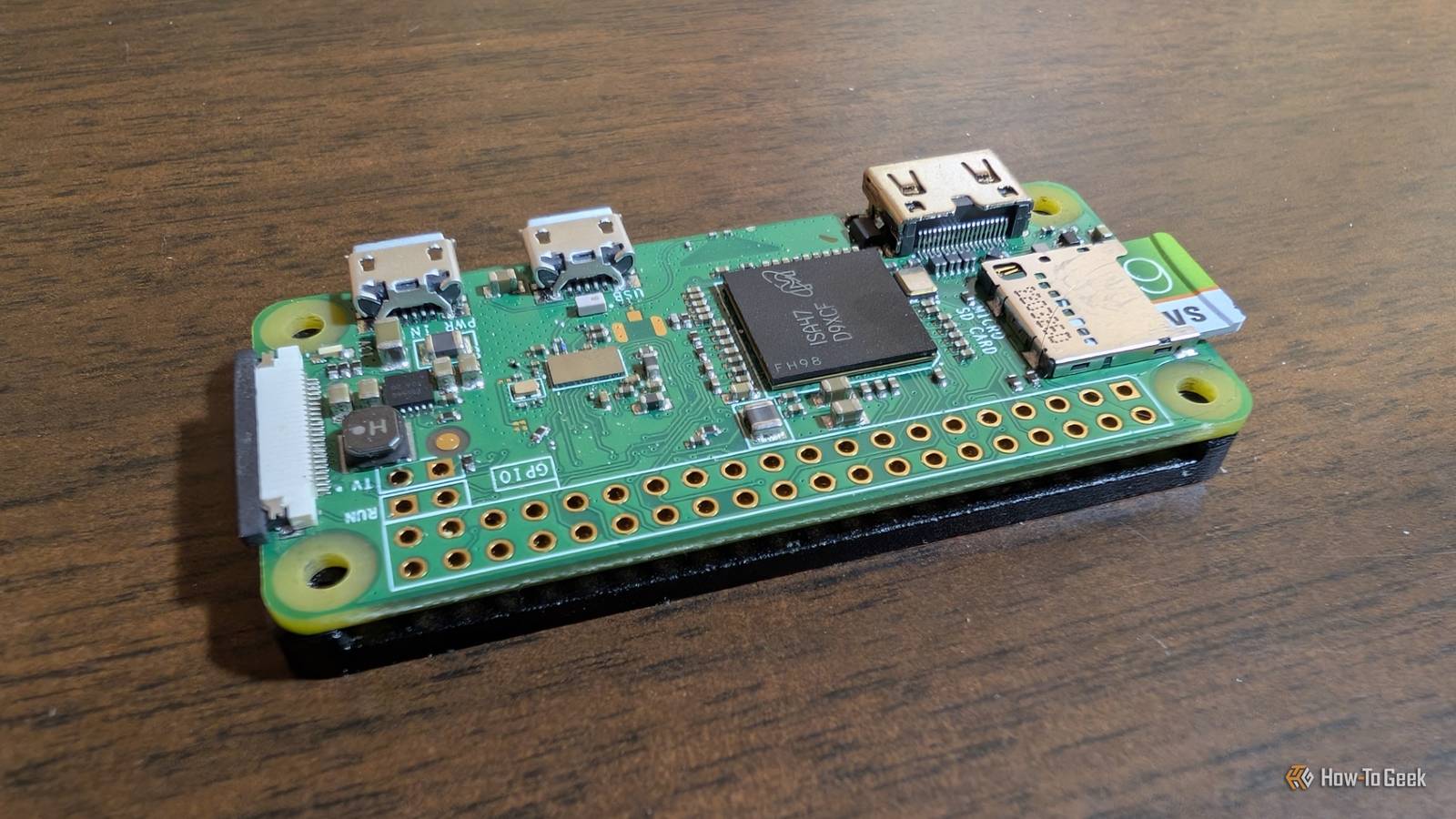
$32 at Spark Fun Expand Collapse Raspberry Pi Zero 2 (and similar) It’s a full-blown computer for a little extra cash The ESP32 and the rest of the alternatives featured above are microcontrollers.They rely on an SDK and code that is uploaded to the chip, which runs forever on the device.They’re fast, power-efficient, and highly suited to small and lightweight devices.
That’s not what a Raspberry Pi Zero is.The Zero 2 is a full-blown computer that runs a Linux operating system, and can be used to do things like browse the web, edit spreadsheets, or watch videos.The Zero 2 lacks Wi-Fi, though the “W” model includes it.
The ESP32 range is faster at executing code natively, but the Zero is arguably better for tasks like hosting an MQTT broker separately from your Home Assistant server, running a light web server, or building an internet radio.For most small projects that demand a microcontroller, the Pi Zero isn’t going to cut it.But at around $15, which roughly twice the cost of a higher-end ESP32, it’s well within spitting distance for anyone looking for a project.
The answer here for most hobbyists will be to buy both.Raspberry Pi Zero 2 W Brand Raspberry Pi CPU Quad-core 64-bit ARM Cortex-A53 The Raspberry Pi Zero 2 W is super tiny and super affordable, but it packs enough computing power for a variety of DIY projects.You can use it to create a handheld retro gaming console, for Klipper/Mainsail, a super compact home or media server, and more. $19 at adafruit $16 at CanaKit Expand Collapse The smartest choice is not to pick these alternatives of an ESP32, but to consider them as well.
Keep them in the back of your mind when you’re hunting for more hardware for your project drawer.Still not got an ESP32? Here’s how to figure out which ESP32 board is for you.
Read More