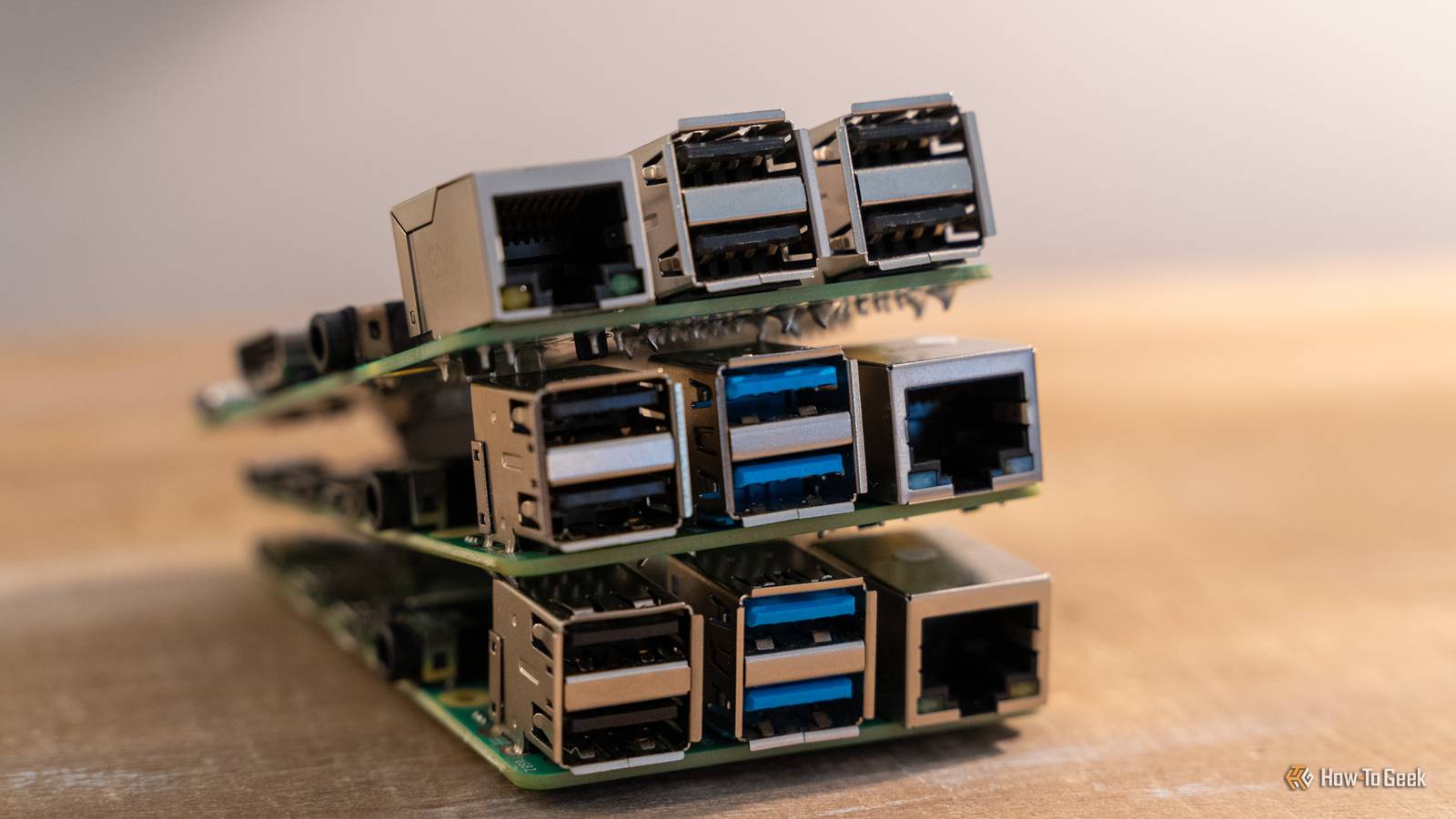
The Raspberry Pi 5 is a fairly capable SBC, but it doesn't make a great desktop—as soon as you start trying to multitask, browser tabs start to lag, and the entire system will struggle.Between a relatively low-power GPU, the limitations of a microSD card boot drive (which is the default unless you buy an M.2 hat), and a CPU that will readily thermally throttle without active cooling, it just isn't up to the job.For a long time, the great community support and low cost made that an acceptable tradeoff.
It is a great board of tinkerers after all.However, as prices have skyrocketed, the performance tradeoff has become increasingly difficult to justify.The price gap between much more powerful SBCS, or even full mini-PCs, is much smaller than it used to be.
If you need an SBC rather than a mini-PC, here are a few options that will get you better performance than a Pi 5.Radxa Orion O6N Almost a real desktop The Orion O6N is a Nano-ITX board built on the CIX P1 CD8160, featuring a 12-core SoC.It pairs an Arm Immortalis G720 MC10 GPU with a 30 TOPS NPU—enough for some local AI applications to be viable.
Additionally, it allows you to add up to 64GB of LPDDR5.Between the extra RAM and the more powerful GPU, it gives it an immediate leg up over the Pi as a desktop.The RAM is soldered, so you can't upgrade it without extraordinary effort once you buy.
Much like the Pi, the Raxda Orion O6n definitely requires active cooling, and the software ecosystem is less mature than the Pi's, so you may spend a bit more time tinkering.Orange Pi 6 Plus A zippy SBC with lots of IO options The Orange Pi 6 Plus features the same CIX P1 as the Radxa Orion O6N, but stands out for its exceptional array of connectivity options.It has dual 5GbE, two M.2 sockets, and display interfaces across HDMI, DP, USB-C, and eDP.
The tradeoff, like you would expect, is noticeably higher power draw and fan noise.However, if you need a more powerful SBC with a ton of I/O, it is a reasonable choice.Radxa Rock 5B+ A small SBC with M.2 Close If you need something that is a bit more proven than the CIX P1, the Rock 5B+ is a good choice.
It uses the RK3588—an ARM SOC that has earned a good reputation among enthusiasts—and can come with up to 32GB of LPDDR5.If you're using it as a desktop, the included PCIe 3.0 x4 interface (split into two x2 interfaces) will be great, since it allows you to use a fast NVMe SSD as a boot drive rather than a microSD card.It also has a 2.5 gigabit Ethernet port with PoE support.
The RK3588 isn't as popular as the BCM2712 (the Pi 5's CPU), but it has more than three years of support behind it now.That doesn't guarantee anything, but if you're looking for out-of-the-box convenience, then that sort of thing does matter.I'd recommend looking for distros builds specifically intended for use with the Rock 5B+, or any of the other RK3588 boards, to start.
Radxa X5 An x86 board in a SBC format Most SBCs come with Arm processors, but the soon-to-be-available Radxa X5 eschews that convention in favor of an Intel N150.By moving to x86, you eliminate the need for Arm image hunting or wondering if a specific package has an aarch64 build.It runs the same Linux your desktop PC runs.
The N150 isn't a powerhouse by any stretch of the imagination, but it can function as a minimalist desktop if you're careful about your OS choice.Fortunately, because it is x86, you have a huge range of options.Related Why Do x86 CPUs Only Use Two Out of Four "Rings"? When learning more about how operating systems and the hardware they run on work and interact with each other, you may be surprised to see what appears to be oddities or under-utilization of "resources" occurring.
Posts By Akemi Iwaya The Radxa X5 isn't widely available yet, but it is expected to be released sometime this year.If you need something sooner, the Radxa x4 is also x86 based but features an N100 CPU instead of an N150.It has similar input and output options, but the N100 is significantly slower than the N150.
The Pi's appeal was never just hardware specs The Raspberry Pi’s advantage was never performance—it was the ecosystem and price.Now that the memory crisis has radically reoriented the entire consumer hardware world, the Pi shouldn't be the default "right option" for an all-purpose SBC.If you're just starting out and need a learning tool, require low-power, or even guaranteed software support, then it should be near the top of your list.
If you need a desktop, you should look elsewhere.Before you buy any of these, however, you should check the price of used mini PC pricing.The same DRAM crisis that drove Pi prices into the stratosphere means that "Best value" is now a continuously moving target without any guarantees.
Read More