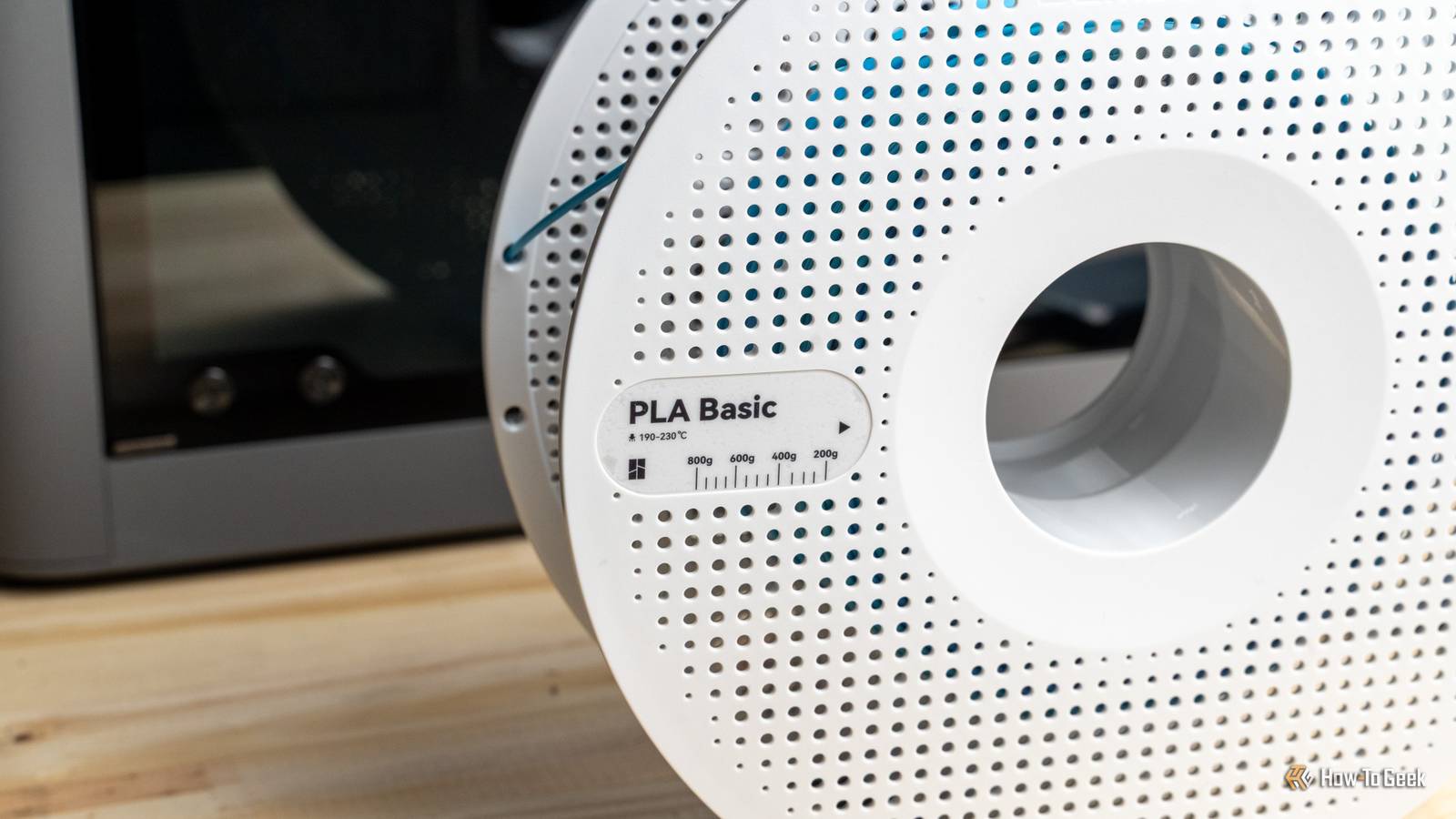
Polylactic acid, or PLA for short, is the world’s favorite 3D printing material.It’s cheap, easy to work with, and relatively safe to be around.Unfortunately, it also has undesirable properties that make it unsuitable for all use cases.
Here are some items you might want to print with other filaments instead.Models that live in your car PLA has poor heat resistance PLA has a glass transition temperature of around 65ºC, though this can vary based on the exact filament used.This means that it will start to deform and warp when it gets close to this temperature, even though the melting point (and temperature used by your 3D printer to extrude it) is much higher.
As a result, PLA is a poor choice if you need heat resistance.One such example is any item designed to live in your car.So if you’re thinking of printing a smartphone mount, cupholder, dashboard ornaments, or replacement knobs and buttons, give PLA a miss.
The inside of a car can reach temperatures of around 50ºC on a mild day, and 60ºC or higher on hotter days.This will vary depending on where you live, where you park, and whether the item is in direct sunlight, but broadly speaking, PETG is the better choice.Brackets and similar load-bearing items Even when properly engineered You can make 3D parts stronger by properly orienting them on your print bed, but this can only go so far in guarding against a print failing along layer lines.
For any items that are to be put under the constant stress of a weighted load, PLA is best avoided.This includes brackets for shelves, monitor arms, TV mounts, hooks, and anything else you expect to withstand a force for an extended period of time.A phenomenon known as “PLA creep” refers to the way that these items warp gradually over time, slowly deforming under pressure.
These items won’t break immediately, but they might one day, and they’ll take out whatever they’re holding and anything beneath them.Tool and workshop items exposed to solvents and other chemicals Being careful isn’t good enough Some filaments are chosen specifically for their resistance to solvents and other chemicals, but PLA is not one of them.Though PLA will degrade over time when exposed to water, it’s still fairly resistant in the short term (a wipe will do the trick).
The same is true of dilute weak acids and salts.But things are quite different when exposing PLA to acetone and other ketones, esters, ethers, and many hydrocarbons.Stronger acids will also damage the polymer.
While you can avoid applying these items to PLA directly, accidental exposure from use in a workshop environment is harder to avoid.For example, WD-40 contains hydrocarbons that can damage PLA.Getting it on your hands and then touching a 3D-printed part like a vacuum attachment or grip then could jeopardize the integrity of the part.
At best you’ll need to print it again, at worst you could injure yourself.Fixtures and tools that live in the sun or outside PLA suffers when exposed to UV and moisture PLA is technically a compostable material, but that doesn’t mean it will rott like cardboard or wood.It requires treatment with an industrial composting process to fully break down, but it can still prematurely degrade when subject to moisture and direct UV exposure.
Even an item made from PLA that is exposed to the sun coming through a window can deform rapidly.Outside, with the added stress of rain and atmospheric moisture, PLA will weaken even further.The filament’s hygroscopic nature, in addition to the possibility of moisture getting in between layer lines (and possibly freezing and expanding in winter), makes it unsuitable for outdoor use.
What to use instead PETG, ASA, and ABS PETG is arguably the best alternative to PLA for most people.It builds on PLA’s heat and water resistance, while being relatively easy to print (though it can be prone to warping caused by temperature differences in the atmosphere).It’s also only slightly more expensive than PLA, so it can’t hurt to buy a roll in a relatively neutral color just in case you need it.
Deals Save on Filaments & 3D-Printing Deals for Makers Browse Maker & Creator deals for savings on filaments, enclosures, ventilation, and workshop gear—score discounts on PETG, ABS/ASA spools, enclosure kits, filtration systems, and tools to print tougher, safer parts affordably.Deals Explore Maker & Creator Deals Beyond this, there are hardier filaments like ASA (acrylonitrile styrene acrylate) and ABS (acrylonitrile butadiene styrene).These are two closely related materials that have different ideal use cases.
ASA is great for UV exposure, whereas UV exposure can cause ABS to become brittle.ABS tends to have better heat resistance than ASA.Both can be challenging to print with, prone to warping (and greatly benefit from an enclosed 3D printer with a chamber heater).
They also release styrene gas when you print with them, which can be very harmful to your health, so proper ventilation and filtration are necessary to print safely.Bambu Lab P2S Build Volume 256x256x256mm Printing Speed 600mm/s The Bambu Labs P2S 3D printer is ready to go out of the box and can have you printing within 15 minutes.It features up to 20-color printing with the AMS unit, has an upgraded built-in camera for remote monitoring and time lapses, and has an enclosed body for printing even high-temperature filament.
$549 at Bambu Lab $549 at bhphotovideo $550 at Micro Center Expand Collapse Bambu Lab AMS 2 Pro A multi-material system for Bambu Lab printers with active air vent 65°C filament drying, air-tight filament storage, a brushless servo feeding motor, Bambu's signature RFID filament sync, and compatibility with up to up 24-color/material printing by connecting more AMS 2 Pro units.$359 at Bambu Lab Expand Collapse Even though PLA is considered to be safe, it’s still questionable whether or not you should share your living space with it.
Read More