Keyboards are a remarkable invention.I’ve been fascinated by them (along with typewriters).Aside from the eternal struggle between QWERTY and Dvorak, Human Interface Devices (HID) like keyboards and mice are just interesting in design and function.
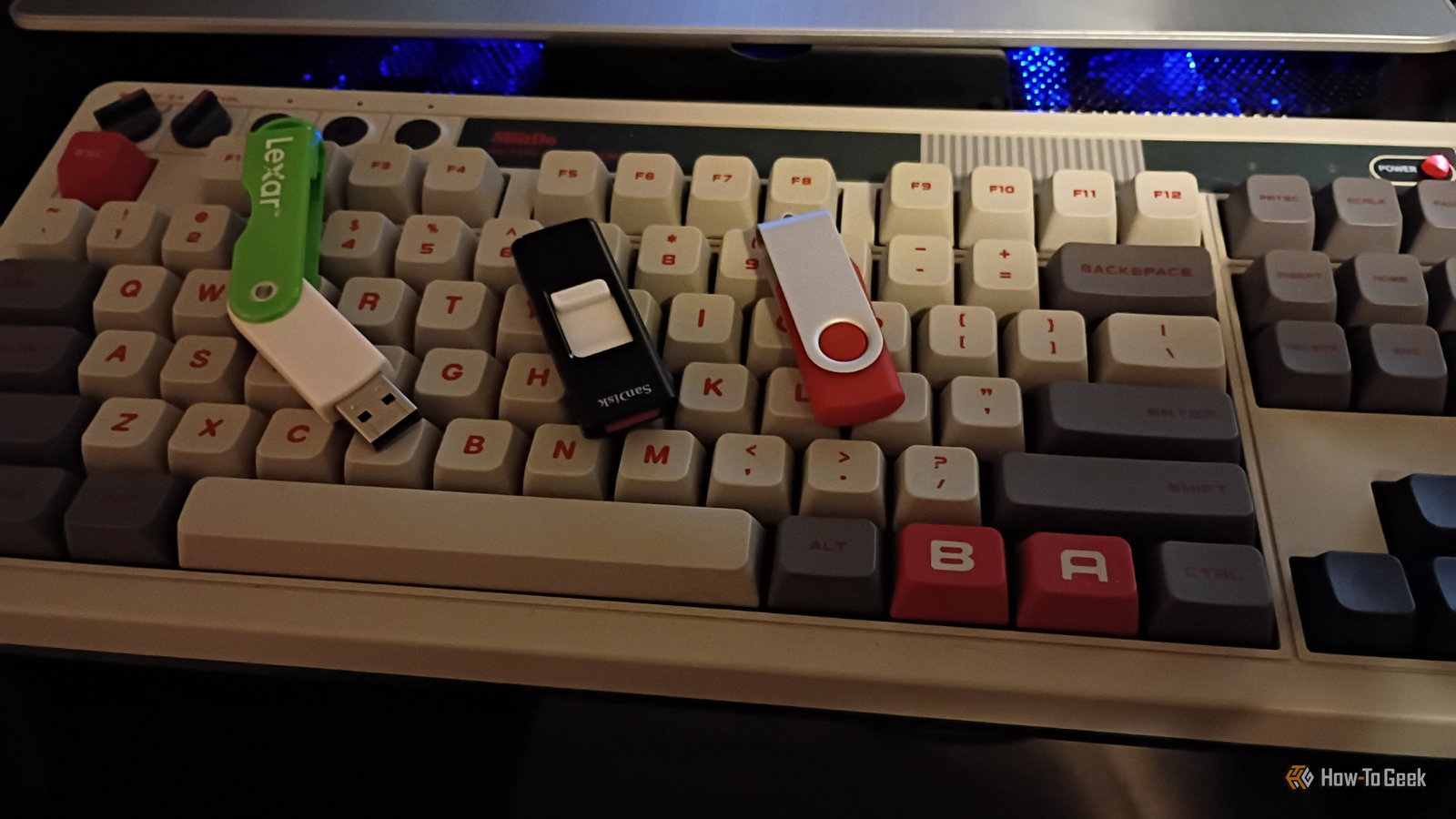
But what strikes me as most interesting is how a USB drive, a banana, or just about anything can be an HID.And while some of them are pretty fun and safe, there’s actually a bit of a darker side to the story.HID devices are kind of amazing It’s all about resistive and capacitive touch USB keyboards are in a class called HID, or human interface devices.
When you plug a USB device into your computer, it has to tell the computer what it is.HID was designed to tell the computer everything it needs to know about the device (like what the buttons do, for instance) through a description package.They’re user-friendly, and most people use them daily.
HID standards were originally just meant for USB.But they also work with Bluetooth now.That’s why some Android phones allow you to set them up as a Bluetooth HID through developer options (at least it works on my Motorola Moto G).
If you’re adventurous enough, you can actually make a basic HID/keyboard out of common household items, including a certain high-potassium fruit.A lot of weird things can be keyboards Some are simple; others are just plain weird Close Here's a rad experiment to try if you have a free afternoon: grab some bananas or an old USB drive.Get yourself a Makey Makey GO, buy an HID, or build one with a Raspberry Pi Pico.
Then get a banana.As The Doctor (circa 2005) would say, “Bananas are good.” I personally don’t like them, but they’re both hilarious and good for stuff like this.The Makey Makey GO device uses capacitive connections, which detect a change in the charge stored on the device.
In very simple terms, it becomes a touchpad you can use to interface with a computer (it can be a keyboard or even a mouse to build code with something like Scratch).You just need to touch a conductive item like a banana or other fruit (or even water) to make it work.Devices like the Makey Makey GO have an alligator clip or conductor with a wire connected to the device.
I've seen donuts, bananas, jello, and play dough being used through similar devices to create makeshift “keyboards.” The same idea applies to tech that uses resistive sensing, like a Raspberry Pi Pico.It's a bit more complicated than the Makey Makey, but you can use a Pico, along with adafruit_hid and CircuitPython, to make a usable HID device.The conductive device (could be a banana or the metal part of a USB drive or some other conductive object) completes a circuit between itself, a GPIO port on the Pico, and ground.
I haven't had a chance to make one yet, but I'll test it once I have the equipment and a free afternoon.As much fun as using random things as keyboards can be, USB drives can also mimic keyboards in some rather dangerous ways.The same trick has a bit of a dark side Be wary of random USB flash drives I recently saw a post about a guy who found random USB drives in the woods.
My first thought was, “I wouldn't plug those in if I were you.” USB drives can easily trigger a malware attack on unsuspecting folks.There's a classification of attacks like this called BadUSB attacks.In a BadUSB attack, malware is inside the firmware layer of the USB device.
Antivirus software won't detect that.You plug it in, and your computer sees it as an HID.Then it can cause all sorts of problems.
Once it's set up in the system, a hacker can get into it and start executing commands.A Rubber Ducky is a tool that performs a BadUSB attack.It's a USB device used as a key injection tool.
That is, it can input keystrokes into your machine.It executes commands , too.In a few seconds, it can steal data or cause havoc.
It isn't always malicious (it can be used for penetration testing, for instance), but a lot of times it is.The devices use a special script called “DuckyScript” and are shockingly easy/cheap to get.Protecting yourself from them comes down to common sense.
Don't plug in random USB devices or devices you don't recognize.You can also use a technique called ringfencing (limiting which systems and network paths can communicate with applications) to block scripts from accessing your system.The user from that Reddit post I mentioned above eventually plugged the USB drive they found into a computer hooked up to the internet.
It only contained PDFs about staying off the grid.They got lucky.HID devices come in all sorts of flavors USB devices are everywhere.
And I get it; they're easy to trust.But there are definitely dangers.You can have a lot of fun experimenting with HID and using bananas as interface devices.
But if you find a random USB drive lying around in an unfamiliar place, do yourself a favor and never plug it in.Related 4 Things You Should Never Plug Into Your Laptop or Phone's USB Ports Curiosity killed the computer.Posts By Sydney Butler
Read More