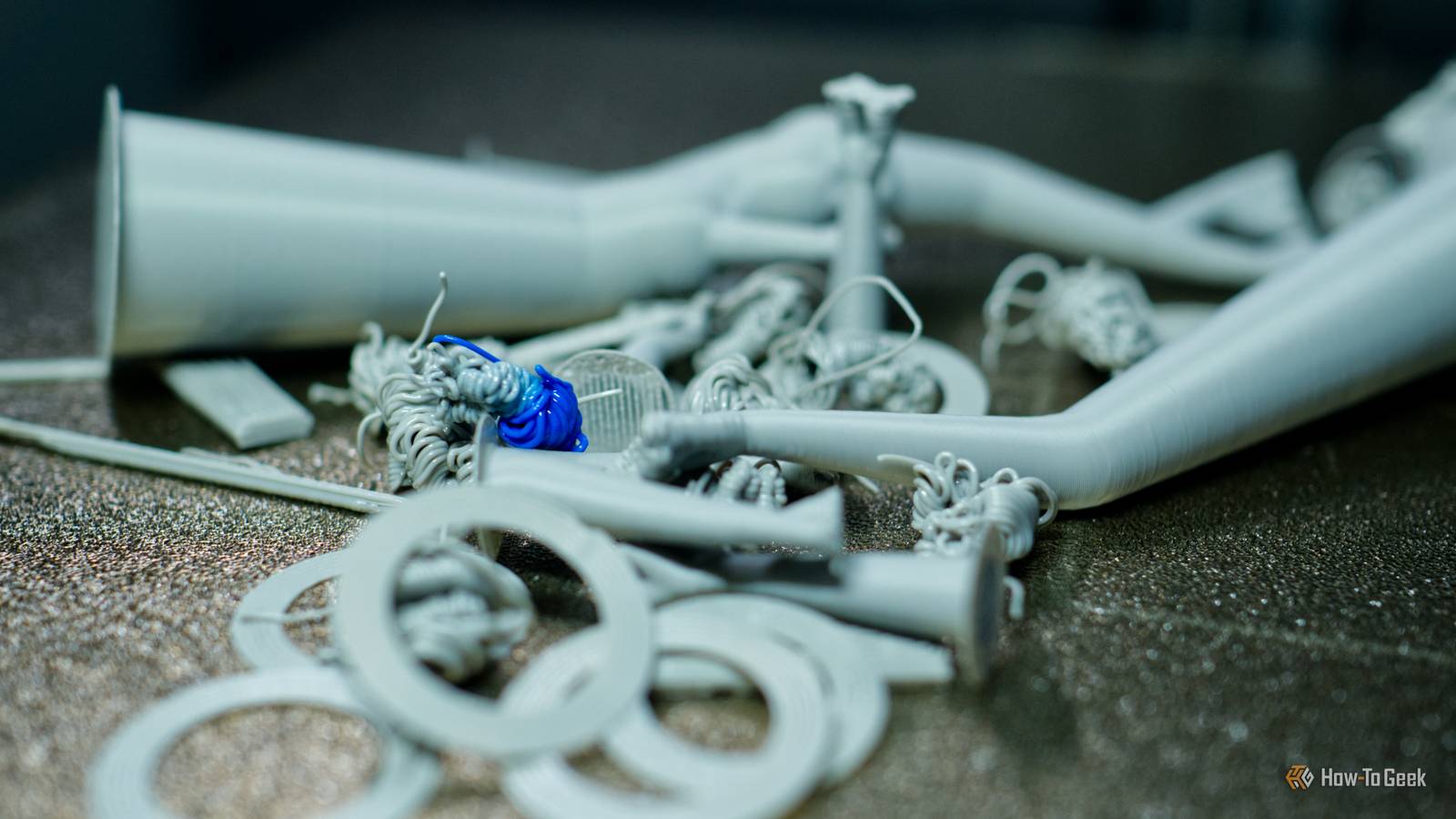
3D printing can feel wasteful at times.Failed prints and the purging process that occurs during filament swaps both create plastic waste that you might be tempted to just throw in the trash.Though there are a few good ways to use this waste, one of the easiest is to use it to create new models.
Why new models might be the best option Waste not, want not You’d be forgiven for thinking that recycling is the best thing you can do with 3D printing waste, and in theory you’d be correct.Unfortunately, turning old filament into new filament is easier said than done.Though there are plenty of companies offering recycled PLA for sale, finding one that will take your old filament off your hands (like Printerior Designs) can be a challenge.
The process is expensive and logistically challenging, plus filament degrades each time it is heated to the point of melting.Recycling at home sounds like the solution, but the necessary equipment is expensive.You need to have a lot of waste to justify the purchase.
Since “printer poop” tends to be pretty light in comparison to tightly wound spools, you’ll need to dedicate a lot of space storing this waste before you can use it again.Even recycling your waste using conventional methods can prove challenging.Your city’s recycling scheme might not accept PLA and other common filament types, or require that you physically take it to a collection point (which not everyone can do).
Putting your waste into new models sidesteps many of these issues, though there are limitations depending on which route you pick.Option 1: Melt and cast Transform waste into brand new items Arguably the most obvious use for old 3D printer filament, melting it down and setting it again into a shape of your choosing continues to be a popular choice.This works great with all sorts of waste, from small amounts of purged waste that occur during filament changes to larger failed prints that you don’t even need to chop up first.
To do this, you’ll need something you can use to melt your filament.A good choice is a used or cheap new toaster oven, which can hold a high enough melting temperature of around 150ºC (300ºF) to turn solid waste into molten filament.Use a dedicated oven for this, and make sure you only melt filament in a well-ventilated space.
Do not cook food in the oven after you have used it for melting plastic and don’t hang around to breathe in the fumes.Silicone molds are ideal, and you don’t even need to worry about segregating different colors since the marbled effect can look good.Other options include pressed dice, spinning tops, and even keycaps.
Are they the most useful or decorative items? Probably not.Are they better than a bag of waste? Definitely.Option 2: Grind and fill Hide waste inside other 3D prints The second option is to grind up your waste into smaller pellets and use it in existing, hollow models.
The main reason to do this is to add weight to an item while reducing the amount of fresh filament you’ll need to extrude as infill.For best results, you should grind up your filament using a cheap blender (that you then never use to prepare food or drink).This will work best with “printer poop” filament purges, since larger items are unlikely to fit into a small blender.
Some makerspaces have machines that will crush larger pieces of plastic into smaller chunks, if you’re lucky.For this to work, you’ll need to use hollow models and set up your slicer properly.Pick an infill pattern like “grid” and a density that’s low enough so that you can fit your ground-up filament in.
Lastly, make sure you add a pause point in your print so that you can remove the build plate (but leave the model attached) and fill your model before resuming the print and sealing everything back up.Two things to note: you won’t add a of weight, and that your model might rattle due to the loose fill inside.Depending on the model, this might be an improvement.
Option 3: Embrace the poop It’s not waste if it’s art The last option is to create new models that “show off” your printer waste.Upcycling your “printer poop” means embracing its formless nature and the full rainbow of colors you have available.My favorite design that uses waste in this form is the Filament Purge Shadow Box by Catherine Doucet.
This model includes swappable face plates to completely change the look, with the option of creating your own.Similar designs include the Poop Atlas and filament purge clock, which deliberately keep purge waste separate to maintain a color scheme.For simpler designs, try creating Christmas ornaments or cat toys.
Another option is using your filament waste in a 3D-printed maraca.Try minimizing printer waste Waste is a sad reality of 3D printing, and minimizing it means less clean up and more money saved.To do this, consider avoiding multicolor prints wherever possible, prepare your print bed properly to avoid failed prints, dry out your filament, and stay on top of printer maintenance.
Read More